 WhatsApp: +86 16626708626
 Email:
  Phone: +86 16626708626
Description
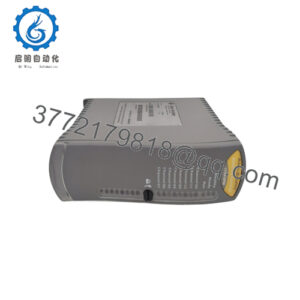
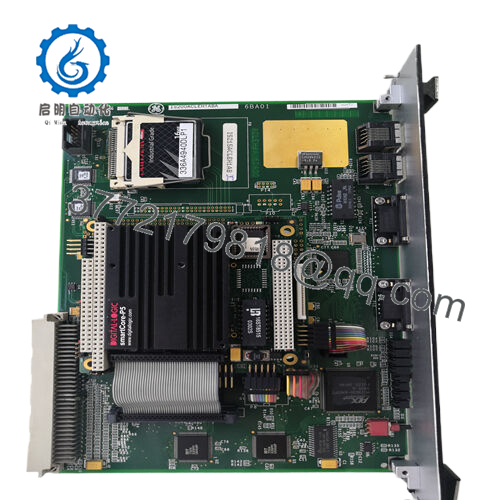
Product Model: GE IS215ACLEH1A
Product Brand: GE (General Electric)
Product Series: EX2100 / ACLE (Application Control Layer)
Product Features:
- Microprocessor-based master controller module for ACLE layer
- Dual Ethernet ports (ENET1 / ENET2) and two serial COM ports (COM1 / COM2)
- Supports QNX OS, onboard BIOS, and flash / compact-flash storage
- LED indicators (Active, OK, ENET, Status, Flash), reset switch, and PCI / PC/104 architecture
Applications & Industry Context
In the world of power generation and turbine control, especially within excitation control systems, the GE IS215ACLEH1A plays a pivotal role. Many plants use GE’s EX2100 series or Hybrid / Innovation series architectures for regulating generator excitation, voltage, and protective monitoring. Within those systems, the IS215ACLEH1A is the “brain” of the ACLE layer — the module that oversees application logic, communicates with I/O layers, and orchestrates control tasks.
For example, in a hydroelectric or steam power plant upgrade, when replacing aging modules, engineers often insert the IS215ACLEH1A into the ACLE slot of the control rack. It cooperates with DSPX / IS200 family modules and I/O channels to maintain system continuity. In retrofit or legacy systems, compatibility with existing backplanes (EX2100 / IS200 rack families) is essential, and the IS215ACLEH1A was designed with that in mind.
In new installations, it might serve in an Innovation / drive-based excitation system for gas turbines, where the ACLE sits above the lower I/O or power modules. The module’s communications, internal processing, and control flexibility make it suited for both base loading and dynamic regulation tasks.
Where reliability is crucial — such as in grid-connected generators or synchronized distributed resources — having a stable ACLE module like IS215ACLEH1A is nonnegotiable: a failure here can cascade through protection, logic, or control loops.
Product Role & System Fit
The GE IS215ACLEH1A is categorized as an Application Control Layer (ACLE) module in the EX2100 series. It sits logically above lower-level I/O and DSP modules, managing application logic, diagnostics, network communication, and supervisory functions.
Within a control rack or backplane, the IS215ACLEH1A occupies two slots (double-width) in many configurations. It connects via backplane bussing to DSP / I/O modules, shares DRAM or dual-ported memory for communication, and interfaces to external networks via Ethernet and serial ports.
In many systems, the ACLE’s counterpart is the DSPX module (digital signal processing unit). The ACLE handles higher-level tasks — health monitoring, configuration, alarm logic, I/O management — while DSPX handles fast, signal-level controls. The IS215ACLEH1A’s bridging enables seamless integration of analog, discrete, and control signals.
In an architecture sense, IS215ACLEH1A is neither a pure I/O card nor a simple controller — it is the application-level supervisor. It may load configuration, process Boolean logic, manage interlocks, and route data between the control plane and field. It must fit into existing architectures (EX2100, IS200 racks, Innovation series) as a drop-in ACLE module.
Because of its role, it’s essential that it be compatible with existing firmware, backplane pinouts, and memory mapping within your control environment — swapping an ACLE board without matching those can lead to misalignments or faulted systems.

- IS215ACLEH1A
- IS215ACLEH1A
Technical Features & Benefits
One of the defining technical features of GE IS215ACLEH1A is its support for dual Ethernet interfaces (ENET1, ENET2) along with two serial COM ports (COM1 / COM2). These interfaces allow it to handle field communications, supervisory control, configuration, remote diagnostics, and interaction with SCADA or upper-level systems.
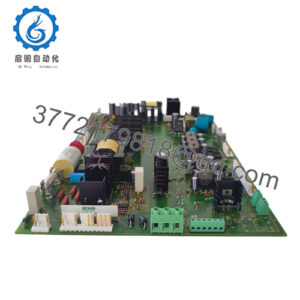
From a hardware architecture perspective, the IS215ACLEH1A is constructed with two boards: a carrier board (IS200ACLE carrier) and a PC/104-Plus microprocessor board. The combination provides PCI / ISA bridging, DRAM, BIOS, and interfaces, all in a compact double-slot module.
Its microprocessor is typically a 266 MHz CPU (QNX OS environment) or similar, capable of maintaining real-time control tasks, Boolean logic, data routing, alarms, and housekeeping without overburdening lower-level DSP modules.
The module includes LED indicators (Active, OK, ENET, Status, Flash) to help in maintenance and diagnostics. A front-facing RESET switch allows manual resets in case of fault or reload.
Memory and storage: the ACLE includes flash ROM, compact-flash storage, BIOS, and non-volatile memory to retain configuration and code between reboots. This allows for field updates, code loading via Ethernet, and persistence of settings.
Another advantage: its integration with EX2100 and Innovation series backplanes. The module was designed to mount in standard control rack assemblies, enabling drop-in replacement or upgrade in many installations.
From a reliability standpoint, field engineers often comment that ACLE modules like IS215ACLEH1A are among the more reliable cards in the rack — most operational issues arise from cabling, network errors, or firmware mismatch. Having a tested and verified ACLE restores system health in many cases.
One caveat: firmware compatibility and version alignment matter. If your control system’s logic expects a specific ACLE revision (H1A, H1B, etc.), substituting a board of mismatched suffix may require configuration or ROM updates. Always match the suffix and revision.
Technical Specifications Table
Below is a consolidated spec summary based on vendor sources and public listings:
| Specification | Value / Description |
|---|---|
| Model | GE IS215ACLEH1A |
| Product Type | Application Control Layer module (ACLE) for EX2100 / Innovation systems |
| Board Architecture | Carrier board + PC/104-Plus microprocessor board |
| Processor / CPU | ~266 MHz microprocessor under QNX OS (or equivalent) |
| Memory / Storage | Flash / Compact-Flash, BIOS, DRAM |
| Communications | 2 × Ethernet (ENET1, ENET2), 2 × Serial COM (COM1, COM2) |
| LED Indicators | Active, OK, ENET, Status, Flash |
| Reset / Front Control | RESET switch on faceplate |
| Mounting / Format | Double-slot module, fits EX2100 / IS200 / Innovation backplanes |
| Operating Temperature | Typically 0 °C to 45 °C (vendor listing) |
| On-board Power | 5 V DC, ~3.0 A requirement (approx) |
| Revision / Variants | Common revisions include H1A, H1B, H1C |
| Manual References | GEI-100434, GEH-6632 etc. |
Installation & Maintenance Insights
When installing GE IS215ACLEH1A, proper environmental control is important. Fit it in a control rack with guided airflow, moderate temperature, humidity control, and vibration dampening. The board is sensitive to overheating or ambient extremes beyond the 0–45 °C spec.
Before insertion, ensure the rack backplane is clean, undamaged, and that alignment guides are intact. The module is double-width; careful alignment avoids bending pins or misregistration.
Cabling: connect the module’s Ethernet cables (ENET1 / ENET2) and serial ports (COM1 / COM2). Use shielded Ethernet and serial wiring, properly terminated, to avoid noise or communication errors. Label each cable clearly. In systems using remote diagnostics or SCADA, ensure redundant paths are tested.
After powering, observe the LED indicators: Active, OK, ENET, Status, Flash should display according to module health. Use the RESET switch for controlled resets if needed. Always follow the sequence defined in your system documentation (e.g., power off → module insert → system bring-up) to avoid backplane contention.
Test the module by loading a known configuration, verifying communication via Ethernet, reading/writing variables, checking log access, and exercising fault or interlock logic. In many plants, commissioning includes a step where technicians load application code and watch the ACLE report diagnostics to ensure memory, network, and I/O paths are functional.
Maintenance best practices:
- Periodically cycle module power during a scheduled outage and monitor log health.
- Watch for LED anomalies or network dropouts.
- Inspect front faceplate and reset switch for physical wear.
- Avoid touching internal board areas; use anti-static handling practices.
- If replacing, document serial number, revision, installation date, and firmware.
- Always match revision suffix (H1A etc.) to avoid compatibility issues.
- Keep a tested spare ACLE board for rapid swap-out in critical generating units.
One tip: if communication errors appear (especially on Ethernet), test cables first before suspecting the board. Many “failures” end up being connector or cable issues rather than ACLE faults.
Related Models
Here are some sibling or alternate modules in the EX2100 / ACLE / ACLA family, with quick distinctions:
- GE IS215ACLEH1B — variation in revision or firmware suffix
- GE IS215ACLEH1C — another revision variant
- GE IS215ACLAH1A — older ACLA version (predecessor)
- GE IS215ACLEH1A (H1X suffixes) — further suffix variants
- GE IS215DSPX — digital signal processing module that works alongside ACLE
- GE IS200ACLEH1A — earlier generation ACLE variant
- GE IS215ACLEH1D — later firmware / hardware revision