 WhatsApp: +86 16626708626
 Email:
  Phone: +86 16626708626
Description
In process control systems where actuators and valves demand unwavering analog signal precision to avoid process deviations or equipment strain, the Yokogawa AAI543-H00 provides a straightforward antidote for engineers navigating the pitfalls of signal noise or isolation failures in dense I/O setups. Consider a distillation column in a refinery where erratic 4-20 mA outputs to control valves trigger off-spec products, or a batch reactor where output drift leads to inconsistent dosing—these disruptions often trace back to modules that can’t maintain galvanic separation under load variations. This 16-channel isolated analog output module resolves that by channeling clean, scalable current signals directly from your DCS logic, ensuring each output stays independent and robust against ground loops or surges that plague shared-bus architectures.
It proves essential in industrial automation environments like chemical processing or power utilities, where high reliability in I/O signal transmission underpins regulatory compliance and uptime targets. The Yokogawa AAI543-H00 slots into CENTUM VP or CS nodes without reconfiguration hassles, supporting dual-redundant pairing to mirror outputs for failover, so a single module fault doesn’t cascade into shutdowns. For teams expanding legacy field I/O, it bridges older HART-enabled devices seamlessly, minimizing the tweaks needed for signal integrity while adapting to variable field loads. In scenarios pushing for modular integration, this unit curbs electromagnetic interference through per-channel isolation, letting you sustain tight control loops and reduce the engineering cycles spent chasing phantom drifts. Ultimately, it fortifies system stability in high-stakes process control, where every output’s fidelity directly ties to throughput and safety margins, enabling scalable deployments that evolve with operational shifts.
When auditing I/O expansions for demanding automation stacks, the Yokogawa AAI543-H00 merits consideration for its channel density and redundancy options, delivering the signal reliability that keeps your processes humming without the vulnerabilities of under-isolated alternatives.
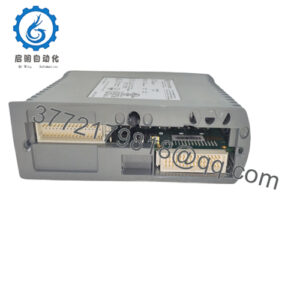
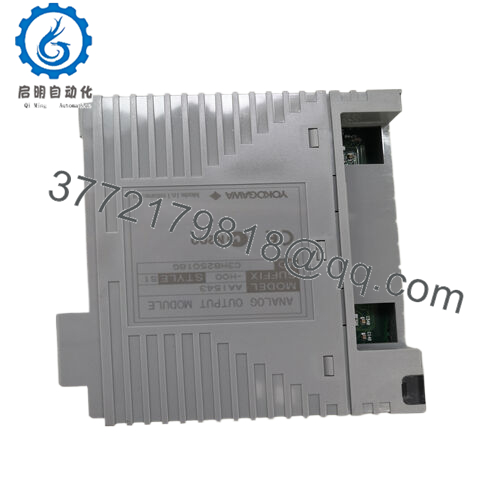
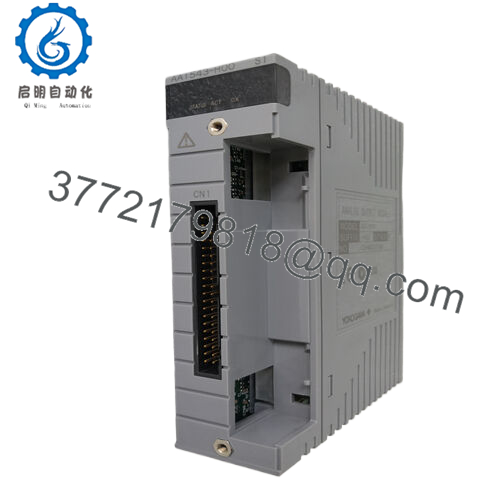
The Yokogawa AAI543-H00 functions as a multichannel analog output module within the field I/O layer of Yokogawa’s CENTUM distributed control systems, converting digital commands from processors or safety controllers into isolated 4-20 mA current signals for downstream actuators like valves or dampers. Housed in an ESB bus node unit (such as ANB10D), it occupies a single slot in the backplane, distributing outputs across 16 independent channels with galvanic isolation up to 1500 V per channel to prevent cross-talk in noisy environments. Each output supports HART overlay for device diagnostics, allowing bidirectional communication over the same wiring, which integrates neatly with upper-tier HMIs for parameter tuning or health monitoring.

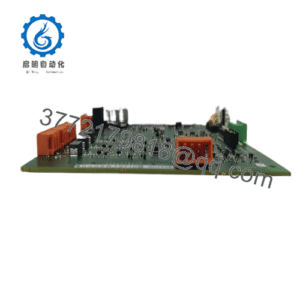
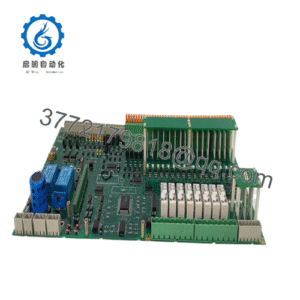
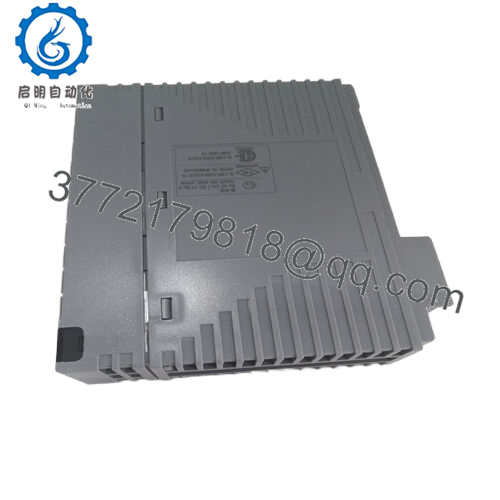
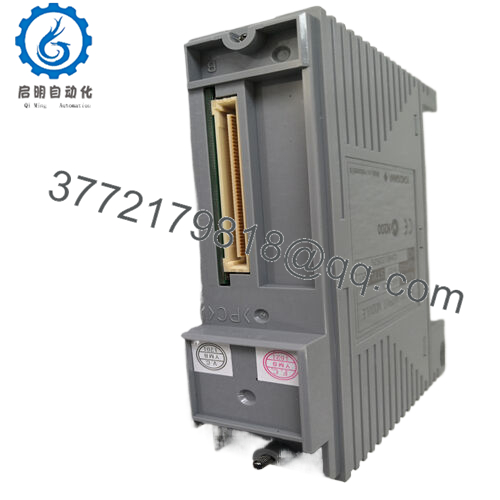
- AAI543-H00
In a full architecture, it draws power from the node interface while relaying status via the ESB bus—dual setups enable automatic switchover in under 100 ms, preserving output continuity during maintenance. It pairs with input modules like AAV141 for closed-loop feedback, forming a resilient I/O subsystem that handles fast scan rates without latency, and complies with protocols like FOUNDATION Fieldbus for hybrid networks. Diagnostics include per-channel fault detection for open circuits or overcurrent, flagging issues to the system console for proactive swaps. Positioned between the control engine and field terminations, the Yokogawa AAI543-H00 ensures precise command execution in modular racks, where its screw-terminal blocks facilitate straightforward wiring in cabinet-based deployments, bolstering overall process control without introducing bottlenecks in data flow or power distribution.
| Specification | Details |
|---|---|
| Model Number | AAI543-H00 |
| Brand | Yokogawa |
| Type | Analog Output Module (16-ch, Isolated) |
| Input Voltage | 24 V DC (from node unit) |
| Operating Temp Range | -40°C to +70°C |
| Mounting Style | Backplane Slot (ESB Bus Node) |
| Dimensions | 35 x 140 x 120 mm (W x H x D) |
| Weight | 0.25 kg |
| Interface/Bus | ESB Bus, HART |
| Compliance | CE, IEC 61131-2, RoHS |
| Supported Protocols | HART, FOUNDATION Fieldbus |
| Typical Power Draw | 8 W (full load) |
Integrating the Yokogawa AAI543-H00 into your setup yields outputs engineered for steadfast accuracy, holding 0.1% span calibration across environmental swings to eliminate the fine-tuning that erodes margins in variable-load processes, ultimately sharpening control responses and curbing energy waste from imprecise actuations. This precision extends to redundancy handling, where mirrored channels sustain operations seamlessly, slashing recovery times and letting operators maintain focus on optimization over crisis management.
On the maintenance front, its self-diagnostic relays pinpoint channel anomalies without full-system scans, streamlining inspections to quarterly checks that keep mean time to repair under an hour—far below non-isolated peers. The module’s plug-in design trims engineering overhead during node expansions; aligning it with existing backplanes involves basic address mapping, not custom cabling, which accelerates scaling while preserving signal fidelity in evolving I/O architectures. By design, it promotes long-term performance through robust isolation barriers that fend off transients, ensuring your DCS investment endures in corrosive or high-EMI zones with minimal degradation, fostering a control ecosystem that’s as adaptable as it is dependable.
In oil and gas refineries, the Yokogawa AAI543-H00 drives valve positioning for flow regulation, where its isolated outputs endure humid, explosive atmospheres to uphold critical system uptime amid 24/7 demands for precise process control.
Pharmaceutical batching plants deploy it for dosing pumps in sterile environments, leveraging HART diagnostics for fast data cycles that verify actuator health, enhancing compliance in high-reliability operations.
Water treatment facilities use this module to command chemical injection systems, meeting needs for continuous uptime under corrosive conditions while supporting modular expansions in expansive I/O networks.
AAI543-S00 – Standard non-redundant variant for single-channel reliability in less critical loops.
AAI143-S00 – 8-channel counterpart for compact setups with halved output density.
AAV141-S00 – Complementary analog input module for balanced I/O in feedback-heavy architectures.
AAI543-H50 – High-speed response edition for applications needing sub-10 ms output settling.
AAI835-H00 – Enhanced 8-channel model with integrated surge protection for harsh transients.
AAT140-S00 – Thermocouple input alternative for temperature-centric process monitoring.
ADV151-P00 – Power supply node unit for powering multiple AAI543 modules in rack expansions.
As you prepare to field the Yokogawa AAI543-H00, scan your ESB node for slot availability and firmware parity—version 5.0 or later ensures HART passthrough without hitches—and gauge terminal block torque to 0.5-0.6 Nm to secure connections against vibration. Factor in derating for loads over 750 ohms per channel, and route output cables away from power lines by at least 200 mm to mitigate induced noise, especially in grounded cabinets.
Routine upkeep centers on visual scans of terminals every six months for corrosion, particularly in damp process areas, followed by a dry wipe-down to preserve isolation integrity. Leverage the node’s diagnostic viewer to log output deviations monthly, cross-referencing against calibration logs to preempt drift. A biannual loop test with a 250-ohm resistor verifies 4-20 mA linearity, and while no field-upgradable parts exist, archiving parameter files aids swift replacements. This targeted regimen sustains peak performance with negligible process interruptions, aligning with your goals for resilient automation oversight.