 WhatsApp: +86 16626708626
 Email:
  Phone: +86 16626708626
Description
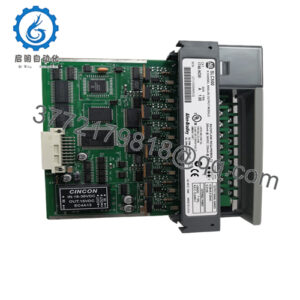
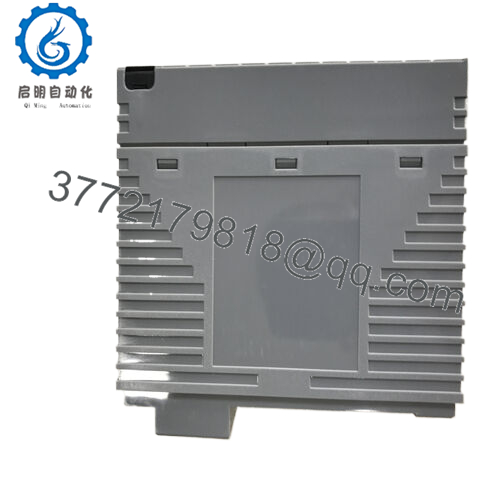
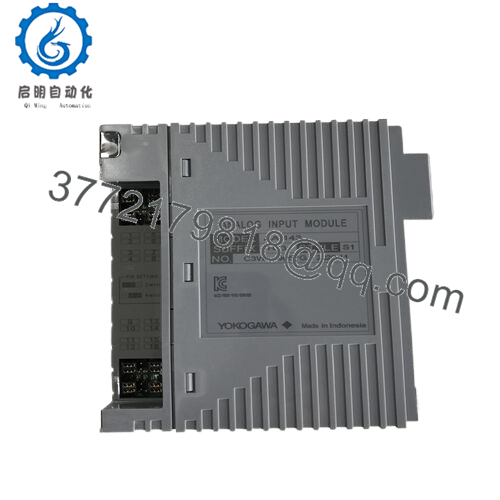
In process control arenas where field sensors feed erratic data into your DCS, risking misinformed decisions or cascading alarms, the Yokogawa AAI143-H53 S1 delivers a precise countermeasure for engineers contending with noisy analog inputs or HART device integration in expansive I/O networks. Envision a steam boiler in a power plant where fluctuating pressure readings from transmitters lead to inefficient fuel burns or safety interlocks tripping falsely, or a mixing tank in pharmaceuticals where current loop drift skews batch recipes—these headaches often root in modules that falter at isolating signals amid EMI or ground potentials. This 16-channel analog input module confronts them by capturing 4-20 mA signals with per-channel galvanic isolation, overlaying HART communication to pull diagnostic overlays without separate wiring, ensuring your data arrives clean and contextualized for reliable control actions.
It becomes a cornerstone in industrial automation like utilities or batch processing, where high reliability in I/O signal acquisition anchors compliance and minimizes variance. The Yokogawa AAI143-H53 S1 mounts into ESB or ER bus nodes, embracing dual redundancy to mirror inputs for seamless failover, so transient glitches don’t derail operations. For those scaling legacy CENTUM VP systems, it accommodates 2-wire or 4-wire transmitters effortlessly, curbing the need for signal conditioners while boosting loop integrity against common-mode voltages. In high-density process control setups, its ISA G3 hardening and extended temperature envelope fend off vibration or heat-induced offsets, letting you extend field cabling without fidelity loss. By emphasizing modular integration and HART passthrough, the Yokogawa AAI143-H53 S1 fortifies system stability, empowering tighter PID tuning and predictive maintenance that aligns with your push for resilient, data-driven automation without the drag of frequent recalibrations.
As you weigh I/O expansions for robust architectures, the Yokogawa AAI143-H53 S1 warrants a look for its blend of channel count and digital smarts, providing the signal reliability that underpins efficient process oversight in EMI-prone environments.
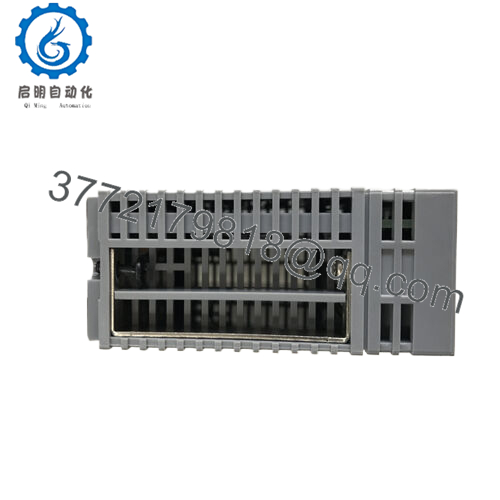
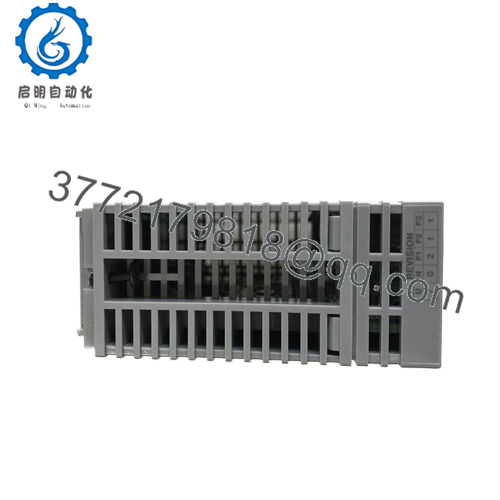
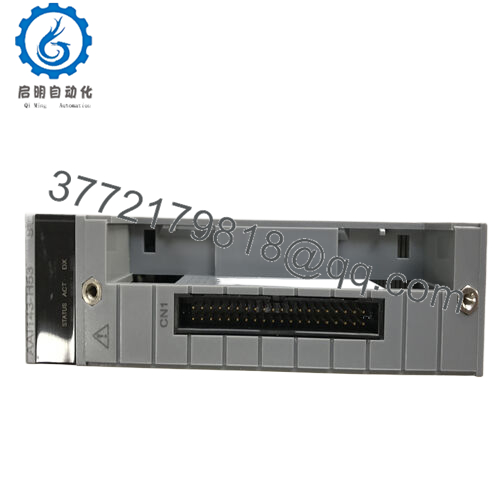
The Yokogawa AAI143-H53 S1 serves as a high-density analog input module in the field I/O stratum of Yokogawa’s CENTUM distributed control systems, digitizing 4-20 mA (or 1-5 V) signals from field transmitters into process variables for upstream processors or safety systems. Installed in a node unit like ANB10D or ANR10S, it claims one backplane slot, with each of its 16 channels featuring 1500 V isolation to shield against noise, plus HART modem support for polling device status, calibration data, or alarms over the same loop—bidirectional without disrupting analog flow. This enables integration with asset management tools, where HART bursts trigger on-demand queries during normal scans.
Power-sourced from the node at 24 V DC, it communicates status and digitized values via the ESB bus, with redundancy wiring allowing a standby module to assume duties in milliseconds upon primary fault detection. It meshes with output counterparts like AAI543 for closed-loop control, handling scan rates down to 100 ms per channel while complying with FOUNDATION Fieldbus for hybrid overlays. Onboard diagnostics scan for wire breaks, overrange, or HART timeouts, routing alerts to consoles for targeted response, and the S1 hardware revision incorporates refined filtering for faster settling in dynamic processes. Nestled between field terminations and control logic, the Yokogawa AAI143-H53 S1 streamlines I/O architecture by consolidating inputs in compact nodes, where screw terminals ease field wiring and its EMC shielding preserves accuracy in backplane-shared setups, cultivating a fault-resilient framework that scales with protocol evolutions like Profibus without rework.

- AAI143-H53 S1
| Specification | Details |
|---|---|
| Model Number | AAI143-H53 S1 |
| Brand | Yokogawa |
| Type | Analog Input Module (16-ch, 4-20 mA, Isolated, HART) |
| Input Voltage | 24 V DC (node-supplied) |
| Operating Temp Range | -20°C to +70°C |
| Mounting Style | Backplane Slot (ESB/ER Bus Node) |
| Dimensions | 35 x 140 x 120 mm (W x H x D) |
| Weight | 0.25 kg |
| Interface/Bus | ESB Bus, HART |
| Compliance | CE, IEC 61131-2, RoHS, ISA G3 |
| Supported Protocols | HART, FOUNDATION Fieldbus |
| Typical Power Draw | 8 W (full load) |
Bringing the Yokogawa AAI143-H53 S1 aboard means harnessing inputs calibrated to 0.05% accuracy that hold steady through thermal cycles or EMI bursts, dodging the offsets that force operators to second-guess trends and intervene manually in sensitive loops, which in turn hones process efficiency and trims variance in outputs like flow or level. This steadfastness pairs with HART’s embedded diagnostics to surface transmitter health proactively, letting your team preempt failures rather than chasing symptoms, often extending asset life by months in monitored fleets.
Redundancy implementation cuts another layer of risk, with automatic handover preserving data streams during swaps to keep MTTR under seconds, a boon for 24/7 sites where even brief input gaps ripple into production halts. The module’s slot-in design lightens integration burdens too—mapping channels via software skips physical reroutes, easing expansions into denser nodes and reallocating engineering time from wiring woes to algorithm refinements. Tailored for endurance in rugged zones, it delivers long-term performance by buffering against surges up to 500 V, ensuring your DCS core stays insulated from field gremlins and adaptable to workflow pivots with minimal footprint creep.
In petrochemical fractionation towers, the Yokogawa AAI143-H53 S1 aggregates temperature and composition signals from distributed sensors, where its isolated channels and HART overlays sustain critical system uptime amid corrosive vapors and high EMI, enabling precise cut-point control in continuous process environments.
Pulp and paper mills harness it for consistency monitoring across wet-end transmitters, leveraging fast-scan HART for real-time diagnostics that curb sheet breaks in humid, vibration-riddled setups, bolstering high-reliability operations.
In semiconductor fabs, this module ingests pressure inputs for etch chambers, meeting sub-micron process control needs under cleanroom constraints with redundant inputs that guarantee uninterrupted data cycles for yield optimization.
AAI143-S53 S1 – Non-HART variant for basic analog acquisition in cost-optimized loops without digital overlays. AAI143-H50 S1 – Standard speed model for general-purpose inputs with slightly relaxed settling times.
AAI543-H53 S1 – Matching 16-channel output counterpart for symmetric I/O in bidirectional control schemes.
AAI143-E53 S1 – Explosion-proof edition for hazardous zones with intrinsic safety barriers.
AAV543-S00 – High-density voltage input alternative for mixed-signal transmitter banks.
AAT145-S00 – RTD/thermocouple module for temperature-focused inputs in thermal processes.
ANB10D – Compatible ESB node unit for housing multiple AAI143 modules in rack builds.
Before slotting the Yokogawa AAI143-H53 S1 into your node, audit backplane firmware for version 6.x compatibility to unlock full HART polling, and torque terminals to 0.5 Nm specs to resist loosening in vibratory mounts—overtightening risks trace cracks. Assess loop resistances under 600 ohms per channel to avert voltage drops, and segregate input wiring from AC lines by 300 mm minimum to starve crosstalk, particularly in shared marshalling trays.
Sustaining it involves semiannual terminal inspections for oxidation in moist areas, using isopropyl wipes to clear residue without bridging contacts. Pull monthly diagnostic dumps from the HIS to chart input linearity against baselines, isolating drifts to specific channels for isolated recalibrations. Biannual end-to-end tests with calibrated sources confirm 4-20 mA fidelity, and though field-swappable, tag modules with install dates for rotation planning. This lean protocol aligns upkeep with operational cadences, warding off degradations that could skew your process baselines.