 WhatsApp: +86 16626708626
 Email:
  Phone: +86 16626708626
Description
In the pulsing heart of industrial power systems, where precision in voltage regulation can make or break grid stability, the ABB XVC768AE101 3BHB007211R102 is a linchpin for seamless operations. Picture a gas-fired power plant in Texas, where turbines roar to meet peak summer demand—here, this module ensures synchronous generators maintain steady excitation, preventing voltage dips that could trip protective relays and darken city blocks. Or envision a steel mill in South Korea, its electric arc furnaces demanding rapid field adjustments to sustain stable melts; the ABB XVC768AE101 3BHB007211R102 delivers precise control to keep arcs consistent, slashing energy waste. It’s equally critical in offshore oil platforms in the North Sea, where compact excitation systems must withstand salt corrosion and vibrations while syncing diesel generators to platform loads. In renewable setups, like solar farms in Rajasthan, it helps inverters match grid phases, smoothing out harmonics that threaten compliance with stringent utility codes.
This module thrives in industrial automation for power electronics, tackling challenges like transient recovery in wind turbines or load sharing in multi-generator setups. Its ability to handle dynamic field currents makes it a favorite in cement plants, where rotary kilns need steady motor torque despite fluctuating material loads. By supporting redundant configurations, the ABB XVC768AE101 3BHB007211R102 minimizes downtime in continuous processes, offering engineers a robust tool for integrating legacy equipment with modern control networks. Whether stabilizing microgrids in remote mining camps or ensuring redundancy in urban data centers, this unit bridges analog power stages to digital precision, making complex systems reliable and predictable.
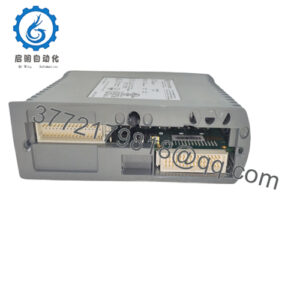
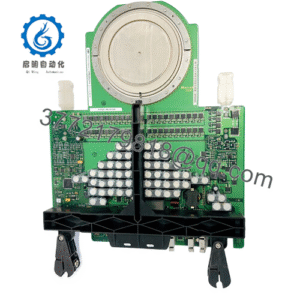
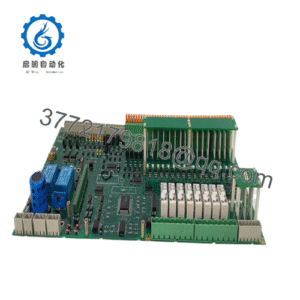
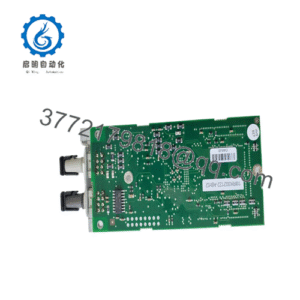
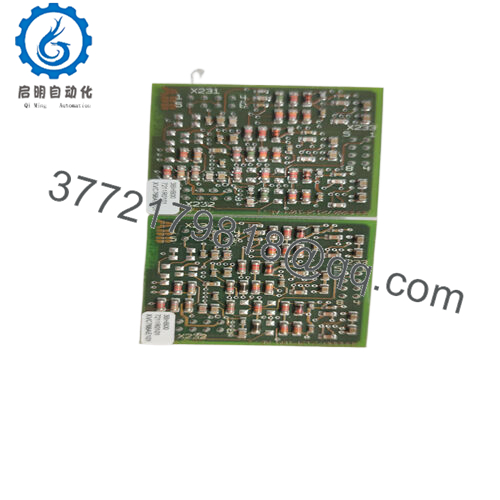
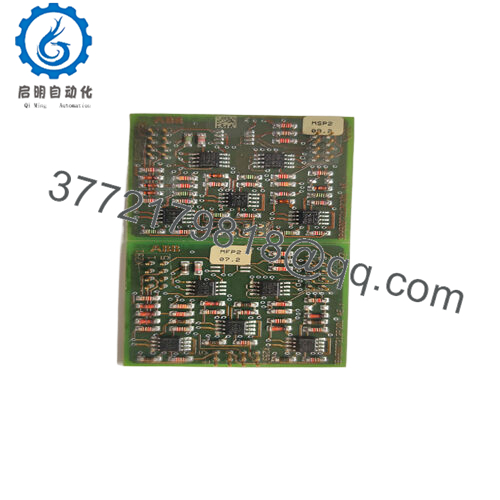
The ABB XVC768AE101 3BHB007211R102 is an analog excitation module within ABB’s Unitrol excitation family, designed to regulate field currents in synchronous machines like generators or large motors. It acts as a high-precision interface, converting digital control signals into stable analog outputs for field windings, typically within Unitrol 1000 or 6000 systems. Mounted in a rack or standalone enclosure, it integrates into distributed control systems (DCS) via fiber-optic or serial links, supporting protocols like IEC 61850 for real-time monitoring. Its role is pivotal in applications requiring tight voltage control, such as hydropower plants or marine propulsion systems, where it ensures rotor stability under variable loads.

- XVC768AE101 3BHB007211R102
- XVC768AE101 3BHB007211R102
Engineers lean on the ABB XVC768AE101 3BHB007211R102 for its compatibility with existing ABB ecosystems, slotting effortlessly into CEX-Bus architectures alongside other modules. It’s a mid-range powerhouse, balancing cost and performance for plants that don’t need SIL-rated safety but still demand uptime. With built-in diagnostics, it flags issues like coil shorts before they escalate, saving hours during commissioning. Its hot-swap capability in redundant setups ensures zero-interruption maintenance, a boon for 24/7 operations like petrochemical refineries. By enabling scalable expansions—think adding parallel generators without rewiring—it offers integrators flexibility to grow systems incrementally, making the ABB XVC768AE101 3BHB007211R102 a pragmatic choice for modernizing aging infrastructure or building resilient new plants.
The ABB XVC768AE101 3BHB007211R102 stands out for its fast response, adjusting field currents in under 5 ms to counter load swings, critical in applications like pulp mills where motor startups spike demand. Its analog output stage delivers up to 300 A with minimal ripple, ensuring smooth rotor performance even during grid faults. The module’s DSP-driven control loop maintains voltage within 0.2% of setpoint, reducing wear on downstream equipment like transformers. Built-in overcurrent protection and fault logging enhance error tolerance, letting operators pinpoint issues without cracking open cabinets.
On the hardware front, the ABB XVC768AE101 3BHB007211R102 is compact yet durable, with a powder-coated chassis that resists humidity up to 95% non-condensing—ideal for tropical or marine settings. Its fanless design uses convection cooling to handle ambients up to 60°C, cutting maintenance by eliminating moving parts. Compatibility is a strong suit, supporting Modbus TCP and CANopen for integration with third-party PLCs, while its analog inputs accept 4-20 mA signals for direct sensor tie-ins. The module’s 15-year design life, backed by ceramic capacitors and derated thyristors, ensures reliability in harsh conditions like mining or offshore rigs. Firmware updates via SD card keep it aligned with evolving grid standards, while diagnostic LEDs simplify troubleshooting, making the ABB XVC768AE101 3BHB007211R102 a low-fuss, high-impact solution.
| Parameter | Value |
|---|---|
| Model | XVC768AE101 3BHB007211R102 |
| Brand | ABB |
| Type | Analog Excitation Module |
| Power Supply | 24 V DC (20-30 V DC range) |
| Operating Temperature | -25°C to +60°C |
| Mounting | DIN rail or rack-mount |
| Dimensions | 130 mm width x 180 mm height x 90 mm depth |
| Weight | 1.5 kg |
| Interfaces | RS485, fiber-optic, 4-20 mA analog inputs |
| Certifications | CE, UL 508, IEC 61850 compliant |
| Cooling | Passive convection |
| Environmental Rating | IP20 (requires enclosure for dust protection) |
XVC768117 3BHB007211R117 – High-power sibling for larger generators, offering enhanced digital control for multi-unit synchronization. XVC768115 3BHB007211R115 – Variant with additional I/O ports, ideal for complex sensor arrays in hybrid setups.
XVC768106 3BHB007211R106 – Lower-capacity model for small-scale turbines, cost-effective for distributed energy systems.
XVC770AE 3BHE006414R0001 – Complementary module for high-current applications, links via shared bus for expanded output. XVC767AE102 3BHB007209R0102 – Redundancy interface unit, enhances failover for critical applications paired with XVC768AE101. CI854AK01 – PROFIBUS interface module, extends fieldbus connectivity for remote I/O integration.
TB840A – Optical ModuleBus adapter, supports long-distance clustering for distributed control layouts.
Installing the ABB XVC768AE101 3BHB007211R102 demands attention to cabinet layout—reserve 60 mm clearance around the module for heat dissipation, especially in vertical mounts where convection is critical. Use shielded cables for analog signals, routing them away from high-voltage lines to avoid EMI, and ground the chassis with 6 mm² copper to a dedicated busbar, torqued to 2 Nm for stability. Verify power supply stability at 24 V DC with a multimeter, ensuring ripple stays below 200 mV to prevent signal noise. For redundant setups, label fiber-optic cables clearly to avoid cross-wiring, and test failover timing during commissioning to confirm sub-10 ms switchovers.
Maintenance is straightforward but disciplined. Every six months, inspect terminal blocks for corrosion, especially in humid climates, and use a soft brush to clear dust from heatsinks. Access the module’s diagnostic logs via Unitrol software to monitor current loop trends, flagging deviations above 2% for investigation. Firmware updates, delivered through ABB’s secure portal, should be applied during scheduled outages—always back up configurations to an external drive first. In dusty environments like cement plants, install enclosure filters and check them quarterly to maintain airflow. Annual calibration of analog inputs ensures accuracy, keeping the ABB XVC768AE101 3BHB007211R102 performing at its peak.