 WhatsApp: +86 16626708626
 Email:
  Phone: +86 16626708626
Description
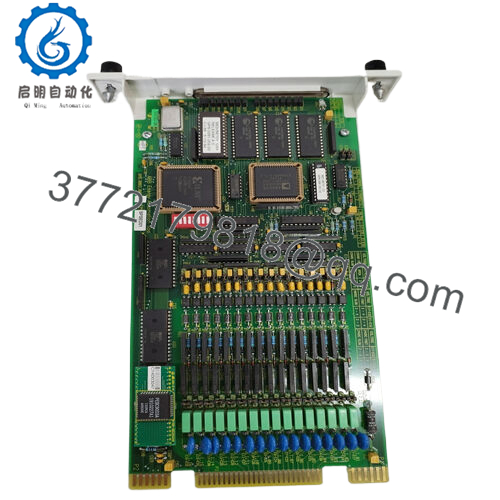
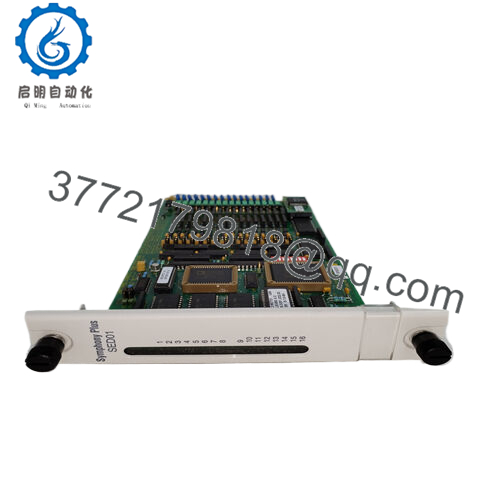
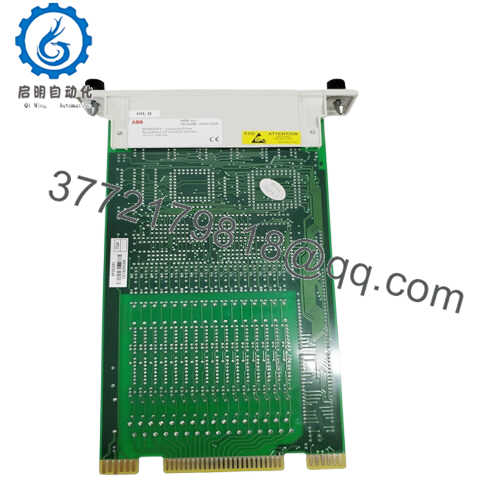
Product Model: SPSED01
Product Brand: ABB
Product Series: Symphony Plus / HR Series I/O – Sequence of Events Digital Input
Product Features:
- 16 independent digital input channels tailored for sequence-of-events (SOE) capture.
- Designed for use in process automation and distributed control systems (DCS) using ABB’s I/O rack architecture.
- Backward compatible with legacy Infi90/IMSED01 modules, simplifying retrofit.
- High-performance, robust design for industrial environments (24 V DC typical, reliable digital input capture).

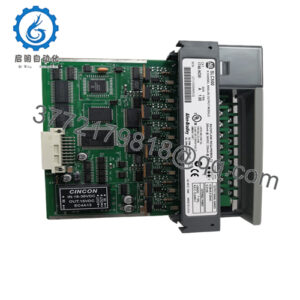
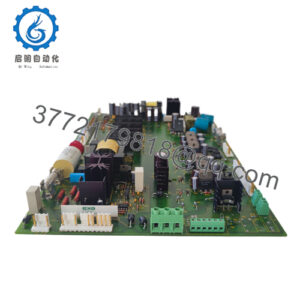
- SPSED01
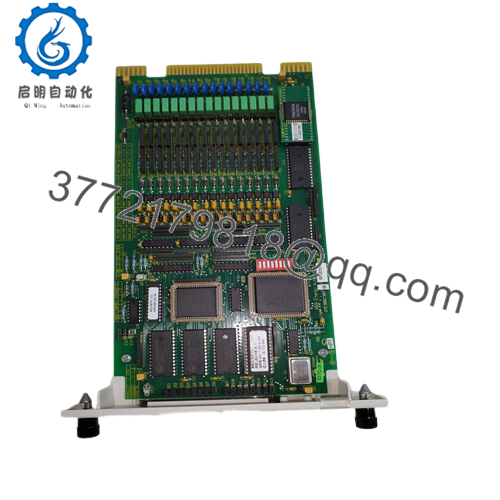
- SPSED01
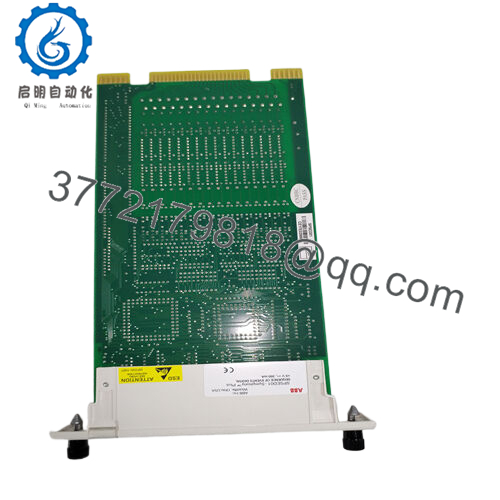
Product Role & System Fit
In a modern industrial automation environment, especially within large process plants—such as power generation, oil & gas, chemical, or water treatment—tracking what happened when is as important as controlling what happens. The SPSED01 module plays a crucial role in this: it is a sequence-of-events (SOE) digital input module that captures changes in digital input signals with precise timestamps, enabling troubleshooting, fault diagnostics, system analysis and asset health tracking.
When installed in a system like the ABB Symphony Plus or legacy Infi 90 rack, the SPSED01 resides in the digital input section of the I/O rack. It receives discrete input signals—often from sensors, field contacts, trip indicators, status outputs—and records when each channel changed state. These inputs are typically critical signals: e.g., breaker open/close contacts, motor starter status, process alarms, field device changes.
From a system fit perspective, SPSED01 plugs into the standard HR-series I/O rack. It interfaces via the backplane bus with the controller or DCS logic system and integrates its timestamped events into the plant historian or operator interface. Because the SPSED01 is backward compatible with the older IMSED01 board in many systems, it can often be dropped into existing systems without rewiring or major reconfiguration.
The importance of this module becomes clear in fault or trip investigations. For example, in a power plant when a generator trips, the sequence of breaker and contactor statuses is captured by SPSED01 channels. Engineers examine the timeline to understand which event preceded which—an invaluable tool for root-cause analysis.
Applications & Industry Context
In large-scale industrial operations, precise event capture is vital. Consider the following typical applications for SPSED01:
- In a combined-cycle power plant, when an electrical fault causes a system drop, the SPSED01 module logs changes in breaker statuses, protective relay signals, pump/fan trips, and auxiliary systems. Operators use this SOE data to trace back the fault path and make improvements to prevent recurrence.
- In a petrochemical plant, safe shutdown logic is triggered by a cascade of events. The SPSED01 module captures discreet field input changes (e.g., valve open, explosion proof sensor signal, fire dampers closed) with precise timing. This helps safety engineers review whether alarms, interlocks and shutdown sequences executed as designed.
- In water/wastewater treatment plants or municipal utilities, when a major pump fails or a valve mis-operates, the SPSED01 records the channel transitions: e.g., pump command, start run feedback, motor overload trip, alternate pump start. Having a clear SOE log means reduced investigation time, fewer false assumptions, and quicker restoration.
- In legacy brown-field sites—say a steel mill with an old Infi 90 system—the SPSED01 is often used as a retrofit module. Because Infi 90 and Symphony Plus share I/O architecture, SPSED01 can be used to replace IMSED01 modules, giving the plant an extended life for its control system.
Across these environments, the SPSED01 helps reduce downtime, enhance forensic visibility, and improve system reliability. In real-world practice, field engineers keep one or two spare SPSED01 boards in stock precisely because a chronic I/O input failure (missing event records) can dramatically hinder fault response time.
Technical Features & Benefits
Let’s explore the technical features of the SPSED01 and why they matter in the field:
16-Channel Digital Input Configuration
The SPSED01 supports 16 independent digital input channels configured for SOE capture.
Benefit: High channel count per module reduces the number of modules needed, centralizing event logging for many field signals.
Sequence-of‐Events Timestamping
Designed specifically for capturing event sequences, the SPSED01 records momentary transitions, enabling precise chronology.
Benefit: Facilitates root-cause analysis and timeline reconstruction of faults or trips—critical for safety & reliability.
Compatibility with Legacy I/O Systems
The SPSED01 is a newer version of the IMSED01 board and fits into the HR I/O rack used in Symphony Plus and older systems.
Benefit: Simplifies maintenance and spare-parts strategy in plants with mixed legacy and current systems—reducing retrofit risk.
Robust Industrial Design
Manufacturers list features such as ± ambient temperature tolerance, industrial grade connectors, and reliable input circuits.
Benefit: Reliable performance even in harsh industrial facilities—high ambient temperature, dust, and vibration environments.
Straightforward Replacement & Maintenance
With plug-in design and standardized form-factor, the SPSED01 module makes field swap-out relatively simple. Engineers have reported replacing suspect modules with minimal system impact.
Benefit: Faster maintenance, reduced downtime, and simpler spare-board logistics.
In a plant scenario, replacing an input board that has logged partial or incorrect events—with a fresh SPSED01—often immediately restores full visibility into field device transitions, reducing investigation time and improving system trust.
Technical Specifications Table
| Specification | Detail / Value |
|---|---|
| Model | SPSED01 |
| Brand | ABB |
| Module Type | Sequence-of-Events Digital Input Module |
| Number of Channels | 16 digital input channels |
| Input Type | Digital inputs (discrete field devices) |
| Platform / Compatibility | ABB Symphony Plus / Infi 90 / HR-series I/O racks |
| Typical Input Voltage | 24 V DC (standard for digital inputs) |
| Replacement / Legacy Model | IMSED01 (legacy board equivalent) |
| Country of Manufacture | India (in some product listings) |
| Typical Lead Time | In stock / 1-2 weeks (for new units) |
| Warranty Typical | 12 months (when purchased new) |
Related Models
Here are modules related to SPSED01 that you might consider:
- IMSED01 – Legacy version of the sequence-of-events digital input module in Infi 90 systems.
- SPDSI14 – Digital input module (non-SOE) for the same I/O rack series.
- SPDSO14 – Digital output module counterpart (16-channel) in the I/O system.
- SPASI11 – Analog input module in the same rack architecture.
- “HR series” I/O modules – general family into which SPSED01 fits.
Installation & Maintenance Insights
From real-world experience, here are practical tips for installing and maintaining SPSED01:
- Pre-installation inspection: Before inserting the module, ensure the I/O rack backplane is clean and that bus connectors are not damaged. Poor contact is a frequent cause of input channel discrepancies.
- Correct wiring and signal monitoring: Since this module logs field events, ensure that each input channel is wired correctly (e.g., dry contacts, appropriate voltage). Field contacts should provide clean transitions; any bounce or noise may result in spurious event logs.
- Power sequencing: When powering up the rack, allow the controller and bus to stabilise before enabling I/O cards. This reduces startup anomalies in event logging.
- Module replacement: If the module is suspected to be faulty (e.g., missing events, jittery transitions), having a spare SPSED01 on hand helps. Because form-factor and wiring match legacy boards, swap-out is relatively fast in many plants.
- Event log review: After installation or during maintenance, review logged events to ensure that all inputs are correctly transitioning and timestamps are consistent. If you spot missing transitions or out-of-order events, investigate wiring or input contact faults rather than the board alone.
- Environmental control: Although the board is industrial grade, maintain recommended ambient conditions—adequate ventilation within the control cabinet, minimal condensation, and protection from dust build-up.
- Spare management: Given the board’s strategic role in SOE logging, keep at least one spare SPSED01 in inventory. Label it clearly (model, revision) and store in static-safe packaging.
- Firmware/revision check: Some plants have multiple revisions of I/O rack boards. Confirm that your spare is compatible in terms of revision and firmware; inaccurate versions may cause unexpected behaviour.
- Documentation and records: After installation, log the board serial number, revision, slot location, wiring channels and date of service. This helps tracking reliability, failures and trends.