 WhatsApp: +86 16626708626
 Email:
  Phone: +86 16626708626
Description
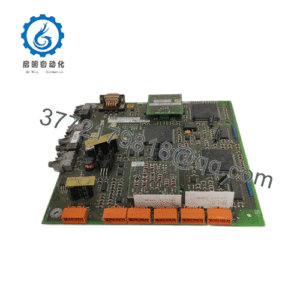
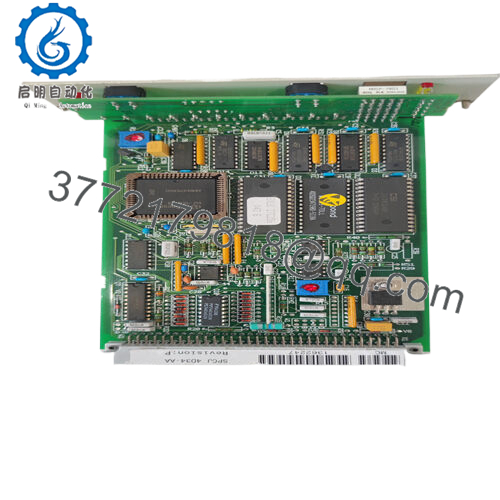
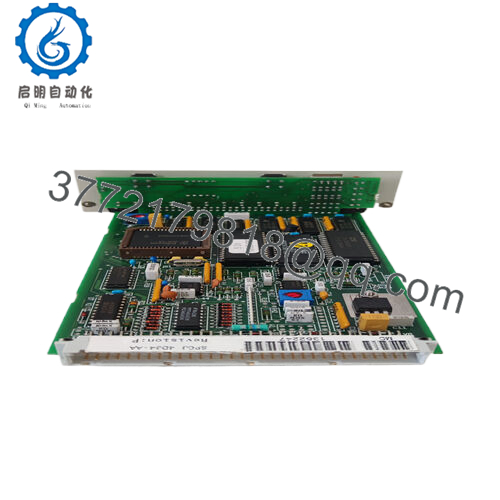
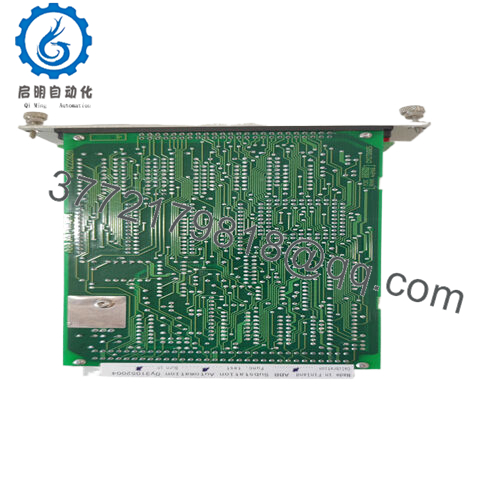
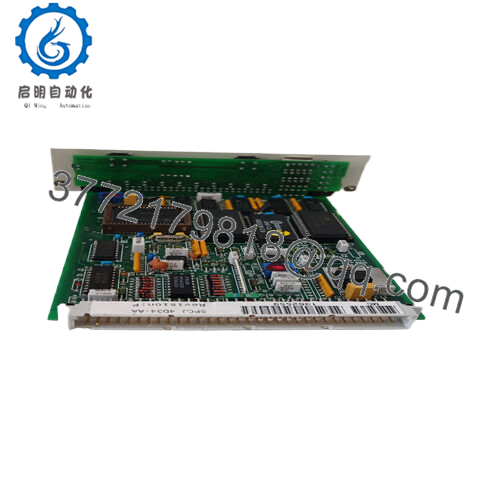
Product Model: SPCJ4D34-AA
Product Brand: ABB
Product Family / Series: SPAM / SPCJ “4D34” Protection Modules
Product Features:
- Modular protection relay interface board used in SPAM 150 C relay systems (overcurrent, earth fault, phase imbalance)
- Supports input currents (1 A / 5 A) and auxiliary voltages between 80–265 V AC/DC
- Continuous self-supervision, diagnostics, and parameterization support via ABB software tools
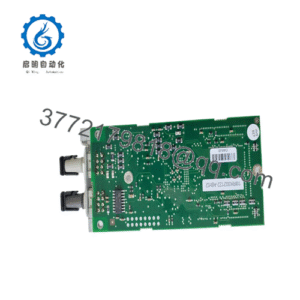
- Compact PCB module often used as part of a larger SPAM relay assembly or retrofit board
Product Role & System Fit
In ABB’s motor protection and protection relay portfolio, the SPCJ4D34-AA module plays a key role as part of the SPAM 150 C relay assembly. The SPAM 150 C is the higher-level multifunction motor protection relay—handling thermal overload, overcurrent (definite / inverse), earth fault, phase imbalance, and single phasing detection.
Within that system, the SPCJ4D34-AA is one of the modular boards (the “SPCJ 4D34” series) that realizes overcurrent and fault detection logic. It receives current transformer (CT) inputs, processes comparative thresholds, and issues trip or alarm signals to the rest of the relay or to external breakers / contactors.
Typically, an installed SPAM 150 C relay comprises:
- The SPCJ 4D34 module(s),
- Input / auxiliary boards,
- Power supply / auxiliary voltage module,
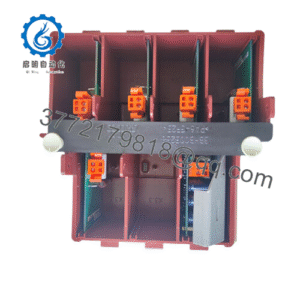
- And the intermodule backplane or enclosure.
Thus the SPCJ4D34-AA fits mechanically and electrically in that ecosystem. For retrofits or replacements, the module must match the same slot, interface connectors, and parameter ranges (thresholds, timing characteristics) as the original. Replacing or upgrading the SPCJ4D34-AA module is often easier than replacing the full SPAM 150 C assembly when one sub-board fails or degrades.
From a systems integrator perspective, when a SPAM 150 C relay trips unexpectedly or shows diagnostic errors, the SPCJ4D34-AA is often among the first to suspect. Its modularity makes swapping or testing easier, provided the replacement board is compatible in revision and version.
Applications & Industry Context
The SPCJ4D34-AA module sees use wherever SPAM 150 C relays are deployed—particularly in medium to large motor protection, feeder protection, or substation automation contexts. ABB’s documentation describes SPAM 150 C as suitable for AC motors, feeders, and transformer protection, with features like three-phase thermal overload, earth fault, phase unbalance detection, and self-diagnostics.

- SPCJ4D34-AA
- SPCJ4D34-AA
For example:
- In a manufacturing plant, large induction motors driving compressors, pumps or fans may be safeguarded by SPAM 150 C relays. If the overcurrent board (SPCJ 4D34) fails or misreads CTs, motor protection functions falter.
- In a mining site, heavy duty motors operated in dusty, humid or corrosive environments need reliable protection modules. The modular nature of SPCJ4D34-AA allows on-site spares.
- In a utility substation, feeders or transformer buses may be monitored by SPAM 150 C. The SPCJ4D34-AA handles the overcurrent/earth-fault functions for those feeders.
- In retrofit or modernization projects, where older SPAM 150 C relays remain in service, operators often replace just the modular boards—such as the SPCJ4D34-AA—rather than the full assembly, to extend service life or improve reliability.
Engineers in the field often mention that failure of just one SPCJ module can render the entire relay inoperative or unreliable, so having matching logic boards, and verifying parameter backups, is crucial. Unlike replacing the full relay which may require recalibration and re-wiring, swapping a single SPCJ4D34-AA often restores full function with minimal system disturbance.
Technical Features & Benefits
Though public datasheets about the specific “-AA” suffix are limited, combining ABB’s published features for SPCJ / SPAM lines with conservative engineering interpretation yields the following likely technical features and benefits:
Multi-Stage Overcurrent & Fault Logic
The SPCJ4D34-AA module implements multiple current threshold zones (low, high, instantaneous) with separate timing curves and logic. Relay logic allows you to tailor protection to motor characteristics and system needs.
Benefit: Fine-tuning of protection ensures the right balance between sensitivity and avoiding nuisance trips.
Earth Fault / Ground Fault Module Option
Within the SPCJ 4D34 family, the unit includes earth/ground fault logic (often with sensitivity and time delay settings). The “4D34” designation in ABB’s documentation associates with “D-type” overcurrent / fault module.
Benefit: Additional protection for motor insulation faults or ground leakage paths.
Diagnostics & Self-Supervision
The module supports continuous hardware and software self-check, detecting internal faults, logic errors, or abnormal sensor inputs.
Benefit: Early detection of module faults, enabling preemptive maintenance and avoiding blind failures.
Parameterization & Data Exchange Capability
Via ABB relay configuration software (often part of the SPACOM / substation automation suite), the SPCJ4D34-AA module parameters can be read, configured, or modified (thresholds, delays, enable/disable features).
Benefit: Easier commissioning, diagnosis, and adjustment without full module replacement.
Compact, Modular PCB Form
The board is designed to be replaceable within the SPAM 150 C relay frame, with standard connectors and backplane interconnects.
Benefit: Simplified maintenance and reduced spare parts complexity — only the defective module, not the entire relay, needs replacement.
Auxiliary Supply Voltage Range
The SPAM 150 C system (hence SPCJ4D34 series) supports auxiliary power input across a broad AC/DC range—approximately 80 to 265 V AC or DC.
Benefit: Flexibility in control cubicle design; compatibility with common power supplies without needing dedicated module variants.
Industry Proven & ABB OEM Heritage
Given its lineage within ABB’s SPAM / SPCJ family, the design has seen long service in many industrial installations. Several aftermarket sellers present SPCJ4D34-AA modules as used or refurbished OEM boards.
Benefit: Reduced risk of surprise behavior compared to unknown “non-OEM” boards.
In practical field operations, swapping a failing SPCJ4D34-AA often restores protection behavior instantly, since the rest of the SPAM 150 C logic, display, and bus interfaces remain intact.
Technical Specifications Table
| Specification | Detail / Value (typical) |
|---|---|
| Model / Designation | SPCJ4D34-AA |
| Associated Relay | SPAM 150 C (Motor / Feeder Protection Relay) |
| Module Type | Overcurrent / fault detection / protection board |
| Current Input | Compatible with 1 A / 5 A CT input ranges |
| Auxiliary Supply | 80 to 265 V AC / DC typical |
| Fault Logic | Low, medium, instantaneous overcurrent, earth fault, phase unbalance |
| Diagnostics | Self-supervision, internal error detection |
| Parameterization | Support via ABB software / SPACOM interfaces |
| Mounting / Interface | Modular PCB in SPAM 150 C frame / backplane connector |
| Environmental Range | Industrial relay ambient ratings (as per SPAM 150 C) |
| Typical Weight | Moderate (module only) — full SPAM relay weight is several kg in documentation |
Related Models
Here are modules or variants you might encounter in the same family or for alternative protection functions:
- SPCJ4D34-DA – alternative suffix variant (revision “DA”) with same functions.
- SPCJ4D34-COAT – potential version with conformal coating for harsh environments (if available)
- SPCJ4D40-AA / D-series – modules with different current / protection ranges (e.g. for capacitive bank protection)
- SPAE / SPAP / other SPAM 150 C boards – Thermal, input / auxiliary boards in the SPAM 150 C system
- Other SPAM 150 C relays – full relay assemblies, for cases where multiple modular boards are replaced rather than just the SPCJ module
Installation & Maintenance Insights
From hands-on practice and knowledge of ABB relay modules, here are tips for installing and maintaining an SPCJ4D34-AA:
- Backup Parameters / Configuration
Before swapping modules, always backup the existing relay configuration (thresholds, delays, logic settings). This ensures the new board continues behavior without unexpected defaults. - Power Off During Replacement
Shutdown auxiliary power and ensure no current signal is applied to CT inputs while inserting or removing the board. Hot swapping can damage connectors or cause transient faults. - Connector & Backplane Inspection
Inspect the edge connectors or backplane contacts for corrosion, dirt or bent pins. Even small contamination can lead to misread CT inputs or erratic protection actions. - Verify CT Polarity & Wiring
Make sure CT inputs (1 A or 5 A line side) are wired correctly. Any reversed polarity or mismatch can cause faulty trip logic. After installation, perform secondary checks for correct directional sense (if applicable). - Commission & Self-Check
Once installed, trigger a self-test or diagnostics cycle (if supported) to verify that internal diagnostics, error flags, and module health are clear. Watch for LED indicators (if module provides them) or software status flags. - Environmental Control & Protection
Operate the module in recommended ambient conditions (temperature, humidity). In aggressive environments (high humidity, salt spray, dust), consider protective enclosures or even coated module versions if available. - Regular Maintenance Checks
Periodically inspect module connections, measure internal temperatures, and verify CT secondary wiring insulation integrity. Use instrumented testing during maintenance windows to validate overcurrent thresholds. - Stock Compatible Revisions
Because ABB relays evolve, ensure your spare SPCJ4D34-AA matches the same revision or is explicitly stated compatible (e.g., -AA suffix). Mismatched revisions can lead to altered timing curves or marginal differences in trip logic.
By following disciplined module handling and wiring practices, the SPCJ4D34-AA can deliver reliable service within SPAM relay systems for many years.