 WhatsApp: +86 16626708626
 Email:
  Phone: +86 16626708626
Description
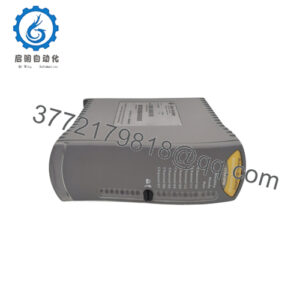
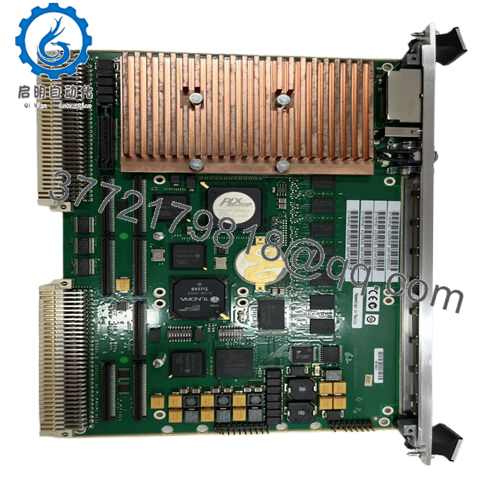
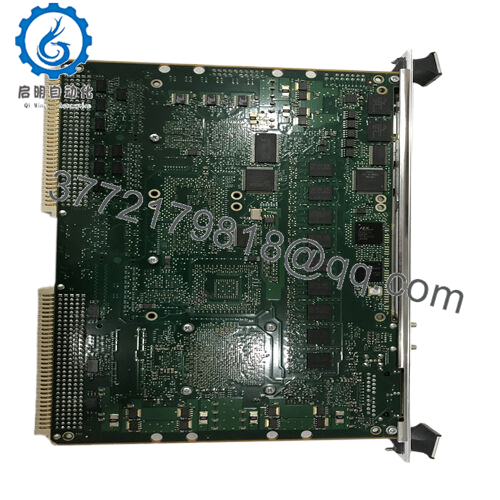
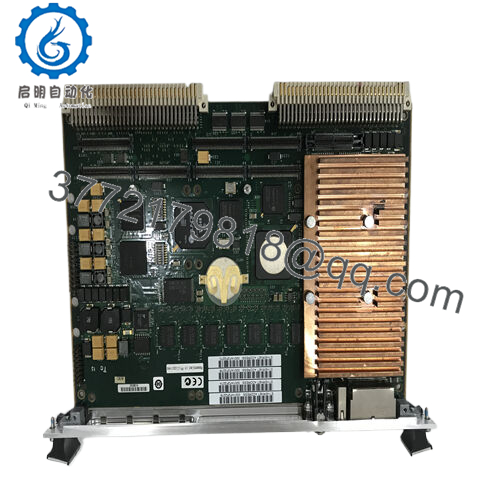
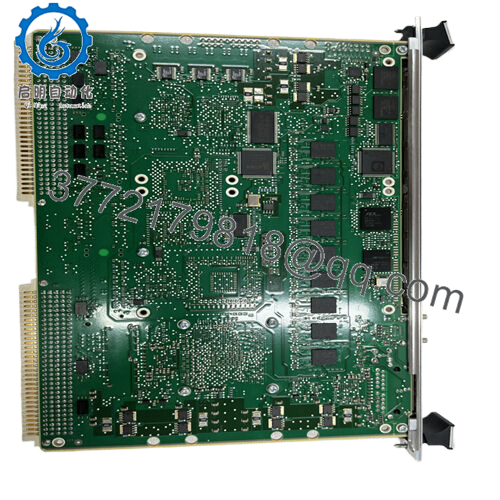
Product Model: Motorola MVME7100
Product Brand: Motorola
Product Series: MVME Series (VMEbus Single-Board Computers)
Product Features:
- PowerPC 8641D dual-core processor for high-speed embedded control
- Supports VxWorks®, Linux®, and RTOS environments
- Dual Gigabit Ethernet ports plus PMC/XMC expansion for maximum flexibility
- Proven industrial reliability in long-life VME installations

- MVME7100
Applications & Industry Context
The Motorola MVME7100 was designed at a time when the demands on embedded computing were rising sharply—when automation, defense, and energy systems needed far more processing power without sacrificing the legendary stability of the VMEbus. It has since become a mainstay across industries where reliability and deterministic performance are not optional but mandatory.
In industrial automation, the MVME7100 often operates as the main system controller in production cells, test benches, and high-precision motion control racks. Its PowerPC 8641D dual-core CPU delivers parallel processing performance, enabling the execution of real-time logic and data-handling tasks simultaneously. On a packaging line, one core may run deterministic motion loops while the other manages HMI and data logging—keeping the line synchronized to the millisecond.
Defense and aerospace programs also rely heavily on the Motorola MVME7100. Its ruggedized VME architecture resists vibration, thermal stress, and electrical noise, making it ideal for radar, sonar, and flight simulation systems. Program managers value that Motorola maintained backward-compatibility with older MVME boards, simplifying upgrades for systems that must remain certified for decades.
Energy and scientific research labs use the MVME7100 to coordinate distributed measurement systems. In a particle-accelerator control setup, for instance, the board’s dual Gigabit Ethernet interfaces allow simultaneous streaming of diagnostic data and command signals with virtually zero packet loss.
These diverse environments share one expectation: continuous uptime. And that’s precisely what the MVME7100 was built for.
Technical Features & Benefits
The Motorola MVME7100 delivers a substantial performance leap over earlier MVME generations while preserving the mechanical and electrical standards that have made VME systems so enduring.
At its heart is the Freescale PowerPC 8641D processor—a dual-core, 64-bit CPU running up to 1.33 GHz. Each core features integrated floating-point and AltiVec™ vector units, making the board ideal for signal-processing and control applications where math throughput matters. The dual-core architecture allows true symmetric multiprocessing (SMP) or asymmetric configurations, giving developers flexibility in how computing tasks are distributed.
Memory architecture is equally robust. Up to 2 GB of DDR2 ECC SDRAM ensures error-free data integrity even in electrically noisy environments. A Flash storage bank holds firmware and boot images, enabling autonomous startup without external storage.
I/O connectivity is a strong point of the MVME7100. The board provides:
- Dual Gigabit Ethernet interfaces for high-speed networking
- Two serial ports (RS-232/422) for console and device communications
- Two PMC/XMC sites for modular I/O expansion
- USB 2.0 and SATA interfaces for external devices
The integration of a Tundra Tsi148 VME-PCI-X bridge provides high-bandwidth, low-latency data exchange with other VME modules. This ensures real-time coordination with I/O or data-acquisition cards, essential for industrial motion and test systems.
The Motorola MVME7100 also offers sophisticated firmware tools for system diagnostics. Built-in Power-On Self Test (POST) routines verify hardware integrity before the operating system even loads. Hardware watchdog timers and onboard temperature sensors add an extra layer of operational security.
From a software standpoint, it’s open and flexible. The controller supports VxWorks®, Linux®, and Integrity RTOS, giving engineers freedom to choose the environment that best suits their applications. Motorola’s BSPs and device drivers are field-tested and well-documented, enabling seamless integration with custom codebases.
In short, the MVME7100 is not just faster—it’s smarter, more reliable, and more maintainable than its predecessors.
Product Role & System Fit
Within a VME chassis, the Motorola MVME7100 typically serves as the system controller or computational hub. It manages data flow across the backplane, coordinates sensor inputs, and directs actuation commands to other boards. Its dual PMC/XMC slots make it flexible enough to handle additional interfaces—ranging from MIL-STD-1553 bus cards to FPGA-based signal processors.
Compatibility is a cornerstone. The board conforms fully to the VME64/VME64x specification, allowing it to coexist with older 68040 and PowerPC-based MVME modules. This backward-compatibility simplifies incremental modernization: users can replace aging processors with the MVME7100 while retaining existing I/O cards and chassis infrastructure.
When paired with Motorola’s transition modules such as the MVME721 series, the MVME7100 provides convenient rear-I/O access for Ethernet, serial, and SCSI connectors—an elegant way to extend legacy system life without redesigning panels.
For high-throughput computing tasks, system integrators often network multiple MVME7100 boards via Gigabit Ethernet or reflective memory channels. This distributed processing approach enables large-scale data acquisition or control networks to perform complex operations in parallel.
Whether it’s a missile test stand, a wafer-handling robot, or a power-plant monitoring system, the MVME7100 serves as the reliable intelligence driving the process.
Technical Specifications
| Specification | Details |
|---|---|
| Processor | Freescale PowerPC 8641D dual-core CPU |
| Clock Speed | Up to 1.33 GHz |
| Memory (DDR2 ECC SDRAM) | Up to 2 GB |
| Flash Memory | 128 MB boot Flash |
| Bus Interface | VME64/VME64x with Tsi148 PCI-X Bridge |
| Ethernet Ports | 2 × Gigabit Ethernet (RJ-45) |
| Serial Ports | 2 × RS-232/422 |
| PMC/XMC Sites | 2 expandable slots |
| USB | 2 × USB 2.0 |
| SATA Interface | 1 × SATA port |
| Operating System Support | VxWorks®, Linux®, Integrity RTOS |
| Power Requirement | +5 V DC, max 25 W |
| Operating Temperature | 0 °C to 55 °C (standard) |
| Form Factor | 6U VME single-board computer |
Installation & Maintenance Insights
Installing the Motorola MVME7100 follows the same principles as earlier VME boards, but its high-speed interfaces reward careful attention to grounding and cabling. Technicians should verify the VME slot configuration and ensure that the board is fully seated in the card guides to prevent connector wear.
Airflow is critical. Although the MVME7100 is efficient, dual PowerPC cores generate more heat than legacy boards. A steady front-to-back airflow of 3 m/s or greater keeps junction temperatures well within spec. Adding dust filters or fan trays extends board life dramatically.
For maintenance, engineers rely on the board’s built-in LED diagnostics and serial console outputs. A red LED indicates watchdog timeouts, while amber signals POST failures—handy for quick troubleshooting without external instruments.
Firmware updates can be applied through Ethernet TFTP servers, a far safer method than manual EPROM replacements of earlier generations. Many users maintain cloned boot images for rapid system recovery—a good best-practice when uptime is paramount.
In environments where boards remain energized for years, periodic inspection every 12 months for electrolytic capacitor health and connector oxidation is recommended. Otherwise, the MVME7100 typically runs maintenance-free.
Related Models
- MVME3100 – Compact PowerPC e500 VME controller for entry-level systems
- MVME4100 – Mid-range PowerPC 8640 board with enhanced I/O options
- MVME2500 – Modern QorIQ P2020 CPU offering higher efficiency
- MVME5500 – PowerPC 7457 processor with extended memory capacity
- MVME6100 – Predecessor to the 7100, offering PowerPC 7448 at 1.3 GHz
- MVME177-005B – Legacy 68060 board for older automation racks
- MVME712M – Transition module for rear-I/O expansion with MVME controllers