 WhatsApp: +86 16626708626
 Email:
  Phone: +86 16626708626
Description
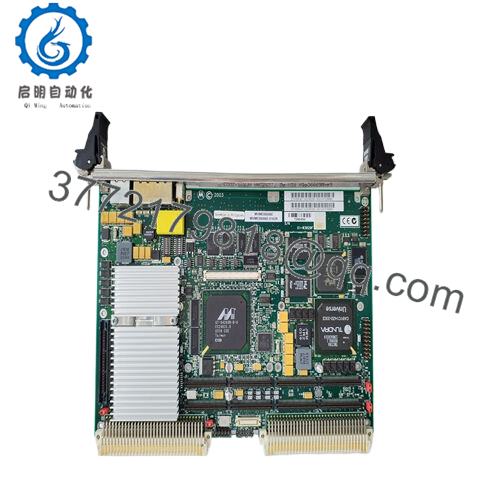
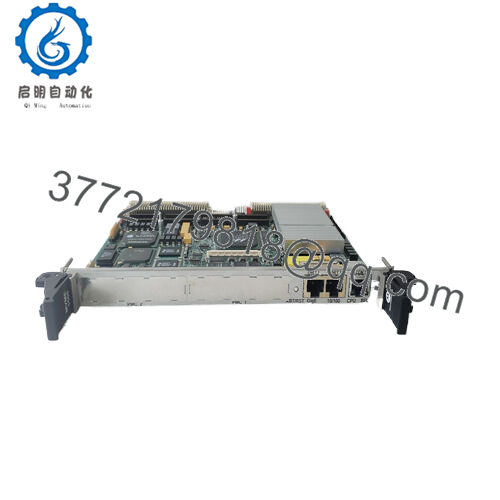
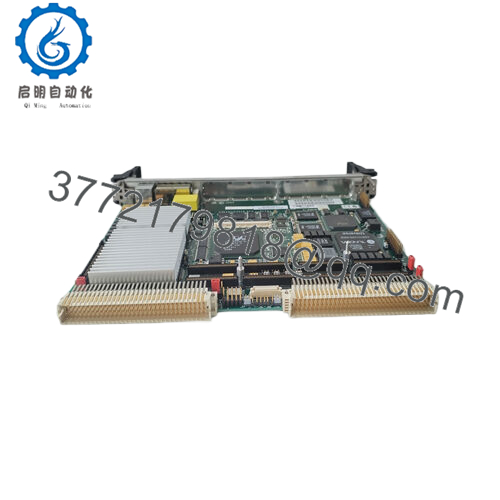
Product Model: Motorola MVME5500
Product Brand: Motorola
Product Series: MVME Series (VMEbus Single-Board Computers)
Product Features:
- Freescale PowerPC 7457 processor with high-speed performance
- Dual Gigabit Ethernet interfaces for reliable networking
- VME64x architecture with Tundra Tsi148 bridge for low-latency data transfer
- Long lifecycle and proven reliability in industrial and defense systems

- MVME5500
Product Role & System Fit
The Motorola MVME5500 serves as a core processing element in VME-based automation, defense, and scientific systems. It is a 6U VME64x single-board computer designed to deliver stable, high-performance computing for applications where downtime is not an option.
Within a VME chassis, the MVME5500 often operates as the system controller. It manages inter-board communications, executes control logic, and coordinates timing-critical operations across a distributed network of I/O and motion modules. The board’s Tundra Tsi148 PCI-X bridge ensures fast, deterministic data exchange with other VME components—essential for process control and testing environments that require microsecond synchronization.
Compatibility remains one of its greatest strengths. The MVME5500 continues Motorola’s commitment to backward integration, supporting legacy MVME boards while providing the headroom needed for next-generation applications. Whether replacing older MVME2300 or MVME5100 units, users can upgrade to the MVME5500 with minimal software modification thanks to a consistent architecture and software support for VxWorks®, Linux®, and other embedded operating systems.
System integrators appreciate the flexibility of its dual PMC sites, which allow the addition of I/O, communication, or FPGA-based expansion modules. This modularity lets engineers tailor the board to specific roles—ranging from data acquisition controller to mission computer.
Applications & Industry Context
The Motorola MVME5500 found its place in some of the most demanding industries: defense simulation, semiconductor manufacturing, scientific instrumentation, and industrial automation.
In aerospace and defense systems, the MVME5500 frequently acts as the mission computer or control processor. Rugged design and extended temperature tolerance make it suitable for embedded roles in radar control units, naval automation consoles, and flight simulators. Many programs have extended their operational lifecycles by migrating legacy MVME systems to the MVME5500, achieving higher processing throughput while maintaining VME hardware certification.
Industrial automation plants use the MVME5500 to coordinate multi-axis motion systems, robotic arms, and safety interlocks. Its PowerPC 7457 processor, running up to 1 GHz, handles real-time control loops with ease, ensuring tight synchronization across multiple axes and sensors. The deterministic performance of its Tundra bridge and fast Ethernet channels ensures no packet drops or unpredictable latencies—a must for precision control.
In scientific research labs, particularly those managing particle accelerators or large-scale telescopes, the MVME5500 operates as a data aggregator and supervisory controller. Researchers value its reliability—these systems often run continuously for years, and downtime can mean loss of valuable experiment data.
Anecdotally, field engineers often mention that the MVME5500 “just keeps running.” Its proven combination of speed and robustness makes it a trusted backbone for installations that must stay live 24/7.
Technical Features & Benefits
The Motorola MVME5500 builds on Motorola’s long-standing experience with VME architecture while integrating modern computing power and connectivity.
At its heart lies the Freescale PowerPC 7457 processor—a 32-bit, high-performance CPU featuring on-chip L2 cache and AltiVec™ vector processing. With clock speeds up to 1 GHz, it offers significant computational throughput for signal analysis, image processing, or real-time automation.
Memory capacity is generous: up to 1 GB of DDR ECC SDRAM, ensuring fast, error-corrected data handling. Additional Flash memory stores boot firmware and system configurations, allowing for self-contained startup without external disks.
Connectivity is another highlight. The MVME5500 offers:
- Two Gigabit Ethernet ports for high-speed networking or redundancy setups
- Four serial ports (RS-232/422) for device or console connections
- Two PMC expansion sites for additional I/O or FPGA-based custom modules
- USB 2.0 interface for peripheral devices
- ATA/IDE interface for legacy storage integration
The Tundra Tsi148 VME-PCI-X bridge serves as the board’s backbone for VME communications, providing high bandwidth and low latency. This bridge maintains compatibility with legacy VMEbus cycles while supporting advanced block transfers and DMA chaining for improved efficiency.
Software support includes BSPs for VxWorks®, Linux®, and other embedded RTOS environments. Motorola’s long history of field-tested BSPs ensures developers can deploy the MVME5500 with minimal integration effort, whether in existing codebases or new developments.
Hardware reliability features include ECC memory protection, watchdog timers, onboard temperature monitoring, and Power-On Self-Test (POST) diagnostics. Together, these make the MVME5500 a resilient and maintainable platform for long-duration deployments.
Technical Specifications
| Specification | Details |
|---|---|
| Processor | Freescale PowerPC 7457 |
| Clock Speed | Up to 1 GHz |
| Memory (DDR ECC SDRAM) | Up to 1 GB |
| Flash Memory | 64 MB for boot and firmware storage |
| Bus Interface | VME64/VME64x with Tundra Tsi148 bridge |
| Ethernet Ports | 2 × Gigabit Ethernet (RJ-45) |
| Serial Ports | 4 × RS-232/422 |
| PMC Expansion | 2 sites for PCI Mezzanine Cards |
| USB Interface | 1 × USB 2.0 |
| Storage Interface | 1 × ATA/IDE connector |
| Operating System Support | VxWorks®, Linux®, and RTOS environments |
| Power Consumption | Approx. 25 W at +5 V DC |
| Operating Temperature | 0 °C to 55 °C (standard range) |
| Form Factor | 6U VME single-board computer |
Installation & Maintenance Insights
Installing the Motorola MVME5500 is straightforward for any technician experienced with VME hardware, but several best practices can enhance performance and longevity.
First, ensure that the chassis provides adequate airflow. The PowerPC 7457 processor runs efficiently, but thermal management remains crucial in densely packed VME racks. Maintain front-to-back cooling airflow at approximately 3 m/s to keep the board’s temperature margin within its rated range.
Before insertion, check that the VME backplane slot corresponds to the system controller position—typically slot 1. Misplacing the board can cause bus conflicts or boot failures. Handle the board by its edges and use anti-static protection at all times.
Upon power-up, the MVME5500 performs automatic diagnostics and POST routines. Watch the status LEDs; a solid green indicates a successful boot, while amber or red signals a hardware fault. The onboard serial port offers console access to BIOS-level setup and system tests, which can be invaluable for troubleshooting.
Firmware and boot images can be updated over Ethernet using TFTP or via onboard Flash utilities. Motorola recommends verifying the checksum after each update to ensure data integrity.
For ongoing maintenance, periodic inspection for dust buildup, connector wear, and capacitor aging should occur annually. With proper care, these boards often operate flawlessly for 10 years or more in continuous service.
Related Models
- MVME162-512A – Compact 68040-based board for legacy automation systems
- MVME2300 – Entry-level PowerPC VME controller with reduced I/O
- MVME5100 – Predecessor model using PowerPC 7410 CPU
- MVME6100 – Enhanced dual-Gigabit version with faster PCI-X performance
- MVME7100 – Dual-core PowerPC 8641D board offering significant upgrade potential
- MVME8100 – Advanced QorIQ-based VME processor with modernized architecture
- MVME721 – Transition module providing rear I/O for MVME5500 installations