 WhatsApp: +86 16626708626
 Email:
  Phone: +86 16626708626
Description
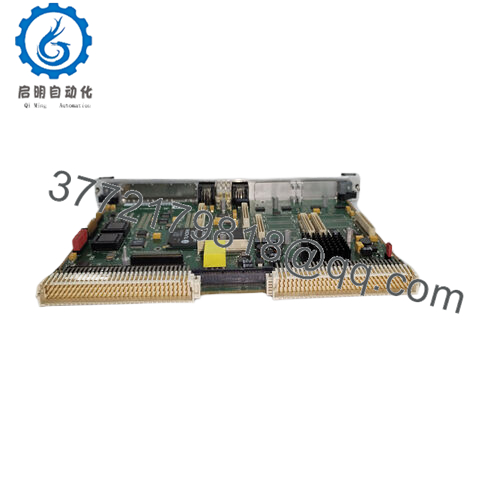
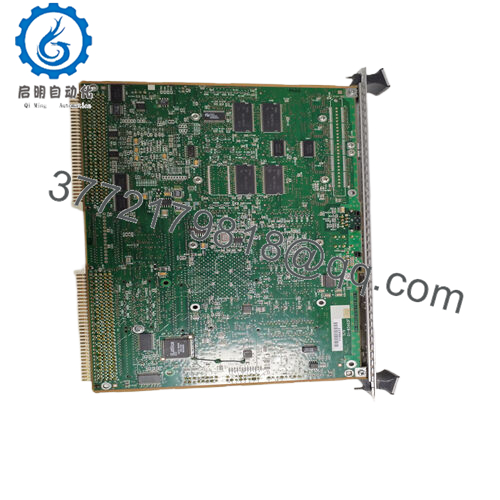
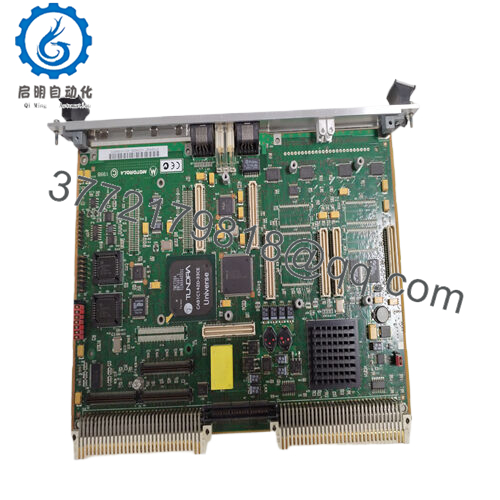
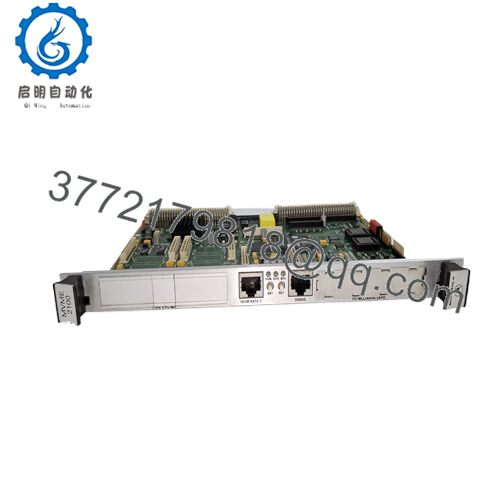
Product Model: Motorola MVME2100
Product Brand: Motorola
Product Series: MVME Series (VMEbus Single-Board Computers)
Product Features:
- Compact and rugged PowerPC-based embedded computer for VME systems
- Designed for real-time control, automation, and industrial networking
- Dual Ethernet ports, SCSI, and serial I/O for maximum connectivity
- Reliable, long-life platform with wide OS compatibility and field-proven stability
Applications & Industry Context
The Motorola MVME2100 has earned its place in control cabinets and computing racks across factories, laboratories, and defense installations around the world. It’s the kind of board that quietly powers the backbone of industrial automation—machines that have to run for decades without a reboot or a second thought.
In industrial automation, the MVME2100 is used as the brain inside robotic control systems, production lines, and motion controllers. The VMEbus interface provides robust data throughput and deterministic timing, ensuring the controller responds to field signals and sensor data without delay. When a motor drive needs precise feedback or a pick-and-place robot requires sub-millisecond synchronization, this board delivers exactly that level of performance.
Beyond factory floors, the MVME2100 has also been adopted in military and aerospace programs. Its stable PowerPC architecture and rugged design make it ideal for radar control systems, data acquisition racks, and mission simulation platforms. Defense engineers appreciate that Motorola’s VME lineage guarantees long-term part consistency and firmware support—a major factor when platforms must remain certified for decades.
Research laboratories and energy facilities use the MVME2100 to coordinate instrumentation, log experimental data, and manage process equipment. Its ability to integrate both modern Ethernet networks and legacy serial links bridges two generations of control architecture—a feature that continues to make it valuable even today.
The MVME line has always emphasized longevity, compatibility, and deterministic performance, and the MVME2100 remains one of the most balanced examples of that philosophy.
Technical Features & Benefits
At the heart of the Motorola MVME2100 lies a PowerPC 603e processor, offering a balance of performance and efficiency ideal for embedded control systems. Running at speeds up to 300 MHz, this CPU provides smooth multitasking capabilities while maintaining low power consumption and minimal heat output—an important advantage in enclosed VME racks.
The system memory architecture includes up to 256 MB of ECC DRAM, ensuring reliable operation even in electrically noisy environments. A generous Flash memory section allows local firmware storage, making the board suitable for stand-alone boot and autonomous applications.
I/O flexibility is a defining characteristic. The MVME2100 features:
- Dual 10/100Base-T Ethernet interfaces for redundant or segmented networking
- Dual serial ports configurable for RS-232 or RS-422 communication
- A parallel port and SCSI interface for legacy equipment integration
- PMC expansion slot for custom I/O or specialty communication adapters
For integrators, these options mean the MVME2100 can function as a control node, data concentrator, or protocol gateway—all within the same hardware footprint.
Another notable advantage is software versatility. The board supports multiple real-time operating systems such as VxWorks, LynxOS, and embedded Linux, ensuring developers can leverage familiar environments without rewriting core control logic. Motorola’s BSP (Board Support Package) provides ready-to-use low-level drivers, further simplifying application deployment.
Electrical and mechanical design integrity are classic Motorola hallmarks. The MVME2100 uses a six-layer PCB for excellent signal integrity, gold-plated VME connectors for durability, and strategically placed heat sinks to promote uniform cooling. A built-in hardware watchdog and onboard diagnostics enable self-recovery and early fault detection.
In essence, this board represents the sweet spot between computational performance, energy efficiency, and industrial resilience.

- MVME2100
Installation & Maintenance Insights
Installing the Motorola MVME2100 is straightforward for anyone familiar with VMEbus systems, but attention to detail pays dividends. Always verify that the VME backplane slot is properly addressed and that the board’s configuration jumpers match the system layout. Inserting the card evenly into the guides prevents contact stress—a small precaution that extends both board and backplane life.
Cooling is often the most overlooked factor. While the MVME2100 runs efficiently, continuous operation inside sealed industrial enclosures demands consistent airflow. A simple addition of a filtered fan tray can dramatically reduce thermal cycling and extend MTBF.
Maintenance routines are minimal yet critical:
- Periodically clean dust from airflow paths and connectors.
- Inspect capacitors and solder joints during scheduled shutdowns.
- Use the built-in LED indicators and serial console to monitor health status.
When firmware updates are required, most operators use a serial or Ethernet-based loader to flash new boot code—no need for physical intervention. And in mission-critical environments, having a preconfigured backup MVME2100 ready for swap-out ensures downtime stays near zero.
Field engineers consistently report that the board’s predictable boot behavior and simple diagnostics make troubleshooting nearly effortless—one of the understated reasons it’s been deployed for decades in facilities where reliability matters most.
Product Role & System Fit
Within the broader architecture of a VME system, the Motorola MVME2100 often serves as the system controller or host processor. It coordinates data flow between I/O modules, executes control algorithms, and provides supervisory communication to higher-level SCADA or MES software. The VMEbus design allows the CPU to directly manage other boards over a parallel backplane interface, ensuring deterministic communication and fast data exchange.
What sets the MVME2100 apart is its balance between legacy compatibility and modernization potential. It can replace older Motorola 68040-based boards like the MVME162 or MVME172, giving existing systems a measurable performance boost while preserving I/O and software investment. Because it supports the same physical form factor and many identical I/O pinouts, system upgrades can often be done with zero mechanical redesign.
In more modern hybrid installations, the MVME2100 works as a network gateway between real-time VME controllers and newer Ethernet-based subsystems. Engineers can offload network traffic to one Ethernet port while reserving the other for control communications—keeping critical timing loops isolated from external traffic.
This modular adaptability has made the MVME2100 a favorite among OEMs seeking longevity without re-engineering. Its role is not to chase cutting-edge specs but to provide dependable, maintainable embedded computing where consistency is the real value.
Technical Specifications
| Specification | Details |
|---|---|
| Processor | PowerPC 603e microprocessor |
| Clock Speed | 250–300 MHz |
| Main Memory | Up to 256 MB ECC DRAM |
| Flash Memory | 16 MB onboard for firmware |
| Bus Standard | VMEbus (IEEE 1014 compliant) |
| Ethernet | Dual 10/100Base-T ports |
| Serial Ports | 2 × RS-232/422 configurable |
| Parallel Port | 1 × IEEE 1284 compatible |
| SCSI Interface | Ultra SCSI |
| Expansion Slots | 1 × PMC (PCI Mezzanine Card) slot |
| Supported OS | VxWorks, LynxOS, Embedded Linux |
| Power Input | +5 V DC |
| Cooling | Forced-air recommended |
| Operating Temperature | 0 °C to 55 °C standard; -40 °C to 70 °C extended |
| Form Factor | 6U VME single-board computer |
Related Models
- MVME162-512A – Legacy 68040 VME controller for older automation systems
- MVME172-263260 – 68060 CPU with enhanced floating-point capabilities
- MVME177-005B – VME controller with dual Ethernet and high-speed performance
- MVME2400 – Next-generation PowerPC board offering higher bus bandwidth
- MVME2434 – Enhanced PowerPC 750 variant with expanded memory support
- MVME5100 – Advanced PowerPC SBC with faster I/O throughput
- MVME5500 – Latest generation with PowerPC 7457 processor and DDR memory
- MVME712M – Transition module for extended I/O connectivity