 WhatsApp: +86 16626708626
 Email:
  Phone: +86 16626708626
Description
Real-World Use & Application Scenarios
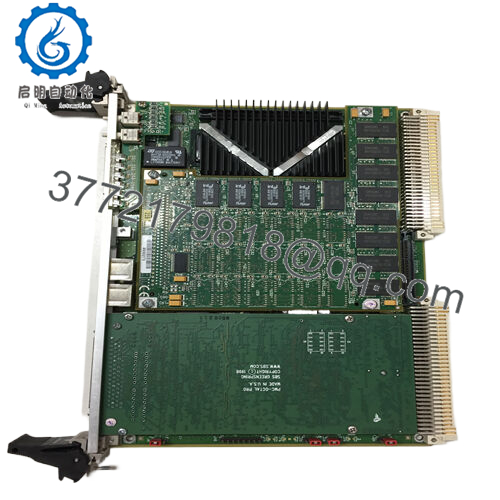
The Motorola MVME2700-761 is a high-performance, ruggedized single board computer designed for demanding industrial automation and embedded control tasks frequently encountered in aerospace, military, telecommunications, and sophisticated manufacturing systems. It serves in environments where computational power must reliably coexist with harsh conditions such as vibration, temperature extremes, and electromagnetic interference common in defense and industrial control applications. This model excels in real-time data processing, control system management, and communication gateway functionalities. The MVME2700-761 is widely used in systems requiring multi-protocol serial communication, fast Ethernet networking, and high-speed storage or mass data transfer via SCSI interfaces, fitting naturally into modern VMEbus-centric control architectures.
Engineers and integrators rely on the Motorola MVME2700-761 for its balance of processing efficiency, industrial-grade robustness, and extensive I/O flexibility, which addresses challenges of evolving control systems that demand increased data throughput, communication diversity, and system uptime. It is considerably applicable in control systems that implement distributed intelligence, remote monitoring, and integrated device control — all pivotal in modern industrial automation.
Product Introduction & Positioning
The Motorola MVME2700-761 is part of the MVME2700 family, featuring a PowerPC 750 32-bit microprocessor clocked at up to 266 MHz, supplemented by 32KB L1 instruction and data caches and a substantial 1MB L2 backside cache. This single board computer is designed as a single-slot VMEbus module that integrates seamlessly into industrial control and embedded computing systems. Its architecture supports modular memory expansion with ECC-protected DRAM ranging from 16MB to 256MB via RAM200 mezzanine modules, making it suitable for applications requiring large memory footprints and error-corrected data integrity.
The MVME2700-761 is uniquely positioned through its inclusion of the MVME761 transition module, which provides essential I/O ports such as industry-standard Ethernet (10/100BaseT), parallel port interfaces, high-speed SCSI connectivity, and multiple configurable serial ports to support synchronous and asynchronous communication protocols. This module is highly valued by engineers who require an integrated solution for communications and control, suitable for legacy system compatibility as well as next-generation VMEbus platform deployments.
Key Technical Features & Functional Benefits
The PowerPC 750 microprocessor on the Motorola MVME2700-761 is built for optimal throughput, delivering robust integer and floating-point performance that supports complex control and signal processing calculations with low latency. The processor’s integrated L1 and L2 cache architecture facilitates rapid instruction execution and data access, boosting overall system efficiency for real-time applications.

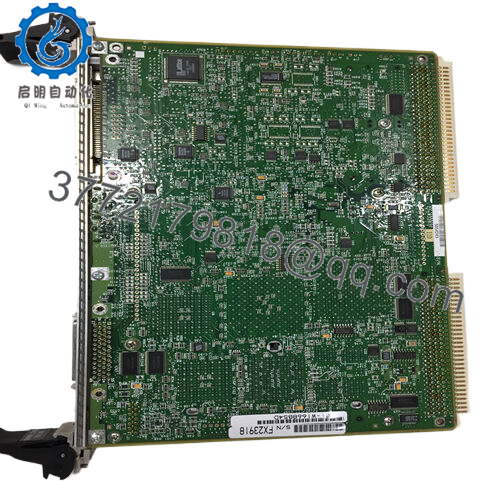
- MVME2700-761
The board supports dynamic memory expansion using RAM200 expansion modules, allowing field upgrades up to 256MB of ECC DRAM, which ensures data memory integrity through error detection and correction—a critical feature in mission-critical automation systems. The inclusion of a 1MB flash memory offers local firmware storage, reducing dependency on external devices and enhancing system robustness.
The integration of the MVME761 transition module enhances the MVME2700-761’s physical connectivity by offering multiple serial ports configurable as EIA-232, EIA-530, V.35, or X.21, a Fast SCSI interface supporting high-speed data transfer, an IEEE 1284-compatible parallel port, and an RJ-45 10/100BaseT Ethernet port. This combination of connectivity options supports diverse device interfacing and network communications crucial in multi-device industrial systems. The board’s rugged design with standard forced air cooling and industrial certifications ensures long-term stability in challenging environments.
Detailed Technical Specifications
| Parameter | Value |
|---|---|
| Model | Motorola MVME2700-761 |
| Brand | Motorola |
| Product Type | Single Board Computer (VMEbus module) |
| Processor | PowerPC 750 32-bit microprocessor |
| Processor Speed | 266 MHz |
| Cache (L1) | 32 KB instruction + 32 KB data cache |
| Cache (L2) | 1 MB backside cache |
| Onboard Memory | 16MB–256MB ECC-protected DRAM via RAM200 modules |
| Flash Memory | 1 MB onboard flash memory |
| I/O Interfaces | MVME761 transition module: 10/100BaseT Ethernet, 2 asynchronous serial ports, 2 synchronous serial ports, Fast 16-bit SCSI, parallel port (IEEE 1284 compatible) |
| Power Supply | +5V, +12V, -12V with typical consumption ~7.5W per PMC slot |
| Operating Temperature | 0° to 55° Celsius (forced air cooling) |
| Mounting | Single-slot VMEbus module |
| Dimensions | 233.4 mm (H) × 160 mm (D) × 19.8 mm (W) |
| Weight | Approximately 0.55 kg |
| Certifications | FCC Class A, industrial-grade |
| Cooling | Forced air recommended |
| Environmental Rating | Industrial-grade, moisture and dust tolerant |
Related Modules or Compatible Units
MVME2700-712M – Transition module variant with different I/O configuration for specialized legacy systems.
MVME172P2 – Compatible single board computer featuring MC68060 processor for lower power applications.
MVME167-33B – A similar Motorola VME single board computer with MC68040 processor, for alternative performance needs.
MVME761 – Standalone transition module providing connectivity options similar to those integrated on the 2700-761.
MVME162-213 – Another VMEbus single board computer optimized for compact embedded automation systems.
MVME177 – High-performance VME CPU with advanced processing capabilities.
Installation Notes & Maintenance Best Practices
Installation of the Motorola MVME2700-761 requires verifying the compatibility of the VMEbus chassis to accommodate single-slot modules and ensuring adequate forced air cooling to maintain operational temperatures within industrial limits. It is important to ensure proper grounding to reduce electromagnetic interference that could impact communications through the Ethernet, SCSI, and serial interfaces. Allow clearance for the MVME761 transition module ports and cables for easy maintenance and troubleshooting access.
Routine maintenance should include checking air filters and ventilation paths to prevent overheating from dust accumulation. Monitor system health using built-in diagnostic LEDs and software tools that can report board status and fault conditions. Firmware updates should be managed carefully following manufacturer guidelines to maximize system uptime and to introduce improvements and security patches. Detailed record-keeping of firmware versions and system configurations will aid in future troubleshooting and audits.