 WhatsApp: +86 16626708626
 Email:
  Phone: +86 16626708626
Description
Real-World Use & Application Scenarios
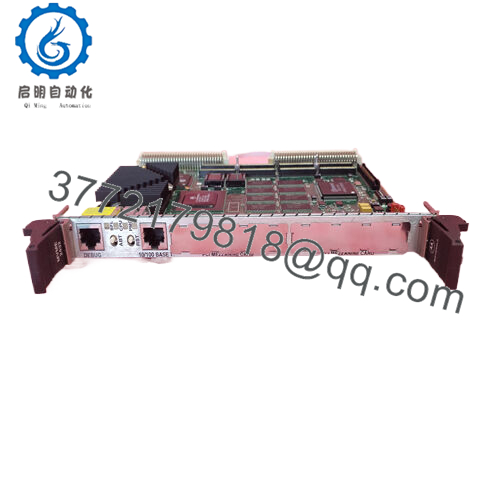
The Motorola MVME2432 is employed in high-demand industrial automation, aerospace, defense, and telecommunications applications that require reliable, high-performance embedded processing within VMEbus systems. This single board computer thrives in environments managing real-time control, complex data acquisition, networking, and communications. Engineers choose the Motorola MVME2432 for its capability to support multi-protocol data exchange, advanced interrupt handling, and high-speed Ethernet connectivity, all essential in systems where continuous uptime and data integrity matter. It is commonly integrated into control racks for sophisticated manufacturing lines, military communications, or avionics systems where mission-critical operations and environmental robustness are mandatory.
The industrial contexts this board serves often involve challenging operating conditions such as wide temperature ranges, vibration, and moisture, demanding resilient hardware with error-correcting memory and self-diagnostic features. The Motorola MVME2432 helps automation engineers meet these rigorous requirements, providing processing power with flexibility that suits customized solutions and long-term system scalability.
Product Introduction & Positioning
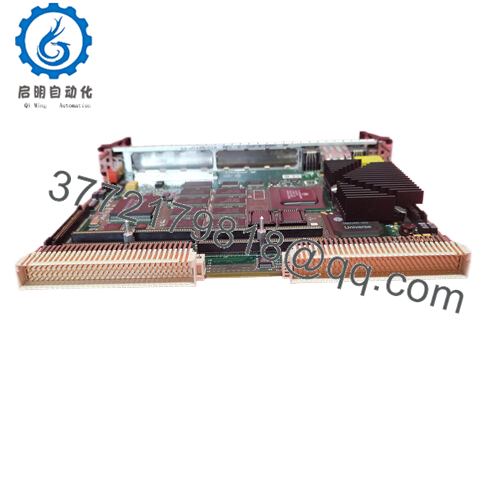
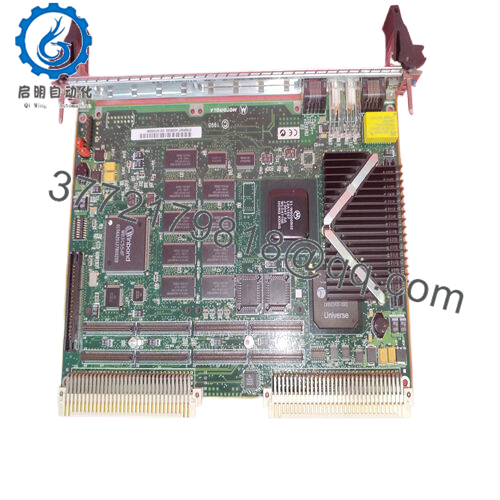
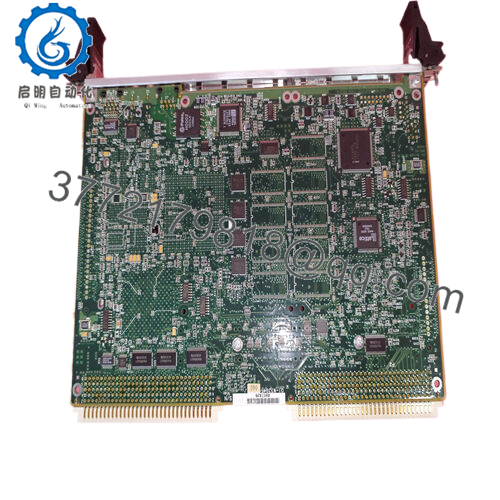
The Motorola MVME2432 belongs to the MVME2400 series of VMEbus single board computers known for their PowerPlus II architecture, centering on the PowerPC 750 microprocessor. It is highly regarded because it offers a combination of speed, modularity, and industrial-grade reliability in a single VME slot. This model features a clock speed around 233 MHz and incorporates 32 KB each of L1 instruction and data cache, plus a large 1MB backside L2 cache, facilitating efficient and swift processing suitable for high-throughput industrial systems.
Designed for both legacy system compatibility and forward-looking automation infrastructures, the MVME2432 supports up to 512 MB of ECC-protected SDRAM for robust memory integrity and includes dual PCI Mezzanine Card (PMC) slots for scalable and customizable I/O expansion. It bridges the gap between advanced computational horsepower and flexible expansion capability while maintaining industry-standard VMEbus connectivity. For systems integrators and engineers, the Motorola MVME2432 acts as a versatile backbone processor module, enabling rapid adaptation to diverse industrial automation demands.

- MVME2432
Key Technical Features & Functional Benefits
The core of the Motorola MVME2432 is the PowerPC 750 32-bit microprocessor operating at approximately 233 MHz, delivering solid integer and floating-point performance critical for real-time control, signal processing, and data handling. Advanced cache architecture consisting of 32KB L1 caches alongside a 1MB L2 cache enhances data throughput and minimizes latency in control loops and embedded applications.
Equipped with ECC-protected SDRAM ranging from 32 MB to 512 MB, this board prioritizes data accuracy and system uptime by offering dynamic error detection and correction capabilities. The two PMC slots positioned on the front panel and P2 I/O connectors allow for seamless integration of specialized modules, adding versatility in adapting to evolving I/O or communication requirements.
Additional hardware features include a 10/100 Mbps Ethernet interface controlled by a DEC 21143 chip, four 32-bit timers, one 16-bit timer, a watchdog timer to ensure system resilience, and onboard NVRAM with battery-backed real-time clock to maintain critical data and time settings across power cycles. Its compact yet robust VME64-compliant design fits into industrial chassis with ease while resisting the stresses of vibration and temperature variations.
Detailed Technical Specifications
| Parameter | Value |
|---|---|
| Model | Motorola MVME2432 |
| Brand | Motorola |
| Product Type | Single Board Computer (VMEbus module) |
| Processor | PowerPC 750 32-bit microprocessor |
| Processor Speed | 233 MHz |
| Cache (L1) | 32 KB instruction + 32 KB data cache |
| Cache (L2) | 1 MB backside cache |
| Onboard Memory | 32 MB to 512 MB ECC SDRAM |
| Flash Memory | 8 MB on-board Flash for firmware/user requirements |
| NVRAM | 8 KB with replaceable battery |
| PMC Expansion Slots | Two 32/64-bit slots (front panel and P2 I/O) |
| Ethernet Interface | DEC 21143 10/100 Mbps Ethernet |
| Timers | Four 32-bit, one 16-bit timers, watchdog timer |
| Operating Temperature | 0° to 55° Celsius |
| Dimensions | 233.4 mm (H) × 160 mm (D) × 19.8 mm (W) |
| Weight | Approx. 0.5 kg |
| Certifications | FCC Class A |
| Environmental Rating | Industrial-grade, 5% to 85% relative humidity non-condensing |
| Cooling | Forced air recommended |
Related Modules or Compatible Units
MVME2431 – A related model with similar architecture optimized for specific I/O configurations.
MVME2433 – Variant with higher clock speeds and enhanced memory options.
MVME2700-761 – Higher-performance PowerPC board with advanced I/O transition module integration.
MVME162-213 – Compact VMEbus SBC with MC68060 processor for embedded control.
MVME167-33B – Classic MC68040-based SBC with ECC memory for varied control applications.
MVME177 – High-performance CPU module for complex VMEbus systems.
Installation Notes & Maintenance Best Practices
Proper installation of the Motorola MVME2432 requires a VME chassis that supports VME64 standards and provides efficient forced air cooling to maintain safe operating temperatures under industrial load. Ensure all connections, especially PMC modules and Ethernet interfaces, are securely seated and use shielded cables to minimize EMI in noisy factory or defense environments. Clearance around the board should allow easy access for diagnostics and future module upgrades.
Maintenance protocols include regular inspections for dust accumulation and connector integrity to safeguard against overheating and signal loss. Utilizing onboard diagnostic tools and hardware watchdog timers facilitates proactive fault monitoring and system recovery in case of operational glitches. Firmware and software updates, when issued, must be followed per manufacturer guidance to maintain system security and performance. Detailed records of firmware revisions and hardware configurations will streamline troubleshooting and compliance inspections.