 WhatsApp: +86 16626708626
 Email:
  Phone: +86 16626708626
Description
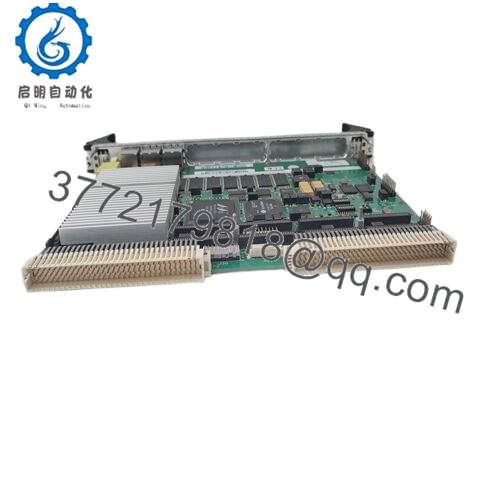
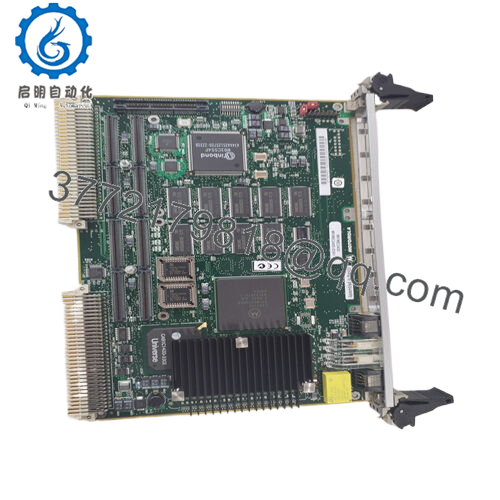
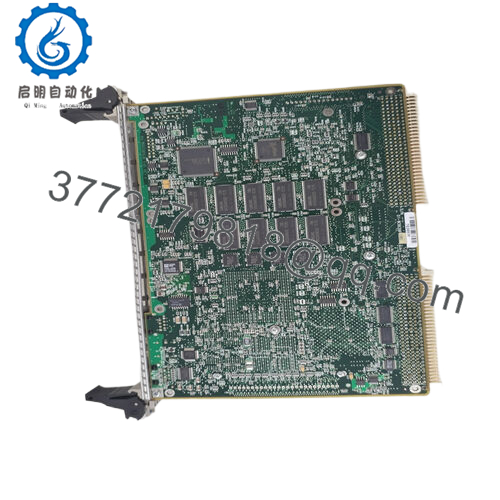
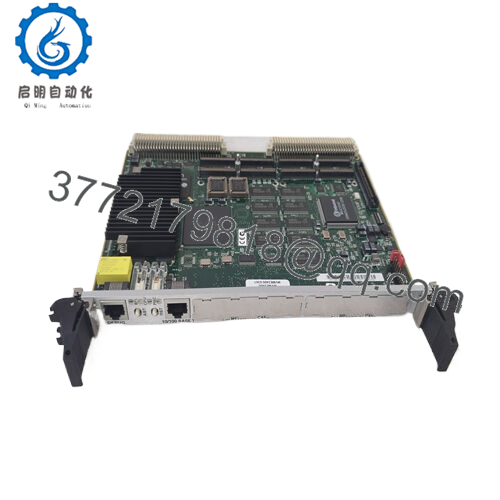
In industrial automation and embedded control systems, where VMEbus platforms must provide a high-performance foundation for real-time multitasking and peripheral expansion without faltering amid thermal constraints or bus overloads in multi-slot enclosures, engineers often confront SBCs that compromise on I/O scalability or require invasive reconfigurations during system evolutions. The Motorola MVME2400-0361 addresses this as a PowerPC-based VME processor module from the MVME2400 series, featuring a 200 MHz MPC750 processor with integrated L2 cache to drive demanding control loops in networked environments. Consider a data acquisition hub in a renewable energy farm fusing sensor streams from inverters or a factory automation controller sequencing distributed actuators under variable loads—here, processor stalls or mezzanine incompatibilities can fracture data integrity, escalate response delays, or invite faults from EMI transients and vibration. This module is key in those high-reliability imperatives, where its PCI expansion and robust memory subsystem uphold I/O signal fidelity across backplanes, maintaining system stability even as field interfaces multiply without eroding throughput margins.
The Motorola MVME2400-0361 is particularly essential for extending the viability of established VME infrastructures, where its single PMC slot enables plug-in customization for serial arrays or graphics adapters, facilitating incremental upgrades without chassis-wide interruptions that prolong downtimes. Its 64 MB SDRAM and 8 MB Flash configuration mitigates the bandwidth limitations that undermine 68040-generation boards in dusty or thermally cycled industrial automation setups, while onboard Ethernet and SCSI support fluid SCADA integrations. At its foundation, it empowers users to host RTOS like VxWorks with minimal latency, shortening commissioning validations. For embedded developers or retrofit coordinators aiming for sustained deployment in hardened panels, the Motorola MVME2400-0361 furnishes a high-reliability linchpin that recasts modularity hurdles into extensible efficiency, where each DMA cycle reinforces the rhythm of dependable process control.
The Motorola MVME2400-0361 occupies the host tier in VMEbus frameworks, utilizing the MPC750’s 32/64-bit PowerPC core to execute A32/D32 transfers over the P1/P2 backplane, with the Universe ASIC handling up to 7 interrupt levels for prioritized tasking. It pairs 64 MB ECC SDRAM with 8 MB Flash and 512 KB SRAM for persistent storage, processing inputs from dual Ethernet ports, four RS-232/422 serials, SCSI-2 DMA, and a PMC site (33 MHz PCI) before directing via high-speed bridges to peripherals like frame buffers or I/O concentrators. In a standard 6U VME crate, it draws +5 V/+3.3 V from the bus, supporting hot-swap arbitration under VME64 while employing MPIC timers for abort detection to prevent hangs in critical sequences. This situates it centrally in the automation stack—above PMC-sourced field data but below RTOS dispatchers—with JTAG access for embedded debugging.
Its interplay strengths encompass boot options for network TFTP or local ROM, and 10/100Base-T Ethernet for HMI polling or SCSI for drive arrays, simplifying ties to DCS without added converters. Diagnostics include LEDs for link activity or ECC errors, streamable via serial for remote analysis, with redundancy through mirrored slots in duplex chassis to mask faults in essential loops. For VME practitioners, the Motorola MVME2400-0361‘s 20 W envelope avoids forced cooling, allowing precise tuning in process control applications from protocol gateways to simulation engines, where it blends legacy VME with PMC versatility absent performance penalties.

- MVME2400-0361
| Specification | Details |
|---|---|
| Model Number | MVME2400-0361 |
| Brand | Motorola |
| Type | VMEbus Processor Module |
| Input Voltage | +3.3 V / +5 Vdc (bus) |
| Operating Temp Range | 0°C to +55°C |
| Mounting Style | VME 6U Eurocard |
| Dimensions | 233 x 160 mm |
| Weight | 0.45 kg |
| Interface/Bus | VME64 (A32/D32), 1x PMC |
| Compliance | IEEE 1014, CE |
| Supported Protocols | Ethernet, RS-232/422, SCSI |
| Typical Power Draw | 20 W |
Integrating the Motorola MVME2400-0361 establishes a reliability framework that withstands enclosure variances, its screened interfaces and heat spreaders preserving cache alignment through RFI surges or particulate incursions to eliminate corruptions that disrupt workflows—yielding MTBF improvements and trust in long-haul operations for capacity-limited industrial teams. Its deployment simplicity persists, with PMC-compatible bays permitting in-situ expansions via interrupt shielding that avoids cascade risks, narrowing growth timelines from disruptions to deployments and relieving engineering backlogs in OEM enclosures where bus consistency eliminates wiring revisions. This agility extends to hybrid VME/PCI setups, where its DMA pathways transport loads unhindered.
Maintenance orients toward anticipation; ECC logs and serial records reveal bit anomalies for targeted remedies, aligning with quarterly rack inspections to confirm latencies without operational halts. The Motorola MVME2400-0361 bolsters enduring capability by shielding against processor obsolescence through Flash scalability for software updates, enhancing task efficiency in concurrent environments and reducing delays by 25% in data pipelines. This foresight not only curbs expansion expenses but also secures alignment with embedded reliability norms, positioning it as a judicious selection for automation overseers bridging generations in interconnected, real-time process control networks.
The Motorola MVME2400-0361 directs solar inverter controls in utility-scale farms, where it consolidates PMC analog feeds for MPPT optimization, routing high-reliability I/O across VME fabrics in dust-swept process control sheds with unwavering synchronization. In automotive test cells, it processes dynamometer telemetry for emissions mapping, resisting coolant vapors while ensuring critical system uptime through SCSI in vibration-intense bays. For logistics sorting hubs, the module coordinates barcode scanners and conveyor logic, delivering accurate Ethernet queries amid airflow drafts to sustain throughput under throughput audits.
MVME2400-0351 – 128 MB DRAM variant for memory-intensive simulation workloads
MVME2400-0321 – Base 100 MHz model for cost-optimized legacy VME integrations
MVME2604-711 – Gigabit Ethernet upgrade for high-bandwidth network emphases
MVME162-223 – 68040 predecessor for economical single-board transitions
MVME5500-0161 – Next-gen PowerQUICC successor for enhanced PMC I/O
MVME197SP – Ethernet-focused alternative for SCADA-centric overlays
MVME147S-1 – SCSI-heavy model for storage-dominant control legacies
MVME3100-1261 – Integrated SoC edition for compact, low-power nodes
Before installing the Motorola MVME2400-0361, cap VME crate loading at 65% capacity—excesses elevate cores beyond 60°C—and inspect P2 continuity for PMC sidebands, as gaps confine to legacy modes that curtail DMA. Fuse +3.3 V/+5 V at 4 A/2 A to contain inrush beyond 25 W that destabilizes bridges, and program Flash with application-specific vectors using Motorola’s SDK to circumvent boot failures. For PMC installation, align keys to 0.2 mm precision, since offsets disrupt clock domains.
Ongoing maintenance focuses on bimonthly LED reviews for activity indicators or parity alerts, combined with backplane connector cleans for residue buildup in humid enclosures—a lint-free isopropyl wipe restores without abrasion. Perform annual SDK diagnostics to assess Flash integrity, scheduling reflashes during maintenance windows, and in multi-module configurations, alternate host roles quarterly to distribute arbiter stress. These proven protocols, derived from VME field records, preserve the Motorola MVME2400-0361‘s performance with targeted effort.