 WhatsApp: +86 16626708626
 Email:
  Phone: +86 16626708626
Description
Real-World Use & Application Scenarios
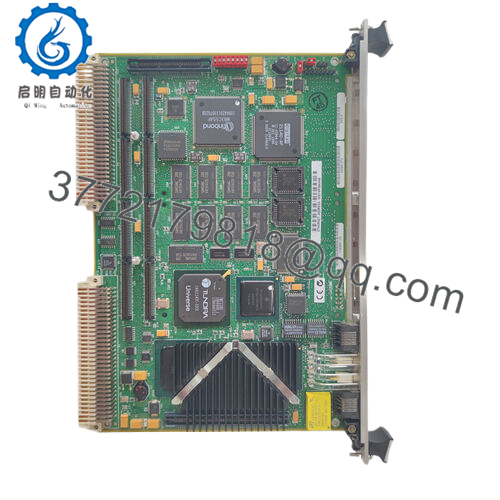
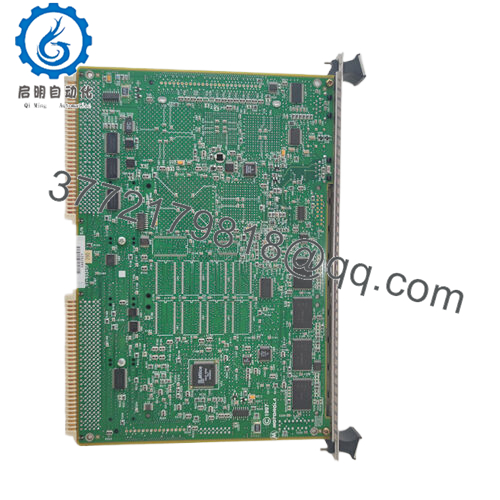
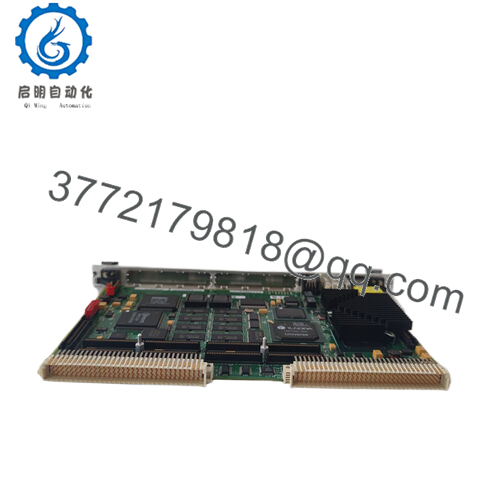
The Motorola MVME2301-900 is a powerful single-slot VME processor module widely used in industrial automation, aerospace, telecommunications, and defense systems. This module fits into control cabinets where real-time processing, precise control, and multi-protocol communications are mission-critical. It excels in applications requiring reliable data acquisition, signal processing, and network communications within harsh industrial environments. Industrial control systems, SCADA stations, and embedded automation rely on the MVME2301-900 for its robust performance in processing control algorithms and managing multiple I/O simultaneously. Its compatibility with Ethernet networks and PMC expansion cards makes it adaptable in evolving automation setups where system uptime and control accuracy are paramount.
Product Introduction & Positioning
The Motorola MVME2301-900 belongs to the MVME2300 series, featuring Motorola’s PowerPC 603 or 604 microprocessors. Typically, it operates at speeds up to 300 MHz with 32-bit processing and dedicated instruction and data caches (in the order of 16KB/32KB for L1 cache depending on processor type). It integrates onboard ECC-protected DRAM memory ranging from 16MB to 128MB and up to 5MB of flash storage for firmware and application code. This board is designed to serve as the main processor in VMEbus-based embedded systems and industrial control racks, acting as the central processing node that manages communications, data processing, and control timing.
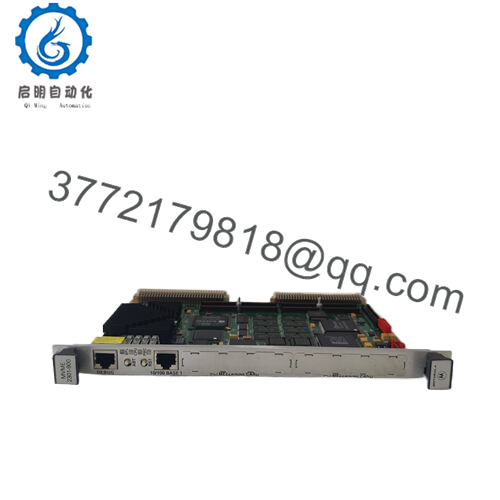
The module’s architecture supports flexible I/O through two PMC (PCI Mezzanine Card) expansion slots, front panel and P2 I/O options, as well as onboard Ethernet (10/100Base-T) and asynchronous serial debug ports. The MVME2301-900 is a preferred choice among system integrators for deploying scalable, reliable, and high-performance processing in modular industrial automation solutions.

- MVME2301-900
Key Technical Features & Functional Benefits
At the core of the Motorola MVME2301-900 is the PowerPC 603 or 604 microprocessor providing 32-bit RISC architecture designed for embedded processing demands. With clock speeds up to 300 MHz and integrated split L1 caches, the module efficiently executes complex control logic and real-time data processing tasks accustomed to demanding automation environments.
This board supports ECC DRAM memory from 16MB to 128MB, ensuring data integrity through comprehensive error detection and correction, a critical requirement in mission-critical industrial automation systems. The memory system’s 66 MHz bus and burst-read/write capabilities facilitate fast and reliable access to data and instructions.
For I/O expandability, the two IEEE P1386.1 compliant PCI Mezzanine Card slots allow installation of a variety of I/O or communication modules (analog, digital, serial interfaces, etc.), greatly increasing the module’s flexibility to match system requirements. Additionally, the onboard Ethernet controller provides standard 10/100 Mbps networking capabilities with PCI local bus DMA support, enabling efficient communication to supervisory and control networks. Supplementary hardware peripherals such as multiple timers, watchdog timers, and a battery-backed real-time clock contribute to system stability, fault detection, and resilience.
Detailed Technical Specifications
| Parameter | Value |
|---|---|
| Model | Motorola MVME2301-900 |
| Brand | Motorola |
| Product Type | Single Board Computer (VMEbus module) |
| Processor | PowerPC 603 or PowerPC 604 32-bit microprocessor |
| Processor Speed | Up to 300 MHz |
| L1 Cache | 16 KB/16 KB for PowerPC 603, 32 KB/32 KB for 604 |
| Onboard Memory | 16 MB to 128 MB ECC-protected DRAM |
| Flash Memory | 3 MB to 5 MB onboard flash |
| PMC Expansion Slots | Two IEEE P1386.1 compliant 32/64-bit PCI Mezzanine Card slots |
| Ethernet Interface | 10/100Mbps with PCI local bus DMA |
| Asynchronous Serial Port | One debug port via RJ45 connector |
| Timers and Counters | Four 32-bit timers, one 16-bit timer, watchdog timer |
| Real-Time Clock | Battery-backed 8 KB NVRAM |
| Operating Temperature | 0°C to 55°C |
| Dimensions | 233.4 mm (H) × 160 mm (D) × 19.8 mm (W) |
| Weight | Approx. 0.5 kg |
| Certifications | FCC Class A, VME64 compliant |
| Cooling | Forced air recommended |
Related Modules or Compatible Units
MVME2302 – Similar module with alternative processor configurations and expanded memory options.
MVME2303 – Enhanced variant with faster clock speeds and larger memory capacity.
MVME2700-761 – Higher-end PowerPC-based single board computer with advanced I/O modules integration.
MVME162-213 – Compact MC68060-based VME single board computer for embedded applications.
MVME2432 – PowerPC 750-based VME module with superior cache and memory support.
MVME167-33B – Legacy MC68040-based single board computer with ECC RAM support.
Installation Notes & Maintenance Best Practices
Installation of the Motorola MVME2301-900 requires a compatible VME chassis supporting single-slot modules and providing good airflow for cooling. Forced air ventilation is recommended to maintain device longevity and optimal operating temperatures. Make sure all PMC cards and cabling are firmly seated and shielded to minimize EMI susceptibility. Proper grounding practices should be observed to prevent interference in sensitive industrial environments.
Regular maintenance should focus on cleaning cooling pathways to prevent dust buildup and inspecting connectors for corrosion or wear. Onboard watchdog timers and diagnostic LEDs facilitate continuous monitoring of system health. Firmware updates should be applied according to manufacturer recommendations to enhance stability and security. Accurate documentation of configurations and firmware revisions will simplify troubleshooting efforts and streamline system audits.