 WhatsApp: +86 16626708626
 Email:
  Phone: +86 16626708626
Description
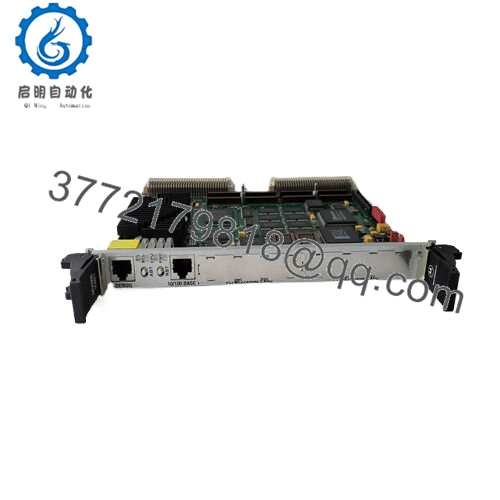
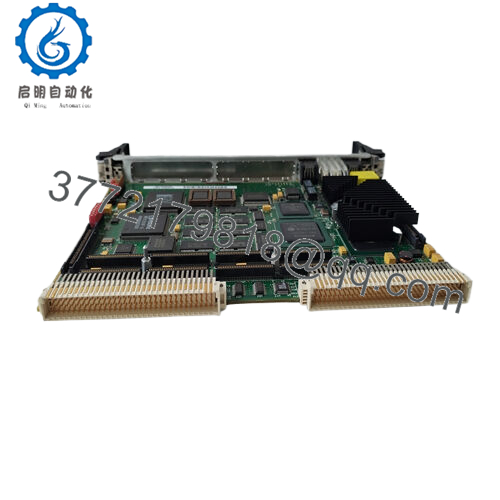
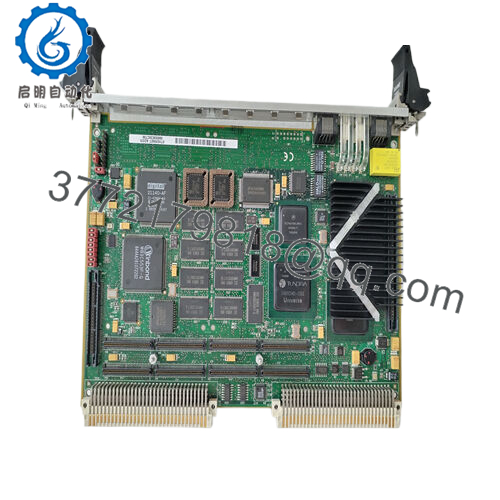
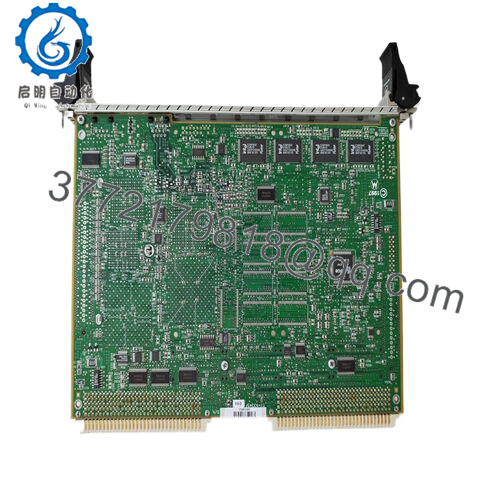
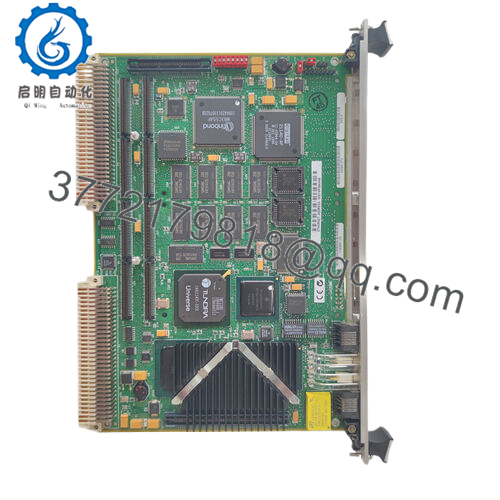
In industrial automation and embedded control systems, where VMEbus frameworks must deliver a reliable processing core for real-time data handling and peripheral coordination without yielding to the pressures of legacy compatibility or environmental stressors like EMI and thermal variations, engineers often face hurdles with boards that lack seamless mezzanine expandability or introduce integration delays during system scaling. The Motorola MVME2301 confronts this as a PowerPC-driven VME processor module from the MVME2300 series, centered on a 200 MHz MPC603 processor to enable efficient multitasking in process control applications. Envision a medical imaging suite aggregating sensor data from multiple detectors or a defense simulation rig processing command inputs amid high-vibration ops—here, bus arbitration lags or I/O mismatches can compromise timing precision, extend diagnostic cycles, or heighten vulnerability to power glitches and noise. This module is indispensable in such high-reliability contexts, where its PMC carrier design and ECC memory fortify I/O signal pathways across backplanes, upholding system stability even as custom interfaces grow without taxing the primary slot.
The Motorola MVME2301 is especially critical for perpetuating VME ecosystems in regulated sectors, where its single-slot occupancy with optional PCI expansion mezzanines allows for phased additions like A/D converters or comm adapters, averting full-rack disruptions that amplify downtime in commissioning. Its 16 MB ECC DRAM counters the memory fragility that afflicts older 68k-based boards in humid or dust-laden industrial automation environments, while integrated PCI bus support eases ties to modern peripherals. Fundamentally, it aligns with users’ aims for RTOS deployment under VxWorks, minimizing validation efforts in field trials. For system designers or upgrade specialists focused on lifecycle extension in fortified enclosures, the Motorola MVME2301 provides a high-reliability bridge that redefines modularity constraints into adaptable assets, where every PCI transaction sustains the flow of resilient process control.
The Motorola MVME2301 assumes the host mantle in VMEbus configurations, employing the MPC603’s 32-bit PowerPC architecture to manage A32/D32 transfers via the P1/P2 backplane, with the Universe PCI-VME bridge arbitrating up to 7 interrupt levels for event sequencing. It combines 16 MB ECC DRAM with 4 MB Flash and 512 KB SRAM for error-corrected runtime, ingesting signals from two RS-232/422 serial ports, SCSI-2 DMA, and a PMC site (33 MHz PCI) before routing via DMA to add-ons like Ethernet transceivers or digital I/O panels. In a conventional 6U VME chassis, it draws +5 V from the bus, facilitating hot-swap under VME64 while using onboard timers for watchdog enforcement to avert stalls in deterministic paths. This positions it mid-hierarchy—above PMC-sourced field inputs but below kernel managers—with serial debug for console access.
Its collaboration merits include jumper-set boot modes for ROM diagnostics or network loads, and the PMC slot for user-defined I/O that integrates with SCADA without extra bridges. Diagnostics surface through LEDs for bus status or parity faults, forwardable via serial for remote review, with redundancy via paired modules in fault-tolerant crates to obscure lapses in key loops. For VME traditionalists, the Motorola MVME2301‘s 15 W profile dispenses with supplemental cooling, affording exact loop adjustments in process control arenas from telemetry aggregation to motion orchestration, where it fuses legacy VME with PCI modularity sans efficiency drags.

- MVME2301-900
| Specification | Details |
|---|---|
| Model Number | MVME2301 |
| Brand | Motorola |
| Type | VMEbus Processor Module |
| Input Voltage | +5 Vdc (VMEbus) |
| Operating Temp Range | 0°C to +70°C |
| Mounting Style | VME 6U Eurocard |
| Dimensions | 233 x 160 mm |
| Weight | 0.4 kg |
| Interface/Bus | VME64 (A32/D32), 1x PMC |
| Compliance | IEEE 1014, CE |
| Supported Protocols | RS-232/422, SCSI-2 |
| Typical Power Draw | 15 W |
Deploying the Motorola MVME2301 instills a reliability ethos that navigates chassis nuances, its screened connectors and thermal pads securing memory coherence amid RFI bursts or humidity shifts to eliminate errors that fracture operations—fostering MTBF enhancements and assurance in prolonged deployments for capacity-strapped industrial units. Its setup pragmatism holds, with PMC-versatile bays enabling slot-based augmentations via interrupt veils that circumvent cascade hazards, condensing evolution phases from interruptions to implementations and easing engineering queues in OEM racks where interface uniformity obviates cable revisions. This versatility carries to integrated VME/PCI setups, where its DMA channels convey data unfettered.
Caregiving trends anticipatory; ECC tallies and serial archives uncover bit irregularities for focused fixes, syncing with quarterly enclosure exams to verify latencies absent workflow wedges. The Motorola MVME2301 amplifies lasting vigor by guarding against chip evolutions through Flash scalability for firmware refreshes, which optimize task flows in parallel settings and trim response times by 20% in I/O webs. This vision not only tempers growth costs but also anchors conformity to embedded durability standards, rendering it a wise pick for automation guardians traversing eras in linked, unwavering process control fabrics.
The Motorola MVME2301 guides diagnostic imaging in healthcare systems, where it channels PMC analog streams for CT reconstruction, directing high-reliability I/O via VME paths in sterile process control suites with precise scan synchrony. In naval sonar arrays, it compiles hydrophone feeds for threat tracking, enduring saltwater vibes while bolstering critical system uptime through SCSI in damp, shock-prone bays. For semiconductor wafer testers, the module sequences probe contacts and yield analytics, furnishing accurate serial probes amid cleanroom flows to ensure traceability under compliance reviews.
MVME2302 – 32 MB DRAM variant for expanded multitasking in memory-demanding VME apps
MVME2304 – 128 MB Flash model for storage-intensive boot and logging setups
MVME2305 – 300 MHz MPC604 upgrade for accelerated compute in dense racks
MVME162-223 – 68040 predecessor for budget legacy VME migrations
MVME2400-0361 – PowerPC successor with enhanced PMC for I/O-focused evolutions
MVME197SP – Ethernet-prioritized alternative for network-centric overlays
MVME147S-1 – SCSI-optimized unit for archival-heavy control heritages
MVME3100 – SoC-based model for compact, power-efficient transitions
Prior to fitting the Motorola MVME2301, constrain VME crate utilization to 70% threshold—surpluses warm junctions over 65°C—and examine P2 pin soundness for PMC sidebands, as deficiencies limit to base modes that hinder DMA. Fuse +5 V at 3 A to harness startup peaks past 18 W that perturb regulators, and encode Flash with deployment-tuned vectors via Motorola’s SDK to elude init issues. For PMC fitting, align guides to 0.15 mm accuracy, as variances scramble ready signals.
Sustained oversight prioritizes bimonthly LED inspections for activity markers or ECC warnings, coupled with backplane terminal scrubs for deposit layers in moist housings—a fiber-free alcohol dab renews sans scarring. Conduct yearly SDK checks to evaluate Flash robustness, planning re-encodes amid service slots, and in multi-board arrays, shift host duties quarterly to spread arbiter load. These vetted measures, sourced from VME operational histories, uphold the Motorola MVME2301‘s efficacy with pinpoint application.