 WhatsApp: +86 16626708626
 Email:
  Phone: +86 16626708626
Description
| Specification | Value / Range / Description |
|---|---|
| Module Type | Remote I/O Scanner (Genius) |
| Model | IC697BEM733 |
| Slot Width | Single slot in remote rack |
| Number of Serial Ports | 1 × 15-pin RS-422/485 compatible, plus 1 × 9-pin handheld monitor connector |
| Max Distance from Controller | Up to 7,500 ft (2,275 m) at 38.4 kbaud |
| Supported Baud Rates | 38.4 kbaud, 76.8 kbaud, 153.6 kbaud (standard and extended) |
| Max Number of Devices per Bus | 32 devices at higher speeds; 16 devices at 38.4 kbaud |
| Remote Drop Capacity | Up to 8 racks (5-slot or 9-slot) in one drop |
| I/O Capacity per Drop | Up to 128 input/output bytes in certain docs; up to 1,024 discrete I/O or 64 analog I/O in others |
| Bus Termination | 75, 100, 120 or 150 Ω at both ends of electrical bus cable |
| Current Draw | Approx. 0.8 A at +5 VDC |
| Operating Environment | Standard industrial ambient; see module manual for specifics |
| Status Indicators | Module OK, I/O Enabled, Bus B Active |

- IC697BEM733
- IC697BEM733
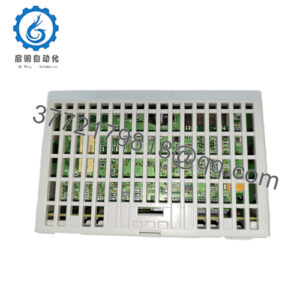
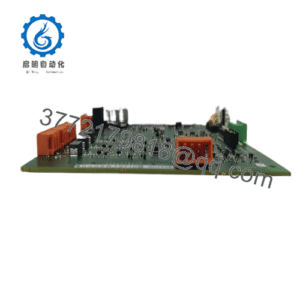
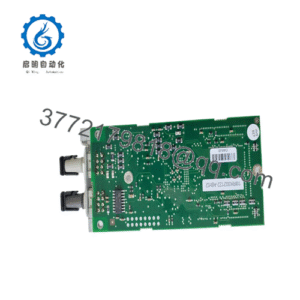
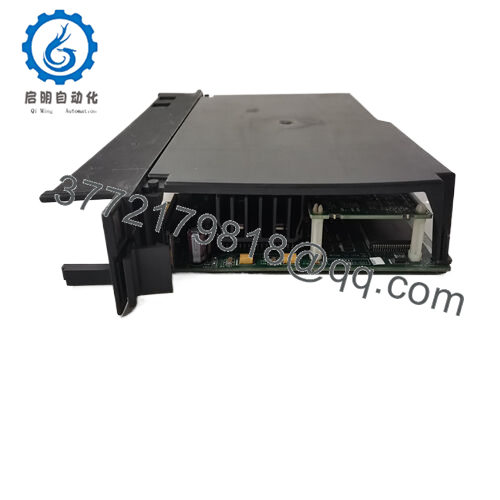
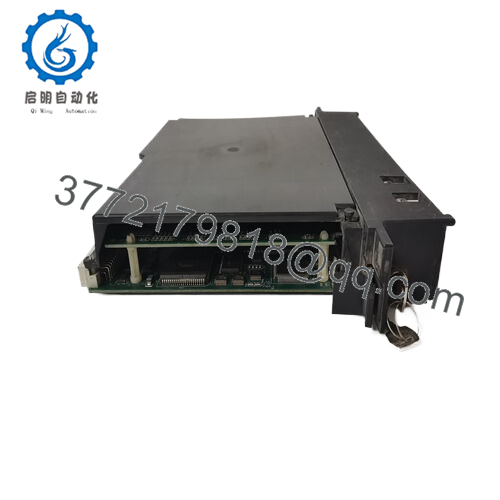
Product Model: IC697BEM733
Product Brand: GE Fanuc / Emerson
Product Series: Series 90-70 (Genius Remote I/O Scanner)
Product Features:
- Remote I/O Scanner that links up to eight racks and supports remote drops up to 7,500 ft (approx. 2,275 m) from the controller.
- Supports both discrete and analog I/O modules within the remote drop, making it highly flexible.
- Provides an RS-422/RS-485 serial port plus handheld monitor connector (IC66*) for diagnostics and configuration.
- Single-slot module, reasonably compact, legacy but proven in harsh industrial settings
Technical Features & Benefits
The IC697BEM733 is a remote I/O scanner module built for the GE Fanuc/Emerson Series 90-70 architecture. What this means practically is that you can locate your I/O racks some distance away from the main PLC CPU and have traffic carried back over an IC66* bus. With this module you get a number of field-friendly advantages.
Firstly, the module supports remote drops up to a distance of 7,500 feet (about 2,275 m) from the controller at the lowest baud rate (38.4 kbaud). At faster baud rates – e.g., 76.8 kbaud or 153.6 kbaud – the maximum length drops accordingly (4,500 ft / 3,500 ft etc) depending on cable type. That kind of reach gives real flexibility for distributed I/O in large plants, or where the remote drop is located far from the CPU.
Inside the drop, the IC697BEM733 supports up to eight racks (5-slot or 9-slot) linked by Bus Transmitter/Receiver modules. The scanner will handle any mix of discrete and analog I/O modules, up to the limits of the drop. One often quoted capacity is up to 128 bytes of I/O per drop in certain configurations. Some sources quote larger totals (e.g., 1,024 discrete inputs + outputs) depending on module combinations. That flexibility means you’re not locked into only discrete or only analog modules — which is important when you have mixed sensors, actuators, and instrumentation components on a remote rack.
The communications side is well covered: the module has one RS-422/RS-485 port and a 9-pin IC66* handheld monitor connector for local monitoring/configuration. The built-in LEDs show status (Module OK, I/O Enabled, Bus B Active) which makes field diagnostics easier. Current draw is modest — around 0.8 A at +5 V in many specifications. The module is designed for harsh industrial environments, legacy though it may be, so it carries the robustness expected in the Series 90-70 family.
In practice, what you get with the IC697BEM733 is a reliable remote I/O solution that integrates seamlessly with the IC66* bus system. If you have a plant where sensors and actuators are spatially distributed, or you want to reduce long analog wiring runs by moving I/O closer to the field and backbone communications back to control, this module is a good fit.
One of the benefits I’ve seen in real commissioning is the ability to place the remote rack closer to the field sensors (shorter sensor wires) and then use the long bus cable to the CPU. This reduces analog noise and simplifies field wiring. The IC697BEM733 enables that architecture.
However, there are some caveats. Because it is an older module, you need to make sure your CPU and bus controller support the required firmware version and bus architecture. There are limits on number of devices per bus and drop counts depending on baud rate. For example at 153.6 kbaud standard you can have up to 32 devices per bus; at 38.4 kbaud you drop device count to 16. Also, cable type, termination resistors (75, 100, 120 or 150 Ω) and shield/grounding all matter more when you push distances. I’ve worked with plants where installations forgot proper termination and the drop length was over spec, leading to intermittent bus failures — so I always advise verifying actual cable runs and termination.