 WhatsApp: +86 16626708626
 Email:
  Phone: +86 16626708626
Description
Detailed Technical Specifications
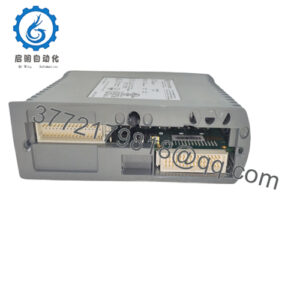
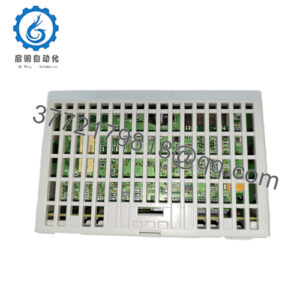
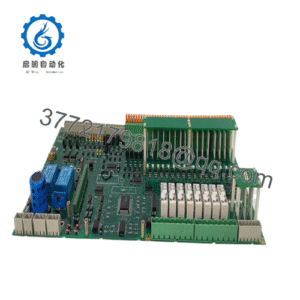
| Model | VMIVME-5565 |
| Brand | GE Fanuc Embedded Systems |
| Type | Reflective Memory Node Card |
| Power Supply | +5 V DC (typical), auxiliary power options as defined by backplane |
| Operating Temperature |0 to 70°C (industrial range) |
| Mounting | VMEbus single-slot card, compatible with standard backplanes |
| Dimensions | Standard VMEbus card dimensions (per backplane spec) |
| Weight | Light-to-moderate (per card specification) |
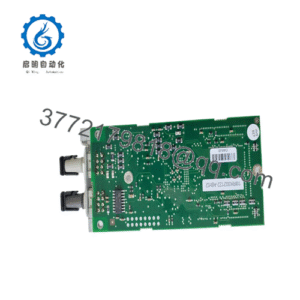
| Interfaces | Fiber-optic Reflective Memory (RFM) interface, PCI backplane integration, optional serial/event signaling (per model variant) |
| Certifications | Industry-standard safety and EMI/EMC qualifications (as applicable) |
| Cooling | Passive cooling with adequate airflow in enclosure |
| Environmental Rating | Industrial-grade, suitable for factory floor and lab environments |
Real-World Use & Application Scenarios
In high-speed control rooms and distributed automation environments, deterministic data sharing is essential. The VMIVME-5565 sits at the heart of tightly coupled systems where multiple controllers or processing nodes must exchange time-critical information with minimal latency. It’s widely used in industries requiring synchronized sensing and actuation across vast LANs of VMEbus-equipped equipment, including automotive test rigs, robotics cells, aerospace testbeds, and complex process automation lines. Operators rely on this kind of hardware to keep control loops coherent when dozens of subsystems work in concert, from motion control to real-time monitoring and safety interlocks. The VMIVME-5565 enables scalable configurations by providing a high-speed reflective memory interface that keeps data consistent across up to hundreds of nodes, which reduces software overhead and simplifies system architecture. It supports rapid data dissemination, deterministic timing, and reliable fault containment—crucial traits for control systems that must meet strict uptime and predictability targets. In practice, engineers specify this module when projects demand synchronized state sharing between multiple CPUs, low-latency fiber links, and predictable performance under varying load. Bolded model references help with quick indexing: GE VMIVME-5565 and GE VMIVME-5565. This approach aligns with how buyers research products that are “used in industrial automation,” “applicable in control systems,” and compatible with traditional VMEbus ecosystems.
Product Introduction & Positioning
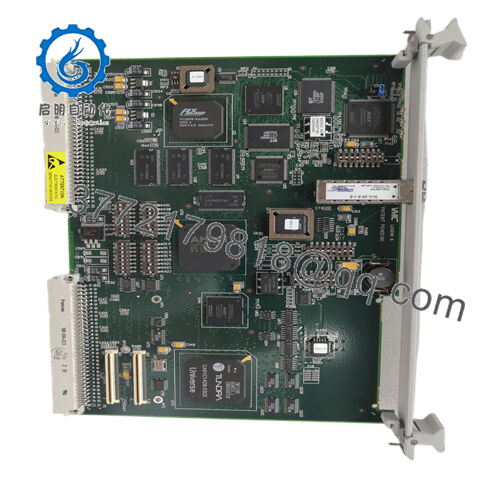
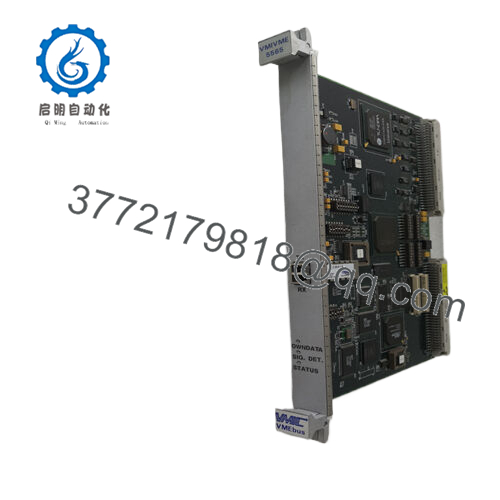
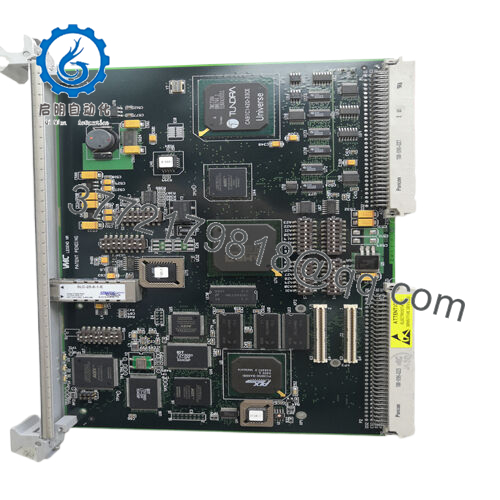
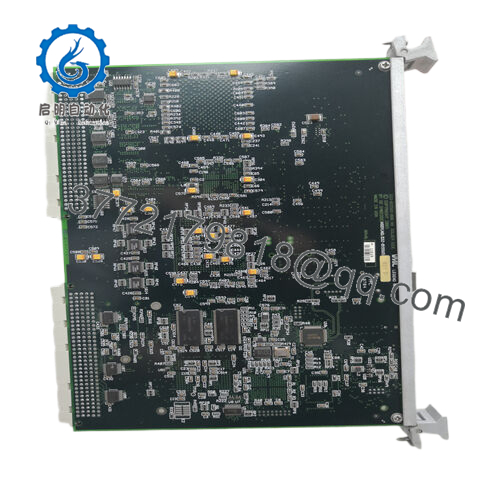
The GE VMIVME-5565 is a reflective memory node card designed for VMEbus systems, delivering ultra-high-speed, low-latency data sharing across up to 256 independent nodes. It functions as an RFM interface that synchronizes memory images between distributed processors, enabling deterministic execution in multi-processor configurations. Integrated tightly into GE Fanuc’s VMIC family, it fits into standard VMEbus backplanes and serves as a critical component in control architectures where timing precision and data coherence drive system reliability. For engineers and integrators, the value lies in reducing software synchronization overhead and enabling scalable architectures without sacrificing predictability. The module is typically deployed in environments where deterministic inter-node communication is a prerequisite, such as real-time process control, motion synchronization, and high-throughput data exchange across multiple chassis. The GE VMIVME-5565 also benefits from established vendor support for firmware, diagnostic tools, and compatibility with existing VMIC infrastructure, which simplifies integration into broader automation platforms.
Key Technical Features & Functional Benefits
The GE VMIVME-5565 delivers deterministic data sharing through its fiber-optic reflective memory interface, enabling low-latency data exchange between up to 256 nodes. This capability minimizes software-based synchronization overhead and ensures tight timing alignment across distributed controllers, which is essential for coordinated motion and synchronized sensors in complex automation loops. Hardware-wise, the card is designed for rugged VMEbus environments, with a form factor that fits standard backplanes and supports robust fiber-optic connections for immune-to-electromagnetic interference operation. The interface supports high-throughput, real-time memory replication, making it a natural fit for control systems that require rapid state propagation without software polling or interrupts. Compatibility is a core strength: it integrates within GE’s VMIC ecosystem and interoperates with common VMEbus hosts, leveraging mature industry standards for reliability and longevity. Reliability features include deterministic timing, low jitter under load, and proven thermal stability, which extend service life in demanding industrial settings. The model’s proven track record in aerospace, automotive testing, and process automation underpins its credibility as a long-term solution for mission-critical applications. The GE VMIVME-5565 stands out for combining high performance with integration simplicity, making it a trusted backbone for multi-node control architectures. The approach to design emphasizes predictability and resilience, essential for engineers who must certify systems for safety and compliance.

- VMIVME-5565
- VMIVME-5565