 WhatsApp: +86 16626708626
 Email:
  Phone: +86 16626708626
Description
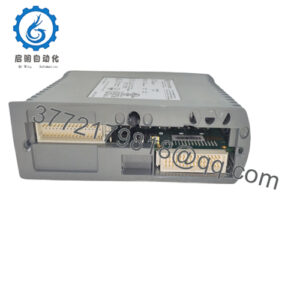
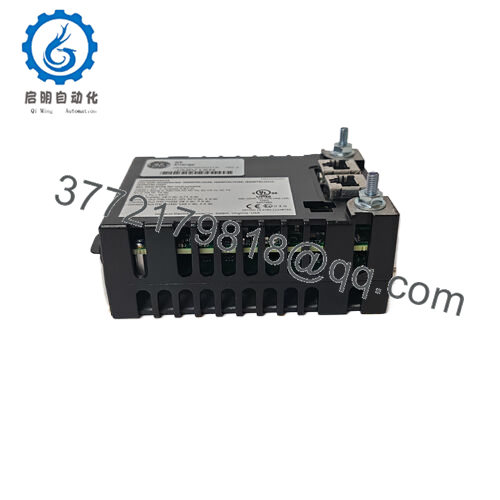
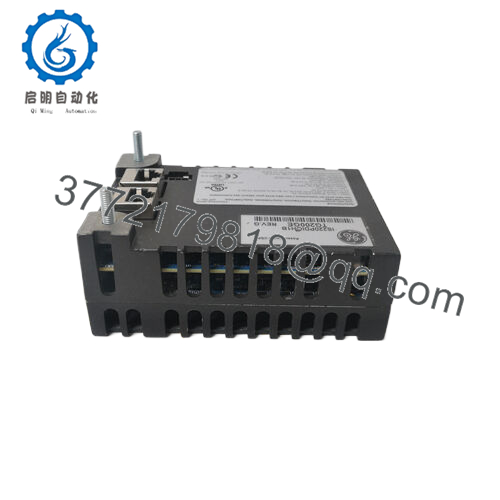
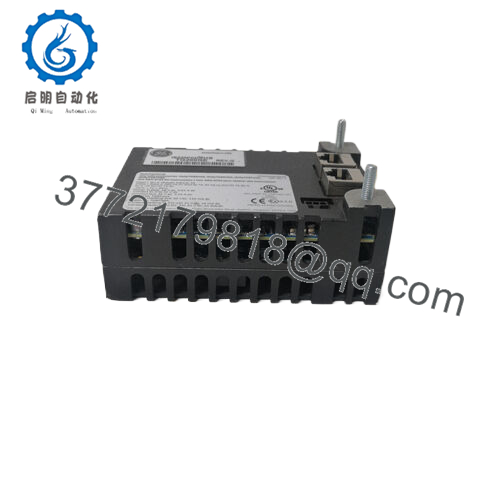
In the unforgiving core of industrial automation, where turbine control systems demand instantaneous relay actuation for fuel valves, breaker commands, or alarm strobes amid electromagnetic storms from generators or arc flashes, engineers grapple with output failures that can delay protective responses, induce partial trips, or compromise interlock integrity—cascading into turbine overspeeds, grid instability, or safety breaches in power generation facilities. This vulnerability peaks in high-vibration, high-temperature zones like exhaust plenums or exciter bays, where non-isolated relays falter under inductive kickback or ground shifts, forcing external suppressors that clutter cabinets and obscure diagnostics in real-time SCADA views. The GE IS220PDOAH1A confronts this as a hardened 12-channel discrete output I/O pack for the Mark VIe series, driving relay outputs with optical isolation and Ethernet networking to ensure unerring command execution, bolstering high reliability without the brittleness of legacy point-to-point wiring in process control.
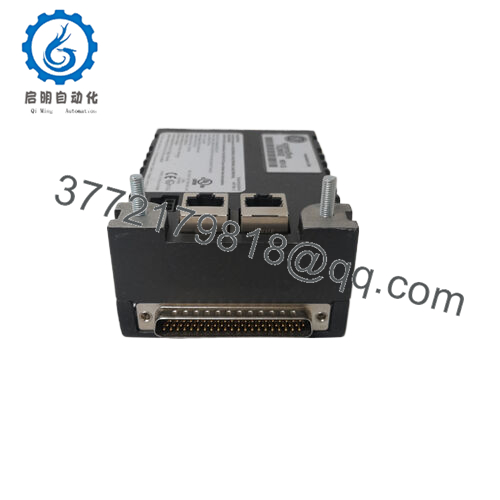
Picture safeguarding a combined-cycle plant or retrofitting an offshore wind farm’s yaw drive: without a networked, multi-channel output driver, you’re daisy-chaining solenoid drivers that amplify surge risks from nearby transformers or require frequent coil checks, eroding system stability in EMI-saturated enclosures. The GE IS220PDOAH1A becomes essential in these modular integration efforts, docking onto compatible terminal boards to energize 12 relays at 125 VDC/15A per channel, directly enabling goals like predictive anomaly actuation and seamless fast data cycles in industrial automation. Its dual Ethernet ports facilitate redundant IONet links to controllers, sidestepping single-path outages while embedding flyback protection to quench transients from field loads.
In process control environments where critical system uptime equates to uninterrupted grid feed, the GE IS220PDOAH1A distinguishes itself through ATEX-certified resilience that withstands explosive atmospheres, ideal for teams fusing Mark VIe with ToolboxST software where output health pings preempt stuck commands. By prioritizing hardware-level surge tolerance up to 250 V, it curtails engineering detours for custom diodes, letting focus shift to optimization over validation in noise-heavy bays and resonating with pursuits for Mark VIe I/O packs, discrete output modules, or robust turbine control interfaces.
Docked onto a terminal board like the IS200TBCOH2C or IS200TDOTH6A in the Mark VIe I/O assembly, the GE IS220PDOAH1A anchors at the actuator interface layer, multiplexing 12 optically isolated relay outputs through a dedicated acquisition board to relay commands over dual Ethernet ports to the controller’s IONet backbone—envision it strapped in a ventilated cabinet, sourcing 24 VDC logic from the backplane while driving high-power loads via screw terminals. It slots into the peripheral stack below turbine logic but above raw effectors, drawing 24 VDC nominal from the system while configuring coil energies via Ethernet without physical jumpers, enabling group-wide scaling for diverse governors or igniters.
Command flow initiates at Ethernet packets: the processor board translates controller datagrams into relay coil drives, applying suppression circuits to dampen arcs before latching states for feedback, then timestamps acknowledgments for EGD broadcasts or SRTP pulls. In the automation hierarchy, the GE IS220PDOAH1A syncs with PDIA input packs for closed-loop sequencing, supporting redundancy through dual-port failover under 10 ms and fault reporting like open-collector flags to the event queue, integrable with CIMPLICITY for trending. Its 1500 V isolation per channel decouples field commons from logic rails, suiting distributed IONets where remote packs command via fiber without latency creep. Hot-swappable with board retainers, it thrives in hybrids blending Mark VIe with RXi gateways, delivering sub-5 ms energize times for trip signals sans the chatter chaos of unfiltered rivals.
| Specification | Details |
|---|---|
| Model Number | IS220PDOAH1A |
| Brand | GE (Emerson) |
| Type | 12-Channel Discrete Output I/O Pack |
| Input Voltage | 24 VDC nominal (22.5-28.6 V range) |
| Operating Temp Range | -30°C to +65°C |
| Mounting Style | Mark VIe I/O assembly with terminal board |
| Dimensions | 8.26 cm x 4.19 cm x 12.1 cm (H x W x D) |
| Weight | 0.34 kg |
| Interface/Bus | Dual Ethernet (IONet), backplane |
| Compliance | CE, UL, ATEX Zone 2 |
| Supported Protocols | Ethernet (EGD, SRTP) |
| Typical Power Draw | 5 W |
Integrating the GE IS220PDOAH1A forges output imperviousness, its optical barriers and arc-quenching circuits yielding performance consistency that shrugs off inductive spikes or motor starts, where bare relays might weld—here, 15A holds firm in exciter-dense vaults without nuisance opens.
Maintenance distills to Ethernet probes with no terminal tears; ToolboxST logs unveil coil stats on-the-fly, paring outage probes versus chasing field intermittents. Forged for bay brutality with conformal coatings against salt or soot and shocks to 5G, it vows long-term performance through thermal throes, while self-tests buffer diagnostics to evade blind actuators in unmanned tours.
The linchpin value emerges in engineering acuity: 12-channel density and native IONet nix driver multipliers in turbine skids, lightening firmware fits for fleet-wide Mark VIe rosters. In turbine control tapestries, it dulls gateway grafts, quelling cable coils and lapse lairs. For grid-guard ops, the GE IS220PDOAH1A extends control canopy, courting predictive packs sans output overhauls—reaping from steadfast switching and innate insulators.
In gas turbine enclosures, the GE IS220PDOAH1A energizes fuel stop valves amid combustion roar, isolating coils to defy EMI in harsh bays for fast data cycles that quench flames, cementing critical system uptime via IONet commands in modular compressor chains.
Hydroelectric spillway gates harness it for breaker actuation under water hammer, driving relays in flooded weirs for process control keenness and high reliability in baseload bursts with Ethernet-buffered grace.
Offshore platform ESD panels deploy the GE IS220PDOAH1A in muster bays, commanding solenoid vents via ATEX ties in brine blasts, upholding continuous operations through suppressed surges in gale-gripped girders.

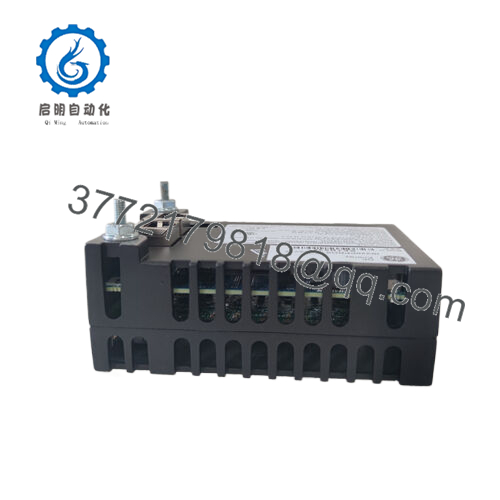
- IS220PDOAH1A
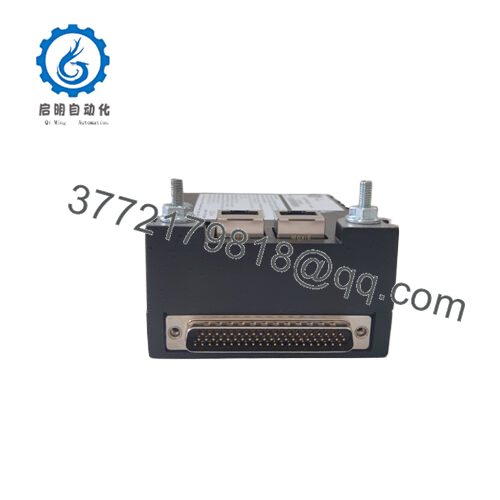
- IS220PDOAH1A
IS220PDOAH1B – Updated revision with enhanced surge protection for higher inductive loads.
IS220YDIAH1A – Input counterpart for balanced discrete monitoring in bidirectional apps.
IS220PAICH1A – Analog output companion for hybrid signal driving in sensor-dense setups.
IS200TBCOH2C – Matching simplex terminal board for non-redundant field wiring.
IS400TDBOH6A – High-density terminal alternative for expanded channel routing in racks.
IS220PPROB1B – Processor board add-on for advanced diagnostics in IONet extensions.
IS220XTURH1A – Turbine interface module for direct governor integration.
Before latching the GE IS220PDOAH1A to its terminal board, audit firmware—below 13.0 mutes EGD, so draw the delta from Emerson’s vault. Chart %Q maps in ToolboxST to evade echoes; stray refs skew states slyly. Assembly voltage vetting counts—its 5W sips steady, but scope the 24V under test tones for sagless. For outputs, tether suppression per channel with 15A fusing to fend arcs, and twist pairs beyond 100 ft to tame crosstalk. Affirm retainer torque at 10 in-lb pre-juice, as loose bites breed dropouts.
In the maelstrom, the status LEDs light the way: green OK for networked outputs, amber FLT for coil or wire woes via %S scans. Quarterly, inject loads with a dummy bank to vet switching shy of 5 ms, nipping wear early. Cinch screws in quake zones quarterly, and dump configs via Ethernet pre-patch. Knot fault flags to controller %S for beacon binds, braiding with rove rounds to bind sub-5 ms tempos, banishing buzz before it bites bits.