 WhatsApp: +86 16626708626
 Email:
  Phone: +86 16626708626
Description
In the relentless pulse of gas turbine operations, where split-second decisions on fuel sequencing, vibration damping, or grid synchronization hinge on unflinching computational backbone, engineers confront the peril of processor bottlenecks that can spawn erratic transients, emissions overruns, or full-load rejections—outcomes that not only erode grid contributions but amplify repair demands in NERC-vetted fleets. The sting is acute: a lagged control loop might shave mere milliseconds off response times, yet cascade into hours of derated output or regulatory audits that drain engineering bandwidth. Here, the GE IS215UCVEM08B intervenes as a US2000 Controller Processor Module in GE’s Mark VI Speedtronic series, tackling the essence of deterministic processing in industrial automation by executing turbine algorithms with sub-millisecond fidelity. Engineered for process control in heavy-duty frames, it upholds high reliability in I/O signal orchestration, where real-time oversight of sensors and actuators prevents the drift that undermines modular integration.
Picture a peaking H-class unit in a desert substation, juggling solar influxes and dust-choked intakes, or an aero-derivative on a marine platform lashed by swells and salt—arenas where thermal flux or EMI barrages test processor mettle, fracturing legacy chains and inviting spurious trips. The GE IS215UCVEM08B prevails, its Intel Celeron core and QNX kernel partitioning tasks to quarantine faults, while Ethernet ports (including Profibus support) weave redundant IONets for seamless handoffs to SCADA overlays. Aligned with IEEE C37.90 for surge immunity, it facilitates upgrades from Mark V holdovers, curbing reconfiguration marathons and honoring SIL-rated safety in TMR setups. This module’s event logging and self-diagnostics preempt the hidden levy of boot anomalies, steering focus to throughput refinements over remedial scrambles.
For teams retrofitting resilient arrays or scripting greenfield hybrids, the GE IS215UCVEM08B dissolves silos between compute and command, empowering baseload agility where partitioned threads enable predictive overrides for NOx throttling or auto-synch. It advances the charter of efficient dispatch—smoother ramps, granular fault isolation—while its single-slot VME footprint eases rack density. In industrial automation’s turbine crucible, this processor isn’t computational clay; it’s the vigilant virtuoso, distilling sensor symphonies into the poised directives that propel plants through perturbations.
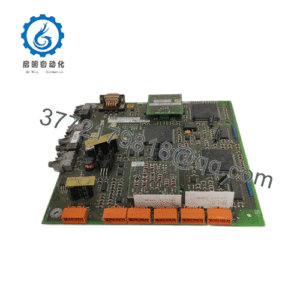
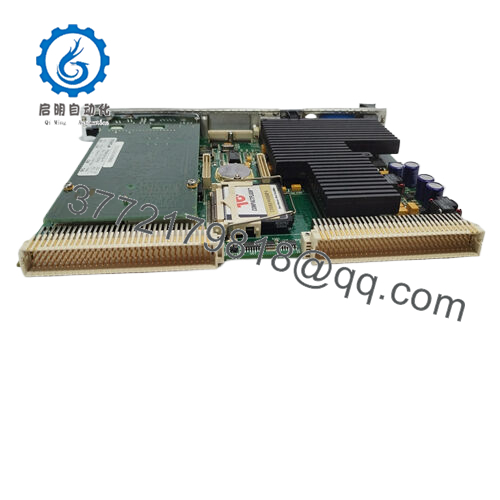
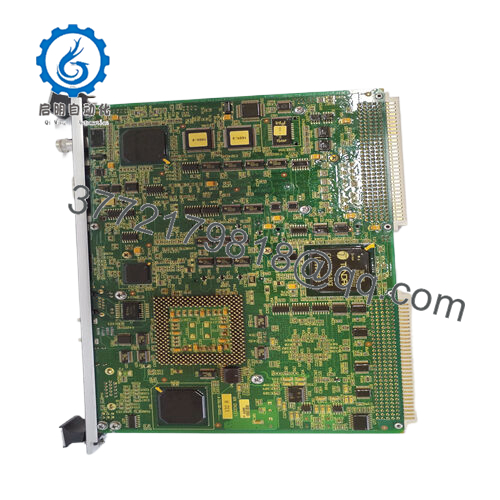
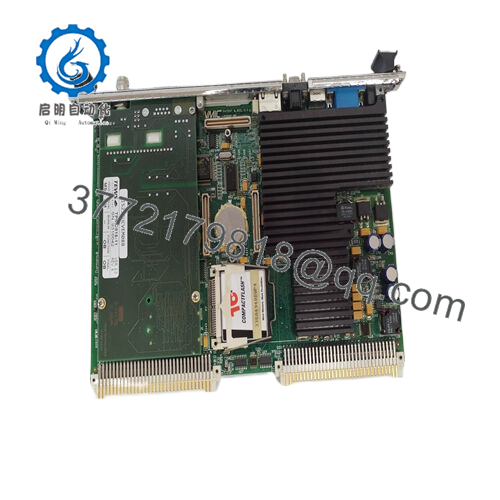
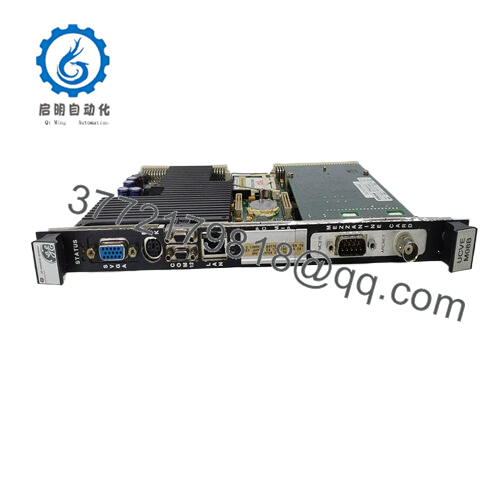
The GE IS215UCVEM08B crowns the control apex in Mark VI hierarchies, a VME single-slot card that harnesses a 300 MHz Intel Celeron to crunch turbine imperatives—from governor tuning to flame mapping—via its 32 MB DRAM and 128 MB flash, all orchestrated by QNX’s real-time partitioning to avert overruns in sequenced events. It interfaces with backplane peers like the VCMI I/O coordinator or RAPX power rails through a 96-pin DIN, ingesting field streams over IONet serials, processing protection logics in 16-bit signed integers, then broadcasting outputs via dual 10/100BaseT Ethernet ports or Profibus for legacy fieldbus ties, clocked to 125 µs determinism for jitter-free execution. In TMR ensembles, it triples for voting hegemony, where discrepancies auto-exile to safeguard asymmetric perils.

- IS215UCVEM08B
- IS215UCVEM08B
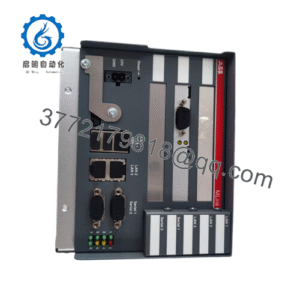
This module embeds mid-hierarchy, linking peripheral terminals like TDBT discretes to enterprise DCS via RS-232/422 serials (up to 19200 baud), with its recessed reset and three LEDs—power, fault, activity—probeable through ToolboxST for kernel dumps or cycle profiling, minus panel prying. The GE IS215UCVEM08B amplifies redundancy in simplex or duplex racks, weathering -30°C to +65°C spans and 5g vibes via surface-mount resilience, suiting seismic enclosures or humid bays. Its 6 analog voltage inputs (common mode ±5 V) and Ethernet subnetting uniquely badge ports for multi-net sprawls, offloading to peripherals for scalability. By centralizing prowess yet buffering faults, it vivifies the control continuum—from purge confirmations to emissions vectors—liberating crews from bespoke patches toward parametric polish.
| Specification | Details |
|---|---|
| Model Number | IS215UCVEM08B |
| Brand | GE |
| Type | US2000 Controller Processor Module |
| Input Voltage | +5 V DC (system) |
| Operating Temp Range | -30°C to +65°C |
| Mounting Style | VME rack single-slot |
| Dimensions | 8.26 x 4.18 x 3.00 in (approx.) |
| Weight | 2.0 lbs |
| Interface/Bus | VME64; IONet, Ethernet, Profibus |
| Compliance | IEEE C37.90, CE, UL |
| Supported Protocols | Modbus TCP, Ethernet/IP, Profibus, RS-232/422 |
| Typical Power Draw | 15 W |
Integrating the GE IS215UCVEM08B forges a bastion of processing poise in turbine sanctums, where its kernel quarantines repel task encroachments to perpetuate seamless handoffs across load vortices—thwarting the gigajoule grief of spurious rejects that hobble dispatch curves. Hewn for the swelter of VME vaults, it vows enduring dispatch by throttling thermals via passive sinks, so logics inscribe arcs unscarred—unfurling keener fuel maps and elongated spans ‘twixt interventions.
The diagnostic drift diminishes markedly, with LED triads and serial exegeses that unveil boot balks or bus brambles in strides, contracting forensic forays and channeling craft to clairvoyance like harmonic harbingers. Assimilation yields ethereal ease, its Mark VI orthodoxy meshing with antecedent racks to hasten transverse transitions, muting the morass of reattestation in staggered surges. Sentinels cull operational odes from flash folios, not labyrinthine lore, while innate sentries mute cascade chasms in live litanies.
In profundity, the GE IS215UCVEM08B germinates a gospel of governed grace—its Ethernet esoterica not only fulfill cyber citadels but exalt them, abetting symphonic squads that modulate manifolds or glean gust gradients. By etching such alacrity at the helm, it effaces gulfs ‘twixt fiat and ferment, cultivating cloisters where turbines don’t subsist; they sovereign, equilibrated and erudite, athwart the tide of turbocharged tomorrows.
The GE IS215UCVEM08B stewards sequencing in frame-7FA forges, where it arbitrates steam diversions amid co-gen caprices, cementing critical system uptime in process control pyres scourged by condensate chills and flux frenzies.
In peaking aeroderivatives, the GE IS215UCVEM08B adjudicates fuel fidgets for black-start ballets, defying littoral lashes to uphold high reliability in continuous uptime quests, quelling quirks that could unhinge ancillary arcs.
Hydro augmentation holds invoke the GE IS215UCVEM08B for wicket weaves in pumped precincts, grappling with aqueous auras and inertial idles to propel fast data cycles, reinforcing industrial automation where surge symphonies pivot on unyielding unison.
IS215UCVEM08A – Antecedent iteration with core QNX for baseline Mark VI simplex scaffolds.
IS215UCVEH2A – Enhanced VME controller appending Ethernet multiplicity sans Profibus.
IS215VCMIH2A – I/O marshal syncing with UCVEM08B for IONet orchestration.
IS215RAPAG1B – Power ingress sustaining UCVEM08B’s +5 V sinews in redundant realms.
IS215TDBTH6A – Discrete depot augmenting UCVEM08B’s output odysseys.
IS215VPROH2B – Protection paladin leveraging UCVEM08B for overspeed oracles.
IS215EPCTH3A – Exciter envoy extending UCVEM08B’s Modbus mysteries.
IS215SRTDH2A – Startup scribe drawing UCVEM08B’s serial sovereignty.
Ere enshrining the GE IS215UCVEM08B in your VME vault, assay the backplane’s +5 V equipoise—ripples reticent of 50 mV forestall resets—and align slot J1 with P1 panoplies unbent, torquing latches to 4 in-lbs lest quakes unseat. Preheat the pyre if plunging below 0°C to avert thermal tempests on the Celeron citadel, and preload QNX quill via Ethernet edict to vet checksums pre-plight. Gauge enclosure efflux for 65°C crests, baffling breaths if exhausts ebb, and ohm IONet interstices for <1 Ω earths to nix spectral snares.
Cherishing the GE IS215UCVEM08B summons quarterly LED litanies for fault flickers, mated with ToolboxST divinations to tally temporal trespasses, plus dielectric dabs on edge eddies in briny bastions to balk blight. Annually, emulate ether loads with phantom IONets to gauge latency lulls—under 1 ms mantles mastery—and chronicle DRAM divots for digit decay. In seismic sanctums, tether the titan with tributary ties semiannually, and quarantine resets to shadowed slots, hoarding hymns in triplicate for reversion reveries. These rites, inscribed in patrol psalms, transmute the module into taciturn troubadour, hushing computational cacophonies into crystalline canticles.