 WhatsApp: +86 16626708626
 Email:
  Phone: +86 16626708626
Description
In the volatile core of turbine management, where real-time orchestration of speed, fuel, and emissions must defy computational lags or communication blackouts, engineers navigate the razor-edge between peak efficiency and perilous instability. A faltering controller isn’t a footnote—it’s the spark for overspeeds that grind rotors, emissions excursions that invite fines, or grid injections that destabilize blackouts. This is the arena the GE IS215UCVEH2A commands as a VME-based controller card in GE’s Mark VI Speedtronic lineup, confronting the imperative for deterministic processing and seamless I/O orchestration in gas and steam turbine realms. It anchors industrial automation by executing control algorithms with clockwork precision, ensuring that sensor streams from governors and exciters coalesce into actionable directives without the drift that plagues lesser architectures.

- IS215UCVEH2A
- IS215UCVEH2A
Consider a combined-cycle plant ramping to meet evening surges or an aero-derivative unit on an offshore platform, lashed by gales and thermal swings—milieus where EMI pulses and voltage flickers conspire to corrupt process control. The GE IS215UCVEH2A stands resolute, its embedded QNX real-time OS and Ethernet backbone filtering noise to sustain high reliability in I/O signal paths, while modular integration lets it scale from simplex pilots to TMR fortresses without recoding marathons. Compliant with IEEE C37.90 for transient resilience, it trims the specter of non-selective trips, channeling focus to throughput gains over crisis aversion. In these high-wire acts, the card’s diagnostic heartbeat preempts failures, slashing mean-time-to-repair and aligning with NERC’s uptime edicts.
For outfits retrofitting Mark V holdovers or scripting hybrid fleets, the GE IS215UCVEH2A dissolves the snags of siloed logic, empowering baseload fidelity where redundant IONets weave a tapestry of failover grace. It propels the mission of leaner cycles—finer spark timing, adaptive droop—while its keyboard port and serial links ease field tweaks sans HMI dependencies. In process control’s relentless forge, this controller isn’t ancillary; it’s the neural nexus, distilling raw turbine tumult into orchestrated poise that safeguards assets and amplifies yields.
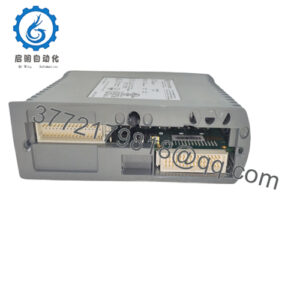
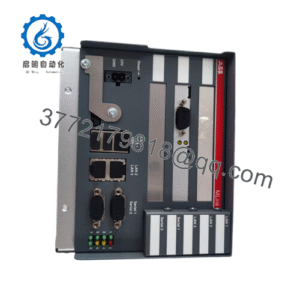
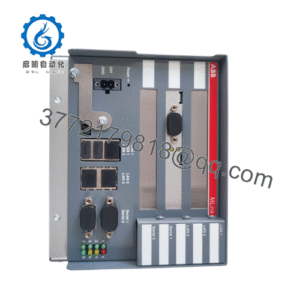
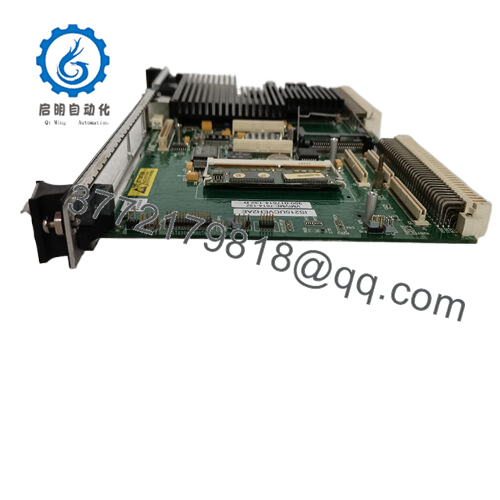
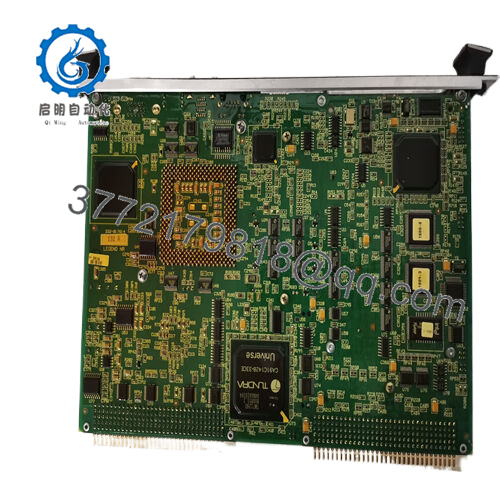
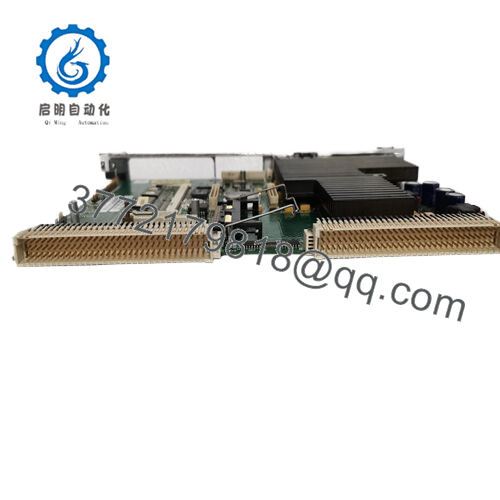
The GE IS215UCVEH2A resides at the apex of Mark VI control hierarchies, a single-slot VME card that processes turbine imperatives via its 300 MHz Intel Celeron core, interfacing with backplane peers like the VCMI I/O module or RAPX power supply through a standardized 96-pin DIN connector. It ingests field data—thrust from thermocouples, flux from current transformers—over IONet serial buses, crunches protection loops and sequencing scripts in QNX’s partitioned kernel, then dispatches outputs to actuators via Modbus-over-Ethernet or hardwired relays, all clocked to sub-millisecond determinism for lag-free synchronization. In TMR deployments, it triples across modules for voting supremacy, where discrepancies self-quarantine to avert asymmetric faults.
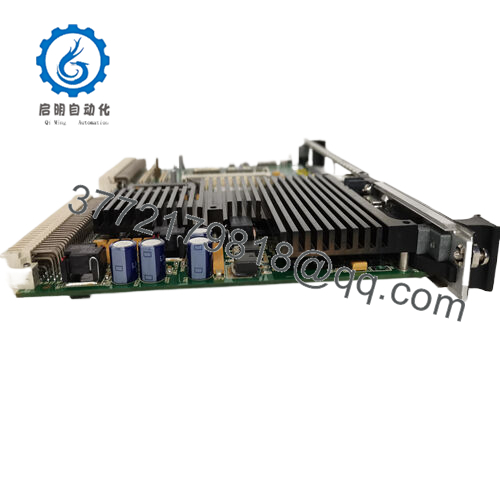
This card dovetails into the mid-stack of automation fabrics, bridging peripheral terminals like TDBT discretes to SCADA overlays, with its dual COM ports (RS-232/422 at 19200 baud) and 10/100BaseT RJ-45 enabling peer chatter or remote polling sans bottlenecks. Diagnostics ignite through three front-panel LEDs—power, fault, activity—interrogable via ToolboxST for waveform captures or boot logs, plus a recessed reset that demands a tool to invoke, curbing errant pokes. The GE IS215UCVEH2A forgoes native redundancy but amplifies it in ensembles, enduring 5g vibes and -40°C to +70°C swings via conformal coatings, suiting it for dusty enclosures or seismic zones. Its 32 MB DRAM and 128 MB flash hoard application binaries and event archives, offloading to peripherals for scalability. By centralizing compute yet decentralizing faults, it fluidizes the control continuum, from purge validations to grid-tie synchros, liberating engineers from bespoke hacks toward parametric prowess.
| Specification | Details |
|---|---|
| Model Number | IS215UCVEH2A |
| Brand | GE |
| Type | VME Controller Card |
| Input Voltage | +5 V DC (system) |
| Operating Temp Range | -40°C to +70°C |
| Mounting Style | VME rack single-slot |
| Dimensions | 233 x 100 x 20 mm (approx.) |
| Weight | 0.3 kg |
| Interface/Bus | VME64; IONet, Ethernet |
| Compliance | IEEE C37.90, CE, UL |
| Supported Protocols | Modbus TCP, Ethernet/IP, RS-232/422 |
| Typical Power Draw | 15 W |
Integrating the GE IS215UCVEH2A begets a citadel of computational surety in turbine bays, where its partitioned OS quarantines tasks to repel overruns, perpetuating seamless handoffs across load transients and paring the levy of spurious halts that erode dispatch margins. Hewn for the crucible of enclosures, it vows enduring throughput by throttling heat via passive sinks, so algorithms etch trajectories unmarred—unfurling crisper emissions profiles and protracted intervals betwixt overhauls.
Diagnostics distill to elegance, with LED trios and serial dumps that unmask boot snarls or bus contentions in strides, curtailing forensic odysseys and channeling savvy to auguries like harmonic forecasting. Assimilation burdens featherlight, its VME orthodoxy meshing with extant racks to hasten lateral leaps, compressing the sprawl of validation suites in phased modernizations. Operators cull runtime vignettes from flash buffers, not labyrinthine dives, while inherent watchdogs mute cascade perils in live probes.
In essence, the GE IS215UCVEH2A germinates a creed of sovereign sequencing—its Ethernet sinews not only fulfill cyber perimeters but transcend them, abetting orchestrated fleets that modulate auxiliaries or harvest DER fluxes. By etching such alacrity at the helm, it effaces rifts ‘twixt fiat and flux, cultivating domains where turbines don’t subsist; they surge, equilibrated and erudite, athwart the tide of electrified tomorrows.
The GE IS215UCVEH2A helms sequencing in HRSG-equipped frames, where it arbitrates steam bypasses amid co-gen variances, cementing critical system uptime in process control crucibles scoured by condensate chills and pressure gyrations.
In peaking aeroderivatives, the GE IS215UCVEH2A adjudicates fuel skews for black-start drills, defying coastal corrosives to uphold high reliability in continuous uptime quests, quelling excursions that could unhinge ancillary loads.
Hydro augmentation plants invoke the GE IS215UCVEH2A for wicket gate logics in pumped storage, grappling with aqueous mists and cyclic inertias to propel fast data cycles, reinforcing industrial automation where surge safeguards pivot on unyielding determinism.
IS215UCVEH2B – Successor variant with bolstered flash for extended logging in TMR expansions.
IS215UCVEM01A – Enhanced module appending Profibus for legacy fieldbus ties.
IS215VCMIH2A – I/O coordinator that syncs with UCVEH2A for IONet multiplexing.
IS215RAPAG1B – Power ingress board feeding UCVEH2A’s +5 V rail in simplex stacks.
IS215TDBTH6A – Discrete terminal augmenting UCVEH2A’s output cascades.
IS215VPROH2B – Protection adjunct leveraging UCVEH2A for overspeed arbitration.
IS215EPCTH3A – Exciter converter interface extending UCVEH2A’s Modbus realm.
IS215SRTDH2A – Startup relay driver drawing UCVEH2A’s serial oversight.
Ere slotting the GE IS215UCVEH2A into your VME crate, assay the backplane’s +5 V steadiness—ripples shy of 50 mV forestall resets—and align slot J1 with P1 shrouds unbent, torquing latches to 4 in-lbs lest vibes unseat. Preheat the bay if dipping below 0°C to avert thermal shocks on the Celeron die, and preload QNX images via Ethernet tether to vet checksums pre-commit. Gauge enclosure flux for 70°C ceilings, baffling intakes if exhausts wheeze, and ohm out IONet stubs for <1 Ω grounds to nix phantom loops.
Cherishing the GE IS215UCVEH2A summons quarterly LED vigils for fault flickers, mated with ToolboxST pings to tally cycle slippages, plus dielectric dabs on edge connectors in briny airs to balk oxidation. Annually, emulate bus loads with dummy IONets to gauge latency spikes—under 1 ms seals fidelity—and chronicle DRAM scrubs for bit flips signaling senescence. In seismic lairs, tether the card with supplemental clips semiannually, and quarantine resets to shadowed slots, hoarding configs in triplicate for reversion rites. These observances, inscribed in patrol sheets, transmute the card into taciturn titan, hushing computational cacophony into crystalline command.