 WhatsApp: +86 16626708626
 Email:
  Phone: +86 16626708626
Description
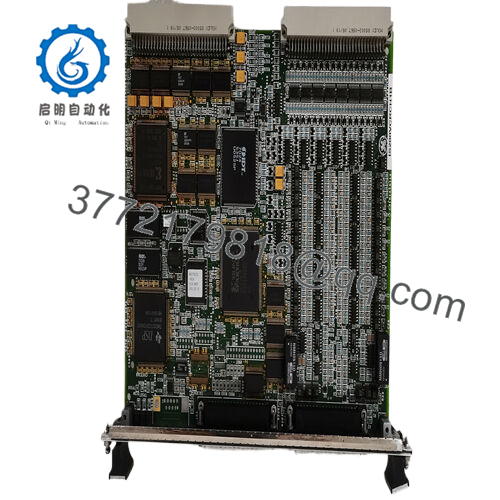
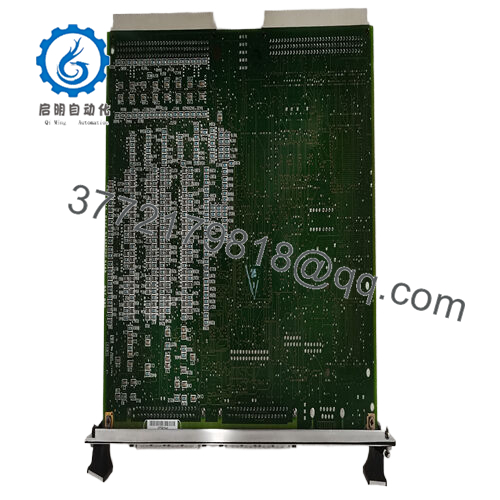
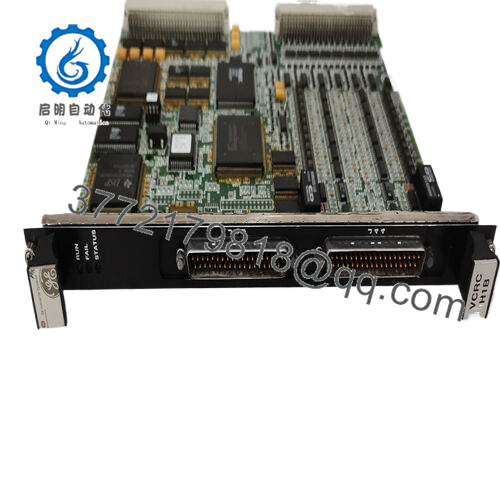
In the intricate dance of turbine governance, where discrete feedbacks from field devices—valves, breakers, or limit switches—must pierce through layers of redundancy to inform split-second protective decisions, engineers grapple with the fragility of unvetted inputs that can spawn phantom trips or overlooked hazards, inflating downtime and compliance risks. The repercussions ripple far: a misread contact closure might delay startups by hours or permit overpressures that cascade into multimillion-dollar overhauls. Here, the GE IS200VCRCH1B asserts itself as a pivotal contact input/relay output board within GE’s Mark VI turbine control framework, fortifying industrial automation by aggregating and validating 48 discrete inputs while orchestrating 24 relay outputs with unyielding precision. Tailored for high-reliability process control in power generation, it ensures I/O signals traverse noisy environs unscathed, enabling fault-tolerant architectures that prioritize uptime over uncertainty.
Envision a heavy-duty gas turbine in a peaking station, contending with grid volatility and seismic tremors, or a steam unit in petrochemical refining where steam leaks or fuel interlocks demand instantaneous relay responses—realms where EMI and vibration erode lesser boards, fracturing modular integration. The GE IS200VCRCH1B prevails, its daughterboard interface channeling inputs from four terminal boards into a cohesive stream, debouncing signals via FPGA logic to quash glitches while driving outputs through isolated relays for commands like solenoid de-energization or alarm latching. Compliant with IEEE C37.90 for transient immunity, it streamlines retrofits in Speedtronic evolutions, curtailing custom cabling woes and aligning with NERC mandates for protective relaying. This board’s diagnostic prowess—real-time health polls and event stamping—mitigates the stealthy toll of intermittent faults, letting crews hone sequencing finesse rather than chase ghosts in harnesses.
For ensembles modernizing legacy fleets or commissioning resilient hybrids, the GE IS200VCRCH1B unravels the knots of disparate discretes, channeling energies toward adaptive droop curves or emissions throttling where voted inputs guarantee consensus without compromise. It advances the ethos of seamless synchronization, where relay chains underpin purge validations or load sheds. In industrial automation’s high-stakes symphony, this board transcends wiring—it’s the discerning curator, sifting field clamor into the crisp directives that sustain turbines through volatility.
The GE IS200VCRCH1B occupies the I/O vanguard in Mark VI control hierarchies, a VME-format board that interfaces with terminal daughterboards (like the TDBT) to harvest 48 dry/wet contact inputs—sourced from pushbuttons, flow switches, or pressure pilots—then funnels them via backplane P1/P2 connectors to voter modules for TMR adjudication, ensuring a single aberrant bit doesn’t derail logic. Outputs bloom from its 24 Form-C relays, energized by 24 V DC coils to toggle field loads up to 5 A, with flyback diodes quelling inductive spikes that could arc across enclosures. In flow, it polls inputs at 125 µs intervals, applies edge detection and filtering through onboard SRAM buffers, and asserts relay states per CPU directives over IONet, achieving sub-10 ms actuation for trip amplification.
Nestled mid-stack, it liaises with processors like the UCV controller or TREA trip boards, where its RS-485 stubs enable daisy-chained diagnostics to SCADA, and optical isolators (per channel) barricade against ground differentials in multi-cabinet sprawls. The GE IS200VCRCH1B embraces redundancy by slotting into simplex or duplex racks, with status LEDs (per relay bank) and test points illuminating coil currents or contact wets via ToolboxST queries, sans disassembly. Rated for 10g shocks and conformal-coated against humidity, it suits seismic zones or offshore skids, implicitly underpinning Modbus TCP for remote overrides. By democratizing discrete dominion—simplifying harness routing with high-density plugs—it liberates the control weave, from interlock cascades to permissive logics, empowering engineers to sculpt sequences with surgical grace.
| Specification | Details |
|---|---|
| Model Number | IS200VCRCH1B |
| Brand | GE |
| Type | Contact Input/Relay Output Board |
| Input Voltage | 24 V DC (system); 5-125 V DC inputs |
| Operating Temp Range | -30°C to +65°C |
| Mounting Style | VME rack-mounted |
| Dimensions | 280 x 133 x 20 mm (approx.) |
| Weight | 0.6 kg |
| Interface/Bus | VME backplane; RS-485 |
| Compliance | IEEE C37.90, CE, UL |
| Supported Protocols | Modbus TCP, IONet |
| Typical Power Draw | 12 W |
Selecting the GE IS200VCRCH1B instills a fortress of discrete discernment in turbine vaults, where its input vetting and relay orchestration repel spurious closures to perpetuate unerring interlocks across endurance trials—thwarting the fiscal bite of errant scrams that curtail capacity by gigawatt-hours. Sculpted for the electromagnetic fray of enclosures, it vows sustained acuity by isolating paths against surges, so outputs snap with fidelity, refining startup cadences and eking efficiencies in fuel modulation.

- IS200VCRCH1B
- IS200VCRCH1B
The vigilance eases markedly, as banked LEDs and polled counters unveil contact chatter or coil hesitations in heartbeats, telescoping triage spans and reallocating drills to prophecies like wear prognostics. Embedment yields trifling toil, its Mark VI pedigree dovetailing with extant VME slots to expedite swaps amid fleeting outages, blunting the drag of ancillary validations in cascade modernizations. Sentinels mine event vignettes from buffers, not exhaustive etymologies, while inherent snubbers tame backlash perils in charged audits.
At core, the GE IS200VCRCH1B begets a canon of consensual command—its relay sinews not only salve regulatory rites but sanctify them, abetting choreographed ensembles that temper auxiliaries or harvest transient fluxes. By imprinting such veracity at the tactile threshold, it effaces fissures ‘twixt contact and calculus, nurturing precincts where turbines don’t abide; they ascend, equilibrated and erudite, athwart the torrent of electrified exigencies.
The GE IS200VCRCH1B buttresses interlock discretes in frame-7FA blocks, where it funnels breaker statuses and valve proofs to enforce permissive ramps amid thermal transients, shoring critical system uptime in process control forges flayed by pressure pulses.
In cogeneration skids, the GE IS200VCRCH1B corrals ESD toggles and scrubber alarms for refinery tie-ins, weathering hydrocarbon hazes to vouchsafe high reliability in continuous uptime quests, staunching surges that imperil process chains.
Distributed peaking clusters enlist the GE IS200VCRCH1B for lube oil discretes in urban grids, grappling with seismic sways and rapid cycles to propel fast data cycles, fortifying industrial automation where black-start edicts hinge on impeccable relay resolve.
IS200VCRCH1A – Predecessor variant with baseline channel isolation for simplex Mark VI integrations.
IS200TDBTH6A – TMR discrete terminal that complements VCRCH1B for expanded input voting.
IS215UCVEH2A – Controller core adjudicating VCRCH1B’s inputs for sequencing arbitration.
IS200RAPAG1B – Power rail provider sustaining VCRCH1B’s 24 V coil demands.
IS200TREAH1A – Trip amplifier extending VCRCH1B outputs for latching safeguards.
IS200RTDCH1A – RTD hybrid board for analog discretes alongside VCRCH1B.
IS200EPCTH3A – Exciter tie-in leveraging VCRCH1B relays for field modulation.
IS200SRTDH2A – Startup relay sequencer drawing VCRCH1B’s contact oversight.
Before inducting the GE IS200VCRCH1B into your VME lattice, assay daughterboard harnesses for polarity fidelity—reversals can invert voting by 50% or greater—so ohm paths pre-plug; affirm slot depth clears the 20 mm spine, torquing captives to 5 in-lbs to defy 5g quakes, and preload configs in ToolboxST to probe debounce latencies under 2 ms. Calibrate input thresholds with dry relays at 24 V wet, capping offsets below 1 V, and ventilate the rack for 65°C surges, perhaps with diverters if heat plumes converge.
Cherishing the GE IS200VCRCH1B beckons bimonthly LED patrols for relay quiescence, yoked with DMM laps at test points to gauge coil resistances within 5% of nominal, plus dielectric swabs on barriers in vaporous vaults to forefend bridging. Annually, emulate fault fronts with contact simulators to vet output synchrony—coincidence shy of 500 µs is paramount—and docket divergences for attrition auguries. In jolt-jolted lairs, cinch supplemental stays quarterly, and sequester flashes to dormant slots, archiving schemas in quadruplicate for reclamation rites. These vigils, etched in vigilance vaults, recast the board as reticent regent, hushing discrete discord into dependable decrees.