 WhatsApp: +86 16626708626
 Email:
  Phone: +86 16626708626
Description
Real-World Use & Application Scenarios
In modern manufacturing environments, the GE IC698CRE030-DE sits at the heart of high-availability control systems, coordinating real-time operations across machines, lines, and processes. Its role is especially critical in packaging lines, metal stamping, automotive assembly, and food and beverage processing where deterministic response and reliable data management are non-negotiable. The module is designed to support the PACSystems RX7i family’s distributed architecture, enabling centralized orchestration of logic with local, fast access to I/O data and process variables. When plant floors demand robust web-based monitoring, synchronized timekeeping, or enhanced diagnostic visibility, this CPU provides the horsepower and integration points necessary for scalable control. It supports high-speed scheduling, multi-task execution, and reliable data exchange with connected devices, operators, and supervisory systems. In practice, engineers rely on this CPU to maintain precise cycle timing, ensure accurate sequencing, and preserve program integrity during power transitions. The full model name IC698CRE030 emerges repeatedly in maintenance records, spare-part catalogs, and system drawings as the standard RX7i CPU for demanding control tasks. Its placement in control cabinets and rack configurations is often planned around network accessibility, cooling provisions, and ease of backplane interconnections, aligning with keywords like “used in industrial automation” and “applicable in control systems” for search relevance.
Product Introduction & Positioning
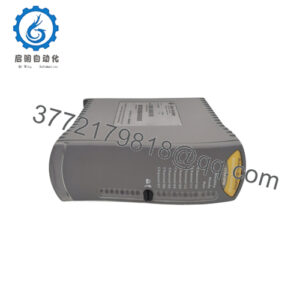
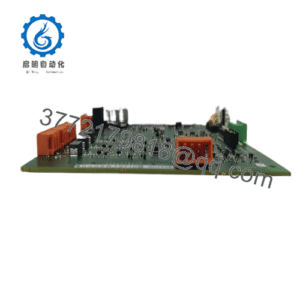
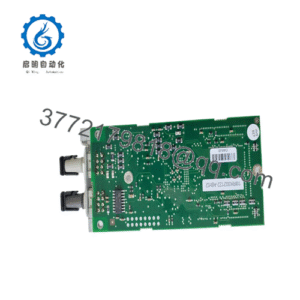
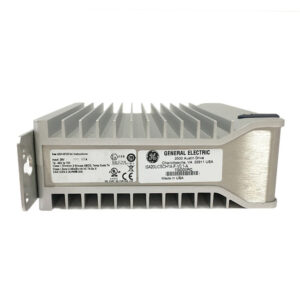
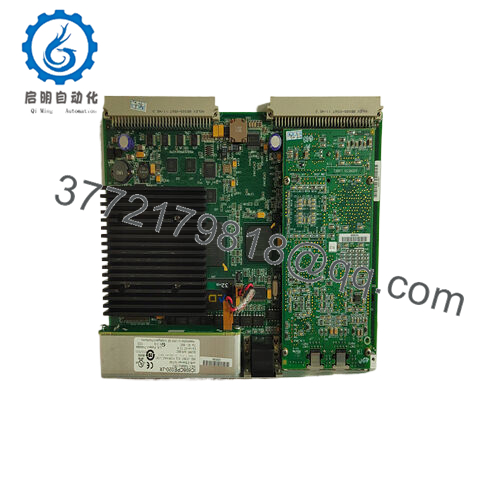
The IC698CRE030-DE is a central processing unit (CPU) within GE’s PACSystems RX7i line, engineered for reliable, real-time control of complex machines and processes. As the RX7i family’s production-grade CPU, it delivers a balance of processing power, memory management, and ruggedness suitable for demanding industrial environments. This module integrates into the RX7i backplane, communicating with I/O, network interfaces, and companion modules to form a cohesive control system. Its value lies in delivering deterministic execution, scalable software architecture, and seamless interoperability with GE Fanuc’s engineering tools and firmware ecosystems. For engineers and integrators, the IC698CRE030-DE provides a familiar, upgrade-friendly pathway within the PACSystems portfolio, enabling enhancements to performance, diagnostics, and remote management without a complete system overhaul. The model name IC698CRE030-DE should be used consistently in procurement and documentation to ensure compatibility with the RX7i hardware series and firmware baselines.
Key Technical Features & Functional Benefits
The IC698CRE030-DE brings robust real-time control capabilities with a focus on reliability and integration. Its CPU core handles multiple task streams with predictable scheduling, while onboard memory and program storage support sizeable control logic and data handling. The rugged enclosures and standardized backplane interface are designed for factory floors, offering stable mounting, thermal resilience, and straightforward cabinet integration. When paired with GE Fanuc’s software tools, it enables clear project structures, streamlined diagnostics, and straightforward firmware updates essential for long-term maintenance. The RX7i architecture emphasizes modularity; this CPU can be swapped or upgraded with minimal wire changes, preserving I/O mappings and communication configurations. For long-term reliability, the unit benefits from refined power management, temperature-tolerant operation, and industry-standard EMC compliance, contributing to consistent control performance across shifts and seasons. In practice, the IC698CRE030-DE is chosen for its balance of speed, system compatibility, and ease of expansion within GE’s automation ecosystem, making it a trustworthy backbone for scalable manufacturing automation.
Detailed Technical Specifications
Parameter Value
Model IC698CRE030-DE
Brand GE Fanuc
Type Central Processing Unit
Power Supply Refer to system power distribution for RX7i, typically 5 V/12 V logic with optional auxiliary rails
Operating Temperature Industrial range, as defined by PACSystems RX7i specs
Mounting Rack/Backplane compatible with RX7i modules
Dimensions Standard RX7i CPU footprint
Weight Moderate, within typical PACSystems CPU range
Interfaces Ethernet/serial backplane, client interfaces per RX7i standard
Certifications Industry standards for safety and EMC
Cooling Passive or active cooling depending on cabinet design
Environmental Rating Industrial-grade enclosure suitability

- IC698CRE030-DE
Related Modules or Compatible Units
IC698CRE030-DE – Primary RX7i CPU for high-demand control tasks within the RX7i family
IC698CRE040-DE – Higher-performance RX7i CPU option in the same platform
IC698CPE020-GM – I/O processing module compatible with RX7i CPUs
IC698ACC640 – Battery and backup support accessory for memory retention and state preservation
IC694ALU608 – Auxiliary logic unit commonly used in integrated GE automation schemes
IC694MDL501 – Mechanical drawer/controller module for expanded I/O handling
IC695CRN001 – Network communications module for RX7i ecosystem
IC698BEM722 – Bus expansion module in the RX7i line for expanded backplane connectivity
Installation Notes & Maintenance Best Practices
Plan pre-installation cabinet layout to accommodate the RX7i backplane, ensuring adequate clearance for wiring and cooling airflow. Verify that the server/SCADA network topology aligns with Ethernet or fieldbus interfaces supported by the RX7i CPU family. Grounding and surge protection should be implemented per plant standards to minimize transients on the backplane. During maintenance, establish a routine for verifying CPU health metrics, reviewing error logs, and confirming firmware consistency across RX7i modules. Schedule preventive checks for cables, connectors, and heatsinks, and ensure firmware baselines are documented in a centralized asset registry. When performing software updates, stage changes in a test cabinet before deployment to production line-ups; maintain a rollback plan in case of incompatibilities with I/O or network modules. Regularly inspect for dust accumulation and verify that cooling benchmarks meet the manufacturer’s specifications to prevent thermal throttling in high-cycle environments.