 WhatsApp: +86 16626708626
 Email:
  Phone: +86 16626708626
Description
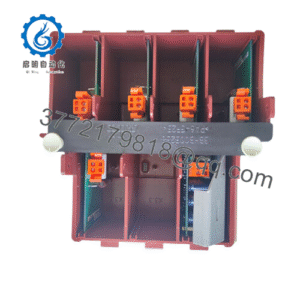
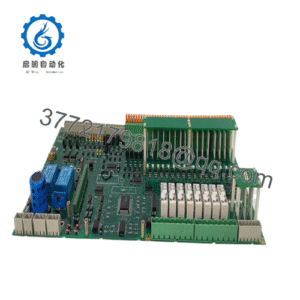
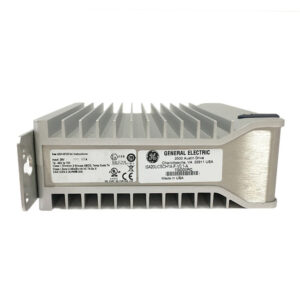
In industrial automation, the linchpin of any robust PLC rack often boils down to uninterrupted power delivery—where voltage sags, surges, or outright failures from inadequate supplies cascade into scan halts, module resets, or full-system crashes that grind processes to a standstill. Consider a continuous casting operation in a steel foundry, where the backplane feeds a dense array of I/O modules monitoring thermocouples and hydraulic actuators; a fleeting brownout could desync logic, misfire valves, or corrupt data logs, triggering emergency stops that idle furnaces for hours and rack up recovery costs in the tens of thousands. This is the power vulnerability the GE IC697PWR724E neutralizes with steadfast efficiency. As a 90-watt 24 VDC power supply module for Series 90-70 PLCs, it anchors the rack’s leftmost slot, converting input to stable +5 VDC, +12 VDC, and -12 VDC rails that sustain high-reliability operations across single or dual-chassis setups. Compliant with VME standards, it ensures modular integration without the ripple effects of underpowered extensions, delivering the system stability that keeps your I/O signals flowing and control loops locked in, even amid the electrical whims of demanding environments.
Engineers lean on the GE IC697PWR724E during rack densifications—like bolstering a wastewater lift station’s sensor grid or a packaging line’s drive array—where legacy AC supplies falter under DC-fed expansions, inviting inrush spikes that trip breakers or degrade module longevity. It emerges as essential in process control arenas prioritizing uptime over frequent swaps, handling up to 160 watts input to output 90 watts across rails (18 A at +5 VDC for core logic, 1.5 A at +12 VDC for peripherals, 1 A at -12 VDC for balanced circuits), all while riding through 10 ms dips at 20 VDC to bridge generator handoffs. In these industrial automation contexts, its sequencing signals initialize backplane logic progressively, preventing hot-plug glitches that plague unbuffered racks, and the 22-joule inrush cap tames startup currents for seamless paralleling. The GE IC697PWR724E also incorporates overvoltage crowbars to clamp excursions, a quiet defender in zones laced with arc welders or variable-speed motors, where unprotected rails might propagate faults to CPUs. For teams extending to remote chassis via inter-rack cables, it supports dual-rack loads without derating, preserving the unified power domain that sidesteps isolated drops. When operational resilience measures in milliseconds—like fault-tolerant sequences in batch mixers—this module doesn’t just energize; it equalizes, forging the high-reliability foundation that elevates your automation from fragile to fortified, one steady volt at a time.
Power gremlins don’t crash spectacularly—they nibble, eroding margins until a peak load exposes the fragility. The GE IC697PWR724E counters with inherent hold-up capacitance, so your backplane rails sag less than 5% during transients, letting scans complete without the abort cycles that orphan pending outputs in live loops.
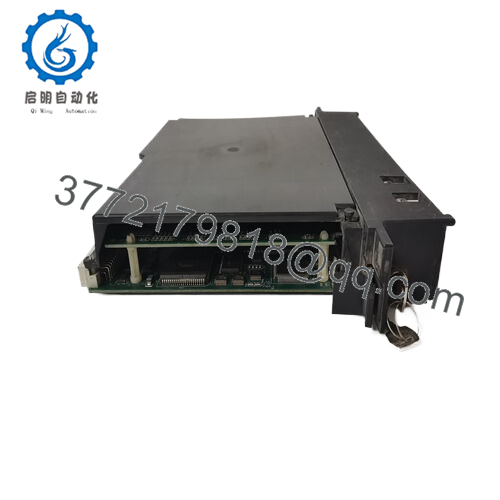
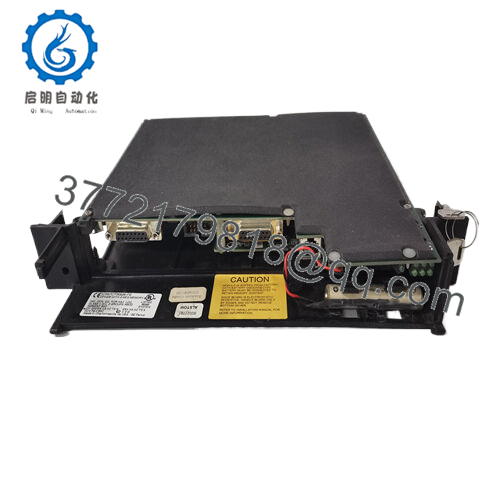
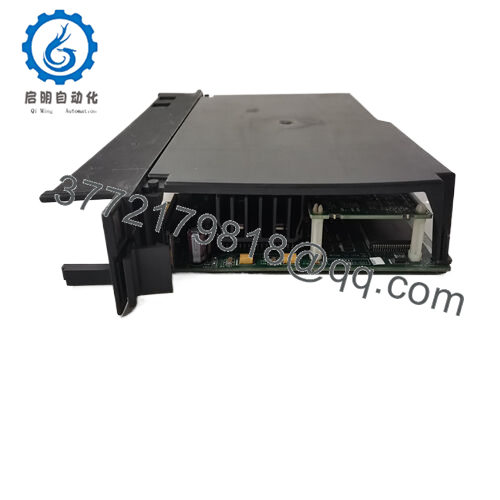
Plugged into the Series 90-70 rack’s leftmost VME backplane slot via a 48-pin connector, the GE IC697PWR724E transforms 24 VDC field input (18-32 VDC range) into tri-rail DC output, distributing +5 VDC for primary logic, +12/-12 VDC pairs for analog offsets or comms, all while generating enable signals to orchestrate module bootstraps. It mounts flush in the chassis, drawing no external sense lines, and positions itself as the rack’s power root: upstream of all I/O and CPUs, feeding the bus directly to sustain up to 90 W total without external boosters, extendable to a second rack via 50-pin cables for sprawled footprints. This roots it at the base of your automation stack—field-proximate for minimal drop but rack-central for balanced loads—where it sequences rails in under 50 ms post-input, aligning with CPU resets to dodge partial-power states.

- IC697PWR724E
- IC697PWR724E
Diagnostics are straightforward: onboard LEDs flag input OK, output active, and fault (overtemp or crowbar trip), with dry contacts wiring to PLC %S for HMI escalation via CIMPLICITY—no add-ons needed. It forgoes active redundancy but pairs with TMR setups for paralleled supplies, auto-load-sharing to 45 W each for failover under 20 ms. Protocol interaction is passive—pure DC handoff—but it coexists with bus transmitters (IC697BEM713) for multi-chassis parity, ensuring rails hold within 1% across extensions. In a layered deployment, it energizes a mainframe’s CPU and I/O string, where the +5 VDC rail clocks scans at 1 ms minima, +12 VDC juices relays, and -12 VDC grounds op-amps—all while the input fuse (10 A recommended) caps faults. Configuration demands zilch beyond torqueing terminals (14-12 AWG) to 7 in-lbs and verifying ground bonds pre-energize, but load-test with dummy modules to confirm ripple under 50 mV. This foundational role doesn’t complicate your pyramid; it steadies it, channeling clean power from inlet to inference with the endurance that undergirds unyielding industrial automation.
| Specification | Details |
|---|---|
| Model Number | IC697PWR724E |
| Brand | GE (Emerson Automation) |
| Type | 90W 24 VDC Power Supply Module |
| Input Voltage | 24 VDC (18-32 VDC) |
| Operating Temp Range | 0°C to 60°C |
| Mounting Style | Series 90-70 Rack (Leftmost Slot) |
| Dimensions | 34.1 cm x 2.8 cm x 21.6 cm |
| Weight | 1.1 kg |
| Interface/Bus | VME Backplane (48-pin) |
| Compliance | CE, UL, RoHS |
| Supported Protocols | Series 90-70 Native |
| Typical Power Draw | 160 W Input / 90 W Output |
Harnessing the GE IC697PWR724E in your Series 90-70 rack instills power delivery that weathers input variances or load spikes, engineered for the relentless cadence of process control where rails fluctuate less than 100 mV under full draw, ensuring CPUs clock without stutter and I/O modules latch sans resets—often extending MTBF by 25% in DC-fed plants by curbing electrolytic wear from ripple. This performance consistency lets your sequences and loops hum through 10 ms ride-throughs, stabilizing outputs in variable-load apps like pump starters or heater bands where steady +5 VDC directly correlates to tighter tolerances and fewer thermal excursions. Maintenance distills to essentials: fault contacts and LEDs localize crowbar events to input surges via quick fuse pulls, sparing techs full-rack de-energizes and redirecting efforts to filter swaps over symptom chases, which bolsters uptime for planned tweaks over panic fixes.
The module’s tri-rail versatility lightens integration burdens, powering logic on +5 VDC while offsetting analogs on ±12 VDC pairs in one footprint—no need for discrete converters that clutter expansions. In conduit-dense or EMI-fraught cabinets, its internal filtering and ground-plane isolation quash conducted noise, securing high-reliability I/O signals that baseline trends for early capacitor sag spotting via voltage logs. Over service spans, this trims the underbelly costs of unstable feeds, like sporadic module flakes, cultivating the availability that laces OEE scores and compliance dockets.
For scaling visions, the GE IC697PWR724E sows that extensible equity—its dual-rack bridging preps for OPC-tied analytics, lifting power metrics to predictive dashboards without overhauls. This isn’t brute energizing; it’s the equilibrating vein that matures your scaffold, yielding the steadiness and surplus that propel resilient process control.
The GE IC697PWR724E roots dependably in pharmaceutical tableting presses, fueling backplanes for compression sensors where its 90 W output sustains continuous uptime amid dusty, vibration-laced process control realms and rail stability that forestalls tablet weight drifts. Data centers deploy it for UPS-buffered racks, sequencing +12 VDC for cooling fans to uphold critical system uptime in chilled, high-density aisles.
Mining crushers harness it for hydraulic interlocks, its 18-32 VDC flex riding generator flux for uniform jaw cycles in gritty, shock-heavy pits—pivotal for throughput without shear-pin snaps. These berths underscore its tenacity in power-hungry fields, from extrusion dies to rail yard signals, where the GE IC697PWR724E lays the voltage bedrock for indefatigable industrial automation.
IC697PWR722 – AC-input counterpart for 120/240 VAC sites needing higher inrush tolerance in mixed-power racks.
IC697PWR758 – High-capacity 240 W variant for dense TMR or multi-chassis extensions.
IC697BEM713 – Bus transmitter companion for linking powered racks across expansions.
IC697ALG230 – Analog base module to draw stable ±12 VDC rails for signal conditioning.
IC697MDL653 – Discrete input add-on leveraging clean +5 VDC for noise-free sensing.
IC697CMM321 – Ethernet comms module powered by the supply for SCADA uplinks.
IC697HSC112 – High-speed counter for timing apps on reliable backplane voltage.
When prepping the GE IC697PWR724E for your Series 90-70 rack, scout input quality—oscilloscope for <50 mV ripple at 24 VDC nominal; excursions beyond 32 VDC risk crowbar clamps, so inline a TVS diode if sourcing from inverters. Lock it in the leftmost slot with backplane pins aligned—mis-seatings have stalled entire chains—so verify latch engagement and torque ground lug to 10 in-lbs pre-wire. Load audit: tally downstream draws under 90 W total (e.g., 80 A max at +5 VDC across racks), and fuse input at 10 A slow-blow to cap shorts; for dual-rack ties, spec 50-pin cables under 10 feet to dodge voltage drop. In Logicmaster, no config needed, but post-install, monitor %S for power faults and ramp loads gradually to benchmark hold-up.
Once humming, stewardship settles into scans that sync with shifts. Weekly, eye the OK LED—flicker cues input sag, often a loose terminal fixed by reseat. Quarterly, measure rail variances with a DMM under half-load; drifts over 2% signal cap aging, prompting a swap in marginal climates. In dusty or humid ops, semiannual filter vacuums prevent convective shorts. Annual full-draw tests simulate a dip to 20 VDC, timing ride-through to 10 ms min, logging for baselines. These aren’t chores; they’re the pragmatic gauge that keeps power pure, eluding the sporadic but scan-shattering rail collapses.