 WhatsApp: +86 16626708626
 Email:
  Phone: +86 16626708626
Description
In the relentless pace of manufacturing plants, where conveyor lines hum around the clock and robotic arms cycle through thousands of repetitions, reliable output control keeps everything synchronized. Downtime from faulty relays or voltage spikes can cost thousands per hour, especially in automotive assembly or food processing facilities demanding precise solenoid actuation for packaging seals or valve sequencing in water treatment plants. Engineers turn to rugged modules like the GE IC697MDL750 for these high-stakes environments, where it drives actuators, indicators, and interlocks across dusty shop floors or humid process areas. Used in industrial automation setups, this module tackles challenges like group isolation to prevent cascading failures during surges, ensuring stable operation in control systems that manage batch mixing in pharmaceuticals or material handling in warehouses. Picture a steel mill coordinating hoist motors amid electromagnetic interference—the GE IC697MDL750 steps in, delivering consistent 24/48 VDC signals to keep production flowing without false trips. Beyond factories, it’s applicable in control systems for utilities, powering remote pump stations or emergency shutdown circuits that must respond flawlessly under variable loads. What sets it apart starts with its core design: a 32-point discrete output module engineered for the GE Fanuc Series 90-70 PLC rack, but now seamlessly integrated into modern PACSystems RX7i architectures. It handles the grunt work of outputting low-current commands to field devices, bridging logic programs with physical actions in ways that minimize wiring complexity and boost system uptime.
Product Overview
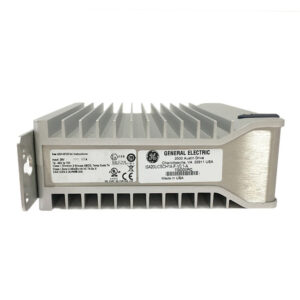
The GE IC697MDL750 stands as a high-density discrete output module tailored for demanding programmable logic controller applications. Part of the legacy GE Fanuc Series 90-70 lineup—fully compatible with PACSystems RX7i and RX3i backplanes—it slots into standard rack positions to expand output capacity without overhauling existing setups. In a typical control system architecture, it resides alongside CPUs and power supplies, translating ladder logic decisions into real-world control signals for devices like relays or lights. What makes the GE IC697MDL750 invaluable for integrators is its group-wise isolation, which protects against common industrial gremlins like ground loops or inductive kicks from motors. Engineers appreciate how it fits into modular designs, supporting hot-swappable maintenance in redundant systems while interfacing via the PLC’s backplane bus for diagnostics and configuration. Whether retrofitting older 90-70 panels or building new RX7i skids, this module delivers scalable I/O density that aligns with protocols like SNP or Modbus, keeping data flowing to HMIs and SCADA without bottlenecks. Its positioning as a workhorse output handler underscores GE’s focus on longevity, making it a go-to for projects where reliability trumps flash.
Core Technical Strengths
Engineers specify the GE IC697MDL750 for its rock-solid performance under load: each of its 32 points sinks 0.5 A steadily at 24/48 VDC, with groups capped at 2 A to handle peak demands from solenoids or pilot devices without thermal runaway. Isolation between four groups of eight points—rated at 1500 V—shields against noise in EMI-heavy spots like welding cells, while a 10 A inrush tolerance for 20 ms absorbs startup surges from capacitive loads. This setup ensures minimum voltage drop under full current, maintaining signal integrity over long runs typical in large-scale automation.
Hardware-wise, the GE IC697MDL750 embodies industrial toughness with its rack-mount form factor, designed for 19-inch PACSystems cabinets and front-panel LEDs that flag point status at a glance. Compact dimensions prevent crowding in dense I/O sections, and passive cooling relies on rack airflow, sidestepping fans that fail in harsh vibes. Compatibility shines through backplane connectivity with GE CPUs, supporting firmware updates via Proficy Machine Edition for seamless integration into Ethernet/IP or Profibus networks.
Reliability extends to long-haul operation, with opto-isolated inputs guarding against overvoltages up to 60 VDC and a service life exceeding a decade in rated conditions. Field-proven in oil & gas skids, it cuts troubleshooting time with built-in diagnostics for open wires or shorts, letting maintainers focus on uptime rather than guesswork.
Technical Specifications
| Parameter | Value |
|---|---|
| Model | GE IC697MDL750 |
| Brand | GE (Fanuc/Emerson/PACSystems) |
| Type | 32-Point Discrete Output Module |
| Power Supply | 20-60 VDC (Rated 24/48 VDC) |
| Operating Temperature | 0 to 60°C |
| Mounting | Rack-mounted (5-slot or larger) |
| Dimensions | 5.5″ H x 1.15″ W x 10.5″ D |
| Weight | Approx. 1.2 lbs (0.54 kg) |
| Interfaces | PLC Backplane Bus |
| Certifications | CE, UL, cUL |
| Cooling | Passive (Convection) |
| Environmental Rating | IP20 (Rack Environment) |
| Outputs | 32 (4 groups of 8) |
| Output Current | 0.5 A/point, 2 A/group |

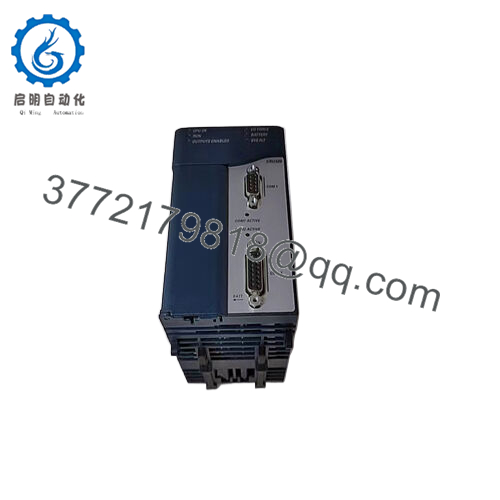
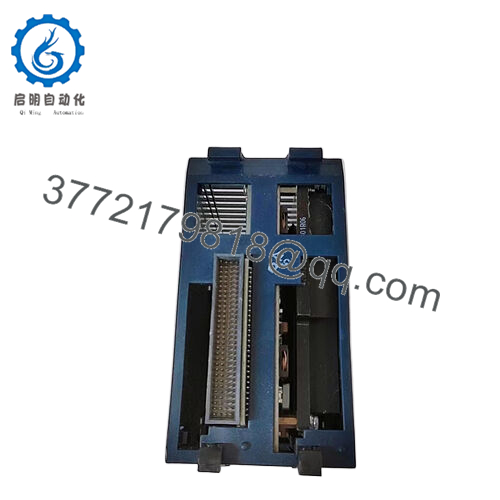
- IC697MDL750
- IC697MDL750
Compatible Modules
IC697MDL740 – Companion input module with matching voltage for balanced I/O pairs in 90-70 racks.
IC697MDL653 – Higher-current AC output alternative for mixed-voltage panels.
IC697CPU771 – Primary CPU for Series 90-70 systems hosting the IC697MDL750.
IC695PSD040 – PACSystems power supply providing stable DC for output modules.
IC697HSC700 – High-speed counter pairing for position feedback loops.
IC697CMM321 – Communications module extending network reach alongside outputs.
IC697ALG230 – Analog output for hybrid digital/analog control architectures.
IC695NIU001 – Network interface unit for Ethernet upgrades with IC697MDL750.
Installation and Maintenance
Before sliding the GE IC697MDL750 into a rack, verify cabinet depth exceeds 12 inches for cable access and ensure grounding straps connect to the backplane frame to bleed off transients—critical in sites with VFD harmonics. Position it away from high-heat sources like power supplies, leaving one slot clearance if airflow is restricted, and torque screws to 15 in-lbs to avoid vibration loosening during machine startups. Pre-power checks include continuity on output leads and confirming no shorts across groups, using the module’s diagnostic bits in logic to validate addressing post-install.
Ongoing maintenance favors quarterly visual scans for dust buildup on terminals, which can skew heat dissipation, paired with logic-forced output tests to catch latch-up early. Firmware flashes via USB keep diagnostics sharp, while monitoring group currents prevents overloads in evolving processes—expect 50,000+ cycles per point with proper fusing. Integrators log fault tables from the CPU for trend analysis, extending module life beyond specs in proactive setups