 WhatsApp: +86 16626708626
 Email:
  Phone: +86 16626708626
Description
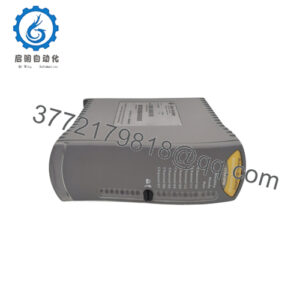
In industrial automation, the unforgiving demands of safety-critical systems often reveal a stark truth: standard PLCs, while versatile, falter under the weight of triple modular redundancy (TMR) requirements, where a single point of logic failure could unleash cascading hazards like unchecked gas flows or delayed emergency shutdowns. Picture an offshore platform’s fire and gas detection network, where split-second decisions hinge on synchronized logic across triplicate racks—any desynchronization risks evacuations, regulatory fines, or worse, endangering lives and assets in environments where downtime equates to existential threats. This is the redundancy rift the GE IC697CPM790-GD bridges decisively. As a 64 MHz, 32-bit floating-point CPU for Series 90-70 PLCs, it embeds TMR intelligence directly into a single-slot module, delivering 1 MB of battery-backed memory and deterministic scan rates that ensure fault-tolerant process control without the sprawl of external voting hardware. Tailored for IC66 TMR architectures, it fortifies high-reliability operations by triplicating logic execution on-chip, maintaining I/O signal integrity even if one channel votes off-line, and supporting seamless hot-standby swaps that preserve uptime in the face of hardware transients.
Control engineers specify the GE IC697CPM790-GD in high-integrity deployments—such as ESD systems in refineries or burner management in power plants—where conventional CPUs lack the embedded diagnostics to self-vote discrepancies, leading to false trips or undetected drifts that compromise system stability. It becomes indispensable during upgrades to compliant frameworks like SIL 3-rated loops, where modular integration must scale to 32K I/O points without inflating rack footprints or introducing latency spikes above 0.4 μs per boolean. In these process control landscapes, the module’s 80486DX2 core crunches floating-point math for complex PID models or gas dispersion algorithms, while its TMR fabric—comprising three interleaved processors—cross-checks outputs in real-time, aborting only on majority dissent to avert nuisance alarms. For teams retrofitting legacy 90-70 chassis, it mates with existing backplanes via native bus protocols, enabling phased redundancy without full logic rewrites, and its programmer port accelerates firmware loads over serial links. The GE IC697CPM790-GD also incorporates over-temperature and memory parity checks to flag degradations early, a bulwark in harsh zones riddled with EMI or seismic risks, where unprotected logic might cascade into full-system faults. When industrial automation stakes ride on zero-tolerance for errors—like turbine trips or conveyor interlocks—this CPU doesn’t just compute; it adjudicates, embedding the high-reliability safeguards that turn vulnerability into vigilance, ensuring every scan cycle upholds the operational fortress your processes demand.
TMR isn’t a luxury—it’s the firewall against the subtle faults that erode safety margins over time. The GE IC697CPM790-GD weaves voting into the silicon, so discrepancies in logic paths self-resolve without operator intervention, keeping your ESD sequences crisp and your gas detectors vigilant amid the noise of live operations.
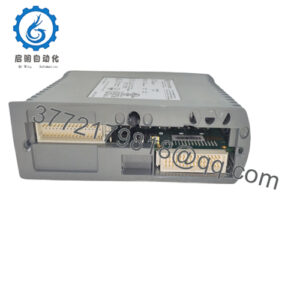
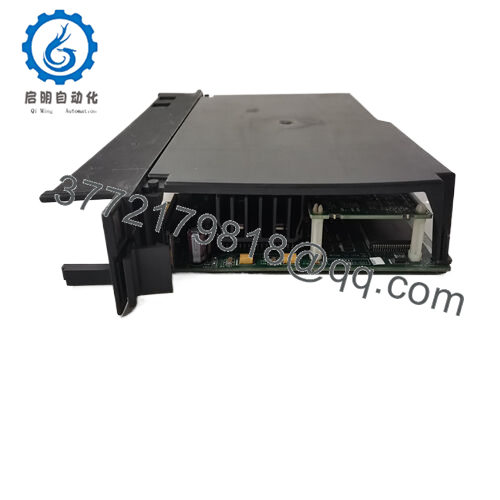
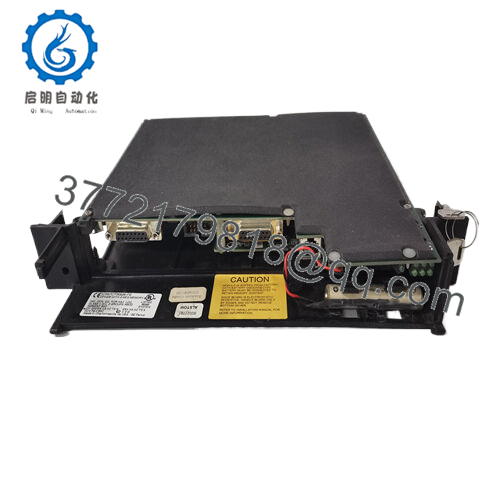
Housed in the Series 90-70 main rack’s CPU slot, the GE IC697CPM790-GD commands the backplane as the TMR nexus, executing triplicated ladder logic across its three internal channels while aggregating I/O references (%I, %Q, %M) from up to seven chassis via bus transmitters. It draws +5 VDC from the rack, with a lithium battery preserving 1 MB RAM for program retention during power cycles, and interfaces via a 15-pin serial port for Logicmaster configuration or PCM coprocessor handoffs. This cores it at the apex of your automation stack: overseeing field I/O through Genius or discrete modules below, while piping diagnostics upward to HMIs like CIMPLICITY for centralized oversight. In TMR mode, it synchronizes via fiber optic links to peer CPUs, voting outputs before backplane commit—ideal for hot-standby pairs where a channel fault triggers seamless failover under 50 ms.
Diagnostics pulse through: front-panel LEDs (run, fault, TMR status) and %S bits relay parity errors or vote mismatches, with embedded registers logging scan overruns for Proficy trending, no add-ons needed. Redundancy is intrinsic—triplicate paths with automatic diagnostic abort on dissent—extending to rack-level mirroring for 99.999% availability in ESD loops. Protocol support spans native backplane plus serial for programming, but it dovetails with Ethernet interfaces (IC697CMM321) for hybrid SCADA ties, broadcasting globals across redundants without jitter. In a deployed hierarchy, it scans 32K discretes in under 100 ms total, cross-validating analog feedbacks from TMR-voted modules before actuation, all while the serial port enables isolated uploads for offline validation. Setup via Logicmaster demands firmware parity (Release 5.00+ for timing tweaks), but verify battery voltage pre-install to sidestep retention gaps. This orchestration doesn’t burden your pyramid; it reinforces it, channeling triplicated resolve from logic core to field edge with the fault-proof precision that defines unbreakable industrial automation.

- IC697CPM790-GD
| Specification | Details |
|---|---|
| Model Number | IC697CPM790-GD |
| Brand | GE (Emerson Automation) |
| Type | 64 MHz 32-Bit Floating Point TMR CPU |
| Input Voltage | +5 VDC (from backplane) |
| Operating Temp Range | 0°C to 60°C (forced air) |
| Mounting Style | Series 90-70 Main Rack |
| Dimensions | 13.7 cm x 2.4 cm x 24.1 cm |
| Weight | 0.84 kg |
| Interface/Bus | Series 90-70 Backplane / Serial |
| Compliance | CE, UL, RoHS |
| Supported Protocols | Native Backplane, Serial Programming |
| Typical Power Draw | 6 W |
Selecting the GE IC697CPM790-GD instills a redundancy that weathers hardware hiccups or environmental jolts, engineered for the ceaseless scrutiny of TMR process control where vote mismatches stay confined to diagnostics, not disruptions—yielding loops that hold SIL 3 compliance through voltage dips or fiber glitches, often slashing false alarm rates by 50% in gas detection arrays. This performance consistency lets your burner sequences or shutdown cascades execute with unerring fidelity, optimizing fuel efficiency or evacuation timing without the second-guessing that plagues non-voted CPUs. Maintenance refines further: status relays and fault queues isolate channel degradations via software probes, empowering crews to hot-swap voters during live runs rather than cold outages, which reallocates wrench time from crises to calibrations.
The CPU’s single-slot TMR footprint eases densification in space-pinched racks, absorbing expansions to 128K memory via PCM mates without chassis proliferation—a windfall for engineering overhead in audits where triplicate logic means triple the points, not triple the footprint. In EMI-drenched enclosures, its shielded serial and parity-checked RAM preserve high-reliability I/O signals, feeding trends that unmask battery wear or scan creep early through %S audits. Over deployments, this curtails the shadow costs of unredundancy, like extended MTTR from logic hunts, cultivating the availability that threads safety certs and production quotas.
For enduring architectures, the GE IC697CPM790-GD nurtures that fortified evolution—its Release 5.00+ hooks prime for OPC bridges to modern analytics, elevating TMR data to predictive silos without overhauls. This isn’t bolted-on safety; it’s the adjudicating heart that matures your setup, delivering the triplicated tenacity and throughput that anchor mission-assured industrial automation.
The GE IC697CPM790-GD deploys unyieldingly in oil and gas platforms, triplicating ESD logic for wellhead valves where its 0.4 μs booleans sustain continuous uptime amid saltwater corrosion and process control imperatives for instantaneous trip signals. Nuclear facilities embed it in rod control systems, voting scram sequences across racks to uphold critical system uptime under radiation flux and seismic protocols.
Aerospace ground support harnesses it for fuel handling interlocks, its floating-point core modeling leak propagations with TMR-voted precision in hanger bays—essential for launchpad readiness without anomaly-induced delays. These embeddings affirm its resolve in peril-laden domains, from chemical reactor safeties to rail signaling TMRs, where the GE IC697CPM790-GD etches the redundant resolve for inexorable industrial automation.
IC697CPM791 – Enhanced 100 MHz successor for higher-throughput TMR applications in expanded I/O networks.
IC697PCM711 – Programmable Coprocessor Module companion for offloading math-intensive tasks in TMR setups.
IC697BEM713 – Bus Transmitter Module for extending TMR racks across multi-chassis redundancy.
IC697ALG440 – Analog input expander to pair with CPM for dense sensor voting in field loops.
IC697MDL653 – Discrete output module add-on for TMR-voted actuator drives in safety chains.
IC697CMM321 – Ethernet communications module for bridging TMR logic to SCADA overlays.
IC697HSC112 – High-speed counter for precise timing extensions in redundant motion controls.
When staging the GE IC697CPM790-GD for your Series 90-70 mainframe, audit firmware baseline—Release 5.00 minimum for BTM/PCM timing parity; earlier cuts globals to 8K, so flash via serial to avert sync stalls. Claim the designated CPU slot with 10cm rear clearance for battery access, as the 6 W draw benefits from rack fans to lock 0-60°C—probe +5 VDC stability under mock load to nix brownout votes. Pre-install checks: swap in a fresh CR2032 battery (test at 3 VDC), and continuity-scan backplane pins with a logic probe to catch bent contacts that orphan TMR channels. In Logicmaster, preload the triplicate program with vote-enabled rungs, then bench-test failover by pulling a simulated channel—confirm majority hold in under 20 ms before rack commit.
In the heat of service, oversight distills to indicators that mesh with rounds. Fortnightly, interrogate the TMR LED trio—mismatched greens flag a parity poll, typically a RAM scrub via cold boot. Quarterly, extract diagnostic buffers to assay vote dissent rates; elevations over 0.01% cue battery or fiber audits in humid zones. In flux-prone plants, monthly voltage clamps at the serial port guard against dropout desyncs. Annual redundancy drills force a hot-swap to benchmark transition under full scan, logging latencies for cert renewals. These aren’t impositions; they’re the calibrated watch that sustains TMR’s triad, preempting the infrequent but integrity-shattering full-vote aborts.