 WhatsApp: +86 16626708626
 Email:
  Phone: +86 16626708626
Description
- Real-World Use & Application Scenarios
In modern industrial networks that rely on GE Fanuc RX3i PacSystem architectures, the IC697CMM711Q typically functions as a communications coprocessor module. It is designed to offload network protocol handling, enabling reliable, high-speed communication between the RX3i controller and external networks or devices. Use cases include robust Ethernet/IP or other supported protocol bridges, SCADA communications, and distributed control schemes where network traffic and data integrity are critical. Engineers rely on such coprocessors to improve system scalability, enable remote diagnostics, and streamline data exchange with remote I/O, PLCs, or MES interfaces. The model name IC697CMM711Q is commonly referenced in system designs and service documentation to denote the network interface layer within the RX3i ecosystem, facilitating procurement, maintenance planning, and upgrade strategies. In practice, this module supports stable network connectivity for mission-critical automation tasks, helping ensure timely data availability and response for control loops, alarm management, and supervisory communication. - Product Introduction & Positioning
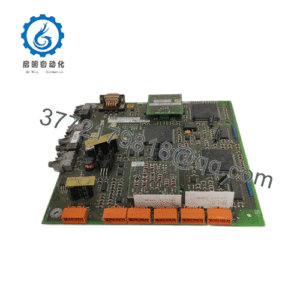
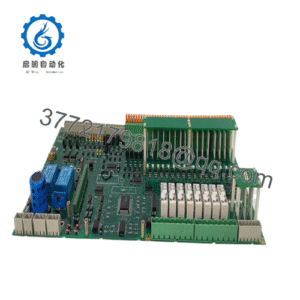
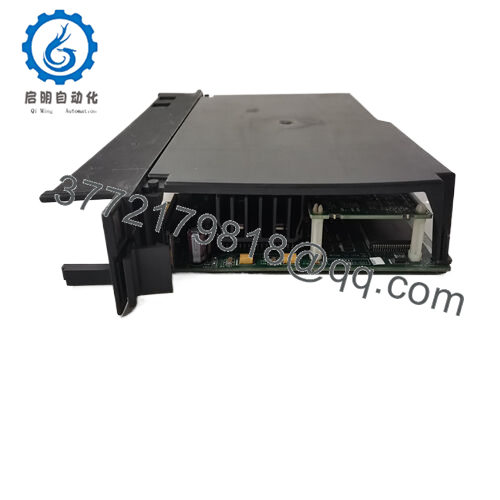
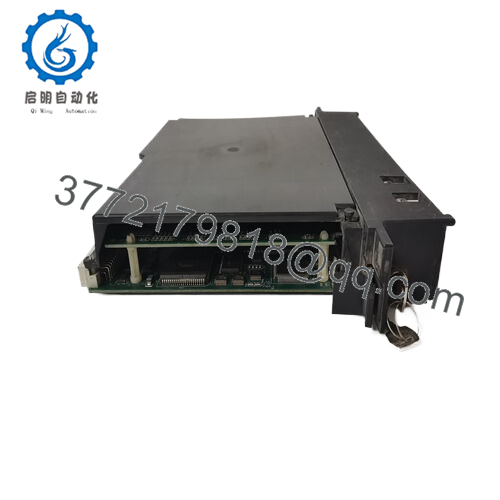
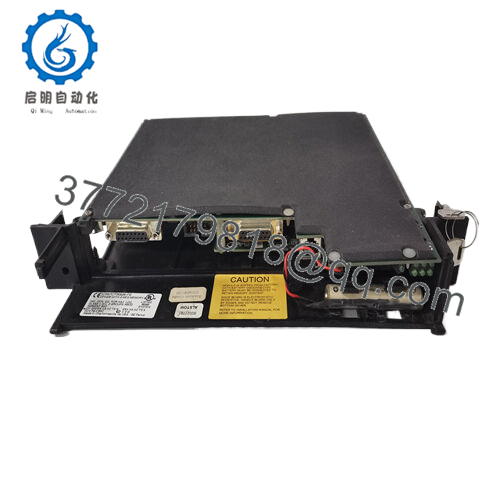
The IC697CMM711Q is a communications coprocessor module for GE Fanuc RX3i/90-70 systems. Its core function is to handle protocol-specific communications between the RX3i backplane and external networks or devices, acting as a dedicated processor for communications tasks to offload the main CPU. Integrated into the RX3i chassis, it shares mounting, signaling, and diagnostic conventions with other RX3i I/O and communications modules, enabling a cohesive, scalable networking layer for mid- to large-scale installations. The module is valued for its ability to provide reliable, high-speed data exchange, offloading network traffic from the main controller, and enabling robust remote monitoring and control workflows. The IC697CMM711Q is typically described in network design guides and service manuals as a key component for establishing scalable, resilient RX3i communication architectures, ensuring compatibility with existing GE investments and a clear upgrade path for expanding network reach.
- IC697CMM711Q
- IC697CMM711Q
- Key Technical Features & Functional Benefits
The IC697CMM711Q typically offers dual or redundant communication paths to improve fault tolerance, with support for a defined set of network protocols and data rates suitable for industrial environments. It is designed to optimize throughput and reduce latency on communications tasks, while maintaining strong isolation from the core processing load on the RX3i CPU. The module provides diagnostic indicators and accessible status data to facilitate quick fault isolation and network health monitoring. Its backplane integration ensures consistent timing and signaling with other RX3i modules, promoting a stable system-wide communications fabric. The hardware is built for rugged operation in factory settings, with EMI considerations and thermal design appropriate for dense backplane environments. Overall, the IC697CMM711Q is positioned as a dependable, high-availability option for engineers who need robust, scalable communications capability within RX3i networks. - Detailed Technical Specifications
| Parameter | Value |
|—|—|
| Model | IC697CMM711Q |
| Brand | GE Fanuc RX3i PacSystem |
| Type | Communications Coprocessor / Network Interface Module |
| Backplane Compatibility | RX3i backplane (compatible with RX3i chassis) |
| Protocols | Ethernet/IP or other supported network protocols (variant-dependent) |
| Data Rate | Up to specified Mbps (variant-dependent) |
| Redundancy | Dual/redundant channels commonly available (variant-dependent) |
| Power Consumption | [To be confirmed] W |
| Operating Temperature | -20°C to +60°C (industrial) [variant-dependent] |
| Mounting | Rack-mount in RX3i chassis |
| Dimensions | Standard RX3i module footprint |
| Weight | Moderate |
| Interfaces | Backplane signaling; network interface connectors per variant |
| Certifications | OEM safety and EMC standards |
| Cooling | Passive/active cooling per chassis configuration |
| Environmental Rating | Enclosure-dependent; verify OEM data | - Related Modules or Compatible Units
- IC697CMM710Q – RX3i Communications Coprocessor with similar functions
- IC695CMM002 – RX3i network interface module for alternative networks
- IC695PBM300-BC – PROFIBUS Master module in the RX3i ecosystem (networking companion)
- IC694PWR331C – RX3i power supply supporting backplane networks
- IC695MDL741 – Diagnostic module for RX3i network health
- IC693CMM310 – Legacy communication module for earlier GE architectures
- IC695ALG708 – Analog I/O module for expanded RX3i networks
- Installation Notes & Maintenance Best Practices
Ensure the RX3i rack is properly ventilated and that the CMM711Q is seated firmly with clean backplane contacts. Document the network topology, including the exact protocol configuration and addressing for connected devices, to facilitate future changes. Regularly monitor diagnostic indicators to detect latency, link integrity, or device responsiveness issues early. When updating firmware or network configuration, test changes in a controlled lab rack before field deployment to avoid destabilizing production networks. Keep spare CMM modules on hand for rapid replacement, and maintain a current network diagram and software configuration map to speed troubleshooting and recovery.