 WhatsApp: +86 16626708626
 Email:
  Phone: +86 16626708626
Description
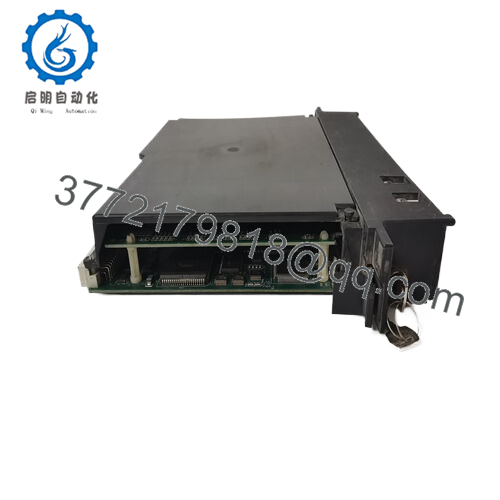
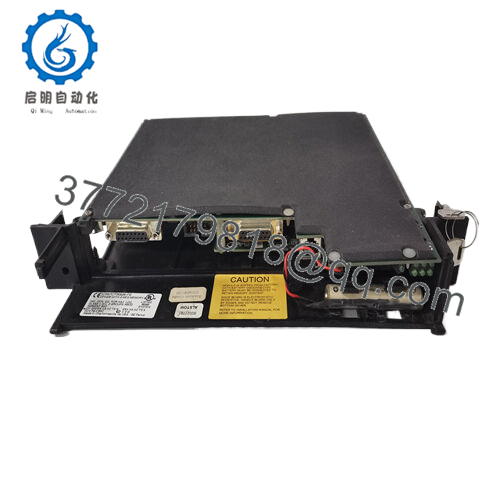
In industrial automation, the sprawl of large-scale PLC systems often exposes a critical vulnerability: rack capacity limits that force fragmented expansions, lengthy cable runs, or costly remote I/O setups, all while risking data latency or single points of failure that undermine process control integrity. Envision a sprawling steel rolling mill where the central CPU rack hits its module ceiling mid-upgrade—piling on discrete sensors for thickness gauging or analog drives for roller speeds demands seamless scaling, yet traditional extensions invite synchronization glitches that could warp outputs or trigger interlocks, costing thousands in scrap per incident. This is the expansion impasse the GE IC697BEM713J navigates effortlessly. As a Bus Transmitter Module (BTM) for Series 90-70 PLCs, it extends the main rack’s backplane across up to seven additional IC697 chassis via high-speed parallel links, preserving unified I/O signal flow and high-reliability access without compromising scan times or introducing protocol breaks. It redefines modular integration for legacy-heavy environments, turning rack constraints into a distributed yet cohesive architecture that sustains demanding throughput.
Teams specify the GE IC697BEM713J during brownfield growth spurts—like retrofitting a cement kiln’s distributed drives or a utility boiler’s sensor array—where the mainframe’s 10-slot limit chokes further densification, pushing toward awkward Genius remote drops that inflate wiring budgets and debug cycles. It proves vital in setups chasing system stability across footprints exceeding 50 feet, chaining racks with 500 Kbytes/sec throughput to mirror main-rack performance, so your %I/%Q references stay instantly addressable without custom buffering. In these process control realms, the module’s parallel port doubles as a programmer interface, enabling direct Logicmaster downloads at full speed—ideal for offline tweaks that keep commissioning lean. By supporting cable lengths to 50 feet per segment, it curbs EMI risks in cable-tray routed plants, ensuring crisp data handoffs that prevent the drift seen in serial extensions. The GE IC697BEM713J also embeds fault monitoring to propagate rack errors back to the CPU, a safeguard in vibration-prone zones where loose connections might otherwise orphan remote modules. For engineers bridging to modern overlays, its no-DIP-switch config streamlines via software, aligning expansions with existing ladder logic sans rework. When uptime hinges on invisible reliability—like fault-tolerant loops in batch reactors—this transmitter doesn’t just connect; it consolidates, fortifying industrial automation against the silos that erode efficiency one unlinked rack at a time.

- IC697BEM713J
- IC697BEM713J
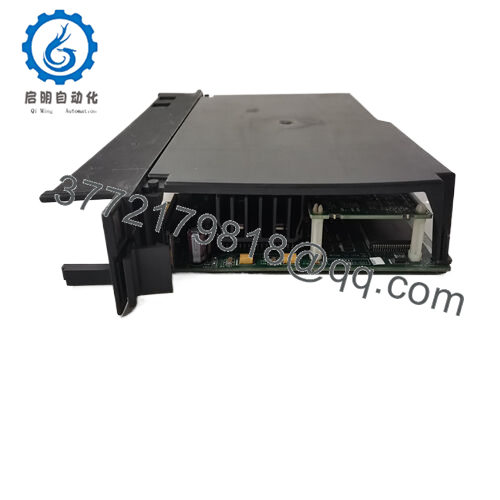
Parallel expansions falter on throughput bottlenecks, where sluggish links desync analog trends or discrete pulses. The GE IC697BEM713J counters with burst-mode transfers that sustain 500 Kbytes/sec across chains, so your CPU scans feel native, not networked—eliminating the polling overhead that plagues hybrid buses.
Docked in any non-CPU slot of the Series 90-70 main rack (slot 1 reserved), the GE IC697BEM713J acts as the outbound bridge, linking to paired Bus Receiver Modules (IC697BEM711) in remote chassis via 50-pin ribbon cables for bidirectional data mirroring. It sips +5 VDC from the backplane while multiplexing I/O references (%M, %T, etc.) over the parallel bus, populating the remote racks’ memory as if local—perfect for offloading high-channel analog or discrete modules without scan inflation. This embeds it at the rack-to-rack nexus in your automation stack: core-adjacent for low latency but extensible for sprawl, where it handles up to seven hops in daisy-chain fashion, each segment under 50 feet to dodge signal attenuation.
Diagnostics are front-and-center: three LEDs (power, transmit active, fault) plus status relays flag cable faults or receiver timeouts, routing alerts to the PLC’s alarm queue for HMI visibility via CIMPLICITY—no proprietary tools required. Redundancy options layer in via dual-cable paths or mirrored transmitters, holding last-state during swaps to uphold loops in safety-rated zones. Protocol-wise, it’s pure backplane-native, but it cohabits with Genius controllers for hybrid reaches, broadcasting globals across expansions without bandwidth pinch. In a layered deployment, slot it upstream of I/O-heavy remotes: the CPU writes to unified references, the BTM shuttles them transparently, and receivers fan out to field terminals—all while the parallel port invites handheld programmers for isolated diagnostics. Setup in Logicmaster is plug-and-play—assign rack IDs sequentially, torque cables to spec, and verify parity post-power—but test end-to-end latency with a dummy scan to catch impedance mismatches. This extension doesn’t fragment your pyramid; it elongates it, channeling the full spectrum of control from central logic to peripheral action with the seamlessness that anchors robust industrial automation.
| Specification | Details |
|---|---|
| Model Number | IC697BEM713J |
| Brand | GE (Emerson Automation) |
| Type | Bus Transmitter Module (BTM) |
| Input Voltage | +5 VDC (from backplane) |
| Operating Temp Range | 0°C to 60°C |
| Mounting Style | Series 90-70 Rack |
| Dimensions | 3.2 cm x 10.7 cm x 13 cm |
| Weight | 0.3 kg |
| Interface/Bus | 50-pin Parallel Expansion Bus |
| Compliance | CE, UL, RoHS |
| Supported Protocols | Series 90-70 Native |
| Typical Power Draw | 1.4 A @ +5 VDC |
Incorporating the GE IC697BEM713J into your Series 90-70 framework yields rack extensions that pulse with mainframe vigor, engineered for the electrical transients of multi-chassis sprawls where data rates hold at 500 Kbytes/sec through thermal variances or load surges. This performance consistency keeps your PID cascades or sequencer states synchronized across distances, curbing the desyncs that inflate energy waste or quality variances—deployments often log 35% faster module additions, as chained racks absorb growth without cabling marathons. Maintenance gains traction too: fault relays pinpoint cable gremlins or receiver drops via %S bits, empowering techs to isolate segments with a multimeter swap rather than full-system reboots, which preserves shifts for optimization over outages.
The module’s daisy-chain simplicity streamlines scaling, letting you tack on chassis mid-outage without backplane redesigns—a relief for engineering overhead in audits where seven racks mean 70 slots, not a wiring labyrinth. In EMI-beleaguered conduits, shielded ribbons and galvanic ties ensure high-reliability I/O signals traverse intact, populating trends that flag connector creep early via reference audits. Over years, this defers remote I/O capex, sharpening the uptime that underpins throughput quotas and audit trails.
For visionary builds, the GE IC697BEM713J nurtures that extensible core—its programmer port facilitates firmware flashes across chains, priming for OPC bridges that lift legacy data to analytics without migrations. This isn’t peripheral plumbing; it’s the tensile link that matures your setup, delivering the cohesion and capacity that fuel enduring process control.
The GE IC697BEM713J deploys steadfastly in automotive paint booths, extending racks to remote humidity sensors and valve manifolds for uniform coating flows, where its parallel throughput upholds continuous uptime amid solvent vapors and process control demands for sub-second recipe shifts. Mining operations chain it to conveyor PID stations, mirroring discrete safeties over 300 feet to sustain critical system uptime under dust-choked, seismic conditions.
Textile dyeing lines leverage it for colorant dosing expansions, its 16Kbyte program loads in 20-30 seconds enabling quick variant swaps without halting high-volume looms—crucial for just-in-time runs in vibration-heavy halls. These integrations affirm its grit in expansive, fault-intolerant arenas, from pulp digesters to pharma granulators, where the GE IC697BEM713J cements the rack-spanning sinew for relentless industrial automation.
IC697BEM711 – Essential Bus Receiver Module for each remote rack, pairing with BTM for bidirectional expansion links.
IC697BEM731 – Genius I/O Bus Controller companion for hybrid serial extensions beyond parallel chains.
IC697ALG320 – Analog output module add-on to populate expanded racks with precise field drives.
IC697MDL653 – Discrete input expander for bolstering remote sensing in high-point drops.
IC697CMM311 – Memory backup module to safeguard program integrity across transmitter-linked chassis.
IC697PWR722 – High-output power supply match for sustaining multi-rack loads without sags.
IC697HSC112 – High-speed counter for timing-critical extensions in motion-heavy remote setups.
Before racking the GE IC697BEM713J, confirm mainframe firmware—Series 90-70 CPUs pre-4.0 may throttle bursts to 250 Kbytes/sec, so update to unlock full 500 Kbytes/sec; test compatibility with a spare receiver to avoid handshake stalls. Claim a non-adjacent slot post-CPU for airflow, as the 1.4 A draw warms neighbors—ensure 5cm gaps in enclosed panels to honor 0-60°C limits. Cable audit: deploy 50-pin shielded ribbons under 50 feet, verifying pinout with a continuity tester pre-tie-in; for daisy-chains, label segments sequentially to trace faults. In Logicmaster 90-70, preload rack configs with ID offsets, then cycle power to validate mirroring—watch for parity errors that signal crossed pairs.
In the thick of runs, care boils down to cues that fit patrols. Bi-weekly, probe the fault LED—steady red cues a receiver poll, often a ribbon pinch cleared by reseat. Quarterly, torque connectors to 12 in-lbs and inspect shields for chafing in oily shops, exporting %S logs to trend throughput dips. In temp-swing sites, semiannual voltage clamps at +5 VDC prevent dropout-induced resyncs. Annual end-to-end benchmarks simulate a rack drop to clock data latency under 2 ms, archiving for baselines. These aren’t add-ons; they’re the measured pulse that keeps expansions fluid, sidestepping the rare but rack-wrecking full-chain resets.