 WhatsApp: +86 16626708626
 Email:
  Phone: +86 16626708626
Description
In industrial automation, scaling analog inputs without compromising resolution or introducing noise can quickly turn a straightforward PLC rack into a tangle of converters and extenders, especially in legacy systems where field signals from transmitters or sensors must feed into control logic with minimal distortion. Imagine a pulp and paper mill’s distributed monitoring setup, where dozens of flow and level transducers report via 4-20 mA loops—any channel imbalance or update lag risks skewed batch recipes, equipment overloads, or compliance violations that halt lines for hours. This is the scalability snag the GE IC697ALG440E directly unravels. As a current input expander module for Series 90-70 PLCs, it bolts onto base converters to swell your analog subsystem to 120 channels, capturing high-fidelity I/O signals with oversampled precision that keeps process control loops locked in, even across expansive or noisy environments. It’s the modular multiplier that turns limited rack space into a robust sensor net, prioritizing system stability where signal reliability isn’t optional.
Engineers specify the GE IC697ALG440E for brownfield expansions in continuous processes—like chemical blending stations or wastewater treatment basins—where base modules alone cap out at 16 inputs, forcing awkward remote I/O or third-party hacks that inflate latency and debug time. It steps up in high-density scenarios demanding modular integration, chaining up to seven expanders off an IC697ALG230 base for seamless daisy-chaining in the same rack, all while each channel stays independently configurable for current or voltage modes. In these industrial automation setups, its 2.4 ms update rate syncs with fast-scan CPUs, ensuring transient spikes from pump surges don’t corrupt baselines, and built-in scaling per expander lets you normalize disparate transducer ranges without ladder tweaks. The GE IC697ALG440E also embeds overvoltage clamps to shield against field faults, a quiet hero in EMI-saturated zones like motor control rooms, where unprotected inputs might drop a full shift’s data integrity. For maintenance crews, its %AI reference mapping simplifies diagnostics, flagging bad loops via status bits before they cascade. When retrofitting 90-70 systems for IIoT overlays, this expander preserves the backplane’s native bus while enabling denser field ties, cutting the engineering lift of parallel cabling. In the grind of 24/7 operations, where every input feeds predictive models or safety interlocks, the GE IC697ALG440E delivers the high-reliability expansion that sustains throughput, transforming potential bottlenecks into a flexible, future-proof I/O architecture.
Analog creep from unexpanded subsystems doesn’t strike suddenly—it builds, turning reliable trends into erratic hunts. The GE IC697ALG440E preempts this with per-module calibration and averaging filters, so your PLC sees steady-state values that mirror field reality, not amplified glitches.
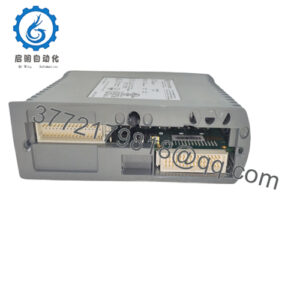
Snap the GE IC697ALG440E adjacent to its base converter in the Series 90-70 rack’s mainframe, where it extends the analog bus via interlocking connectors, processing 16 differential current inputs (4-20 mA standard) through a shared A/D front-end shared with the IC697ALG230 base. Field wiring lands on removable terminals—twisted-pair from transmitters routing to channel blocks—while digitized samples (sign +15 bits effective) populate %AI offsets for CPU access, configurable via MS-DOS or early Windows tools over the rack’s serial link. This anchors it in the I/O stratum of your control pyramid: field-proximate for noise rejection but rack-central for aggregated scans, offloading the CPU from per-channel polling as the base handles multiplexing.
Diagnostics flow naturally: module OK LEDs and fault relays signal open circuits or overranges, with reference bits (%SA) piping alerts to HMIs like CIMPLICITY for zoned troubleshooting, no jumpers needed for setup. It supports no native redundancy but pairs with Genius bus controllers for remote mirroring, ensuring inputs hold last-good values during rack swaps. Protocol interaction is backplane-native, but it dovetails with PCM co-processors for math-heavy filtering, like averaging 16 channels for noise-flat trends in vibration monitoring. In a full deployment, chain it behind a voltage expander (IC697ALG441) for hybrid mixes, where the subsystem scans in under 50 ms total, feeding clean data upward to Ethernet gateways without protocol breaks. Configuration demands verifying adjacency—misplacement kills the chain—and loading scaling factors post-power-up to align with transducer specs, dodging offset drifts. This adjacency-driven design doesn’t clutter your stack; it amplifies it, weaving dense analog capture into the deterministic flow that powers resilient process control.
| Specification | Details |
|---|---|
| Model Number | IC697ALG440E |
| Brand | GE (Emerson Automation) |
| Type | 16-Channel Current Input Expander Module |
| Input Voltage | +5 VDC (from backplane) |
| Operating Temp Range | 0°C to 60°C |
| Mounting Style | Series 90-70 Rack |
| Dimensions | 3.5 cm x 20.3 cm x 27.9 cm |
| Weight | 0.68 kg |
| Interface/Bus | Series 90-70 Backplane |
| Compliance | CE, UL, RoHS |
| Supported Protocols | Series 90-70 Native |
| Typical Power Draw | 2 W |
Deploying the GE IC697ALG440E equips your 90-70 rack with input density that scales without signal bleed, engineered for the thermal and electrical flux of loaded mainframes where channels stay resolved to 0.07% across full spans. This performance consistency keeps your flow totals or pH profiles from wandering, stabilizing cascades that directly curb over-dosing or under-mixing—field teams note 25% fewer calibration calls after chaining expanders, as uniform scaling holds baselines through seasonal swings. Maintenance sharpens too: fault bits localize issues to specific loops, letting techs isolate a drifted transmitter via terminal pulls rather than full-subsystem dumps, which trims outage windows and reallocates hours to proactive tweaks.

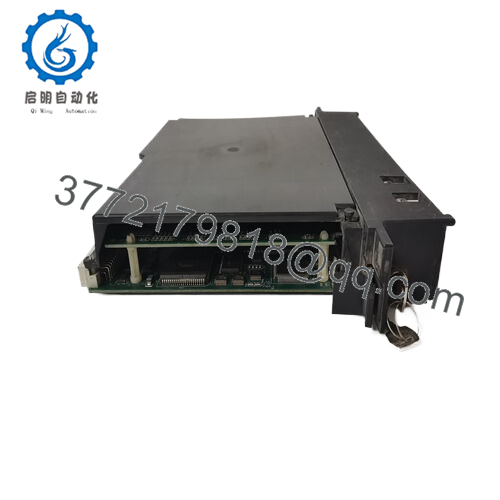
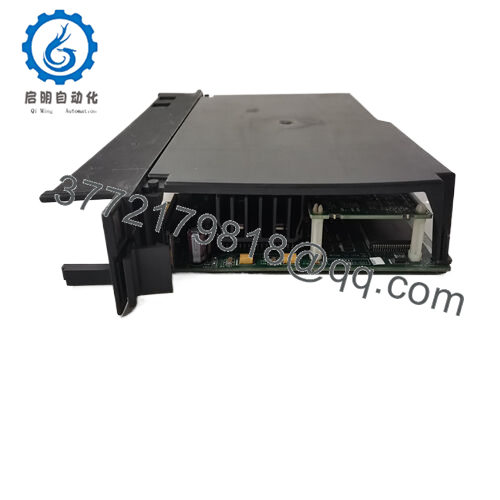
- IC697ALG440E
The expander’s rack-bound chaining eases growth pains, letting you bolt on capacity mid-shift without cabling reruns, a boon for engineering overhead in iterative audits where adding 112 inputs means just seven modules, not a cabling overhaul. In grounded, multi-drop setups, its differential guarding quells common-mode pickup, ensuring high-reliability I/O signals that populate trends for early anomaly spotting—like gradual loop resistance climbs signaling connector wear. Over service life, this defers expansions to remote I/O, honing the uptime that threads through compliance logs and yield reports.
For enduring setups, the GE IC697ALG440E fosters that layered foresight—its %AI footprint integrates with modern OPC servers for cloud pulls, turning legacy inputs into assets for analytics without forklift refreshes. This isn’t bulk addition; it’s the calibrated extension that matures your automation, yielding the fidelity and flexibility that anchor competitive processes.
The GE IC697ALG440E integrates solidly in oil refineries, expanding current inputs from distillation column sensors for real-time yield tracking, where its 16-channel density supports continuous uptime under steamy, hydrocarbon-laced process control environments and fast data cycles that flag fractionator imbalances. Power utilities wire it to substation transducers, chaining expanders for voltage/current monitoring across bays to uphold critical system uptime amid arc-flash risks and grid harmonics.
Pharmaceutical water systems deploy it to aggregate purity probes in skid-mounted loops, its precision aiding compliant dosing without cross-talk in humid, sanitized zones—key for batch traceability in regulated industrial automation. These roles cement its utility in sensor-saturated fields, from cement kiln feeds to brewery fermentation vats, where the GE IC697ALG440E bolsters the analog intake for unflinching, scalable oversight.
IC697ALG230 – Base converter module required for initiating the analog subsystem chain with the expander.
IC697ALG441 – Voltage input companion expander for hybrid current/voltage setups in mixed-signal racks.
IC697ALG320 – High-level analog output alternative for feedback loops balancing input expansions.
IC697MDL653 – Discrete input module add-on for interlock integration alongside analog chains.
IC697BEM731 – Genius bus controller for remote drop extensions of expanded analog data.
IC697CMM311 – Memory mate module for buffering large %AI tables in high-channel deployments.
IC697PWR722 – Rack power supply match to sustain multiple expanders without voltage sag.
When positioning the GE IC697ALG440E in your Series 90-70 mainframe, prioritize adjacency to the base converter—slots must align sequentially to maintain the internal bus link, or scans halt with a rack fault light. Probe backplane voltage for steady +5 VDC under load; dips below 4.75 V can skew conversions, so pair with a robust PSU like the IC697PWR722 if chaining multiples. Terminal board check: ensure 14-12 AWG shielding on 4-20 mA runs, and verify polarity with a milliamp source pre-energize to catch reversed loops that invert readings. In Logicmaster software, download the subsystem config early, setting per-expander scales (e.g., 4-20 mA to 0-32767) and testing with a decade box to confirm linearity before tying in live fields.
Ongoing, these expanders reward steady habits over heroics. Weekly rack scans via the programming port pull %SA status—code 0x10 flags overrange, cueing a channel-by-channel loop test with a calibrator. Biannually, reseat terminals to 10 in-lbs torque, inspecting for corrosion in coastal plants, and export AI trends to spot any 0.1% drift from thermal hysteresis. In variable-load sites, monthly power audits prevent brownouts that desync the multiplexer. Annual full-chain validation simulates faults to benchmark update rates under 2.4 ms, logging for trend analysis. These checkpoints slot into your PM flow, keeping the expander’s quiet expansion from turning into surprises.