 WhatsApp: +86 16626708626
 Email:
  Phone: +86 16626708626
Description
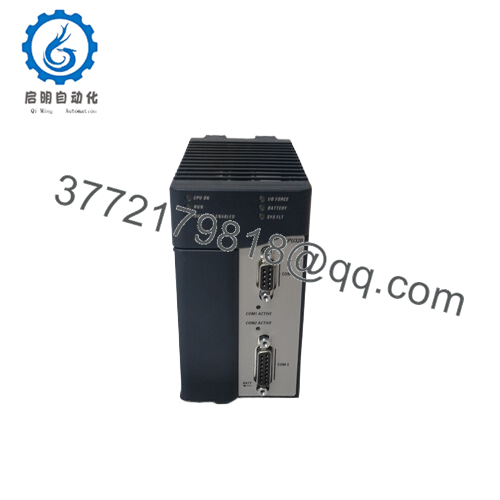
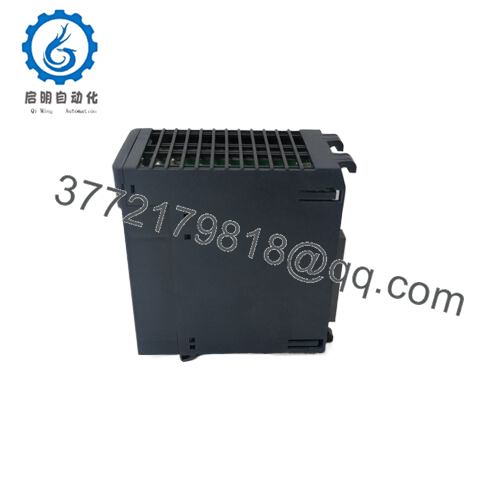
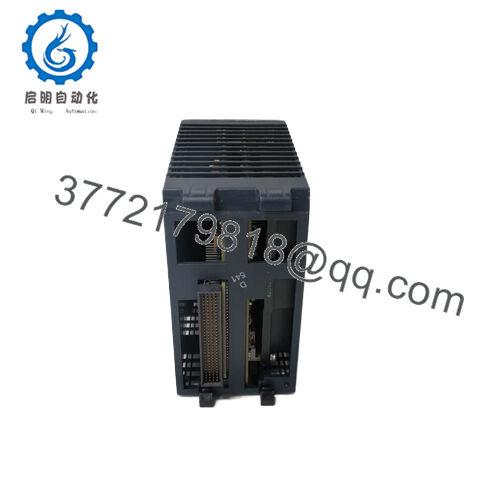
In industrial automation, where a single controller failure can halt production for hours or trigger safety interlocks in regulated processes, achieving true high-availability redundancy without complex custom coding is essential for mission-critical operations. You’re likely facing scenarios like synchronized hot-standby setups in a petrochemical refinery, where a CPU fault could disrupt fractionation columns or flare systems, or in utility-scale power distribution where momentary lapses in logic execution risk grid instability and blackouts. The GE IC695CRU320-EH delivers precisely this as a high-performance redundancy CPU for PACSystems RX3i platforms, enabling seamless hot-standby (HSB) configurations with bumpless transfer and data synchronization over dedicated links.
This module addresses the demand for system stability in high-reliability industrial automation by pairing two identical units—one primary, one backup—via Reflective Memory Xchange (RMX) modules for real-time mirroring of I/O states, registers, and logic. It becomes indispensable when expanding legacy RX3i systems to include failover without downtime, such as upgrading from non-redundant CPU320 setups or integrating into distributed process control where network partitions or hardware faults can’t be tolerated. Engineers deploy the GE IC695CRU320-EH in situations requiring sub-scan switchover times, like continuous chemical dosing or turbine governance, where even a 100 ms delay cascades into quality deviations or emergency stops. By supporting Genius I/O and EGD for redundancy transfers, it minimizes engineering overhead for failover scripts while embedding diagnostics that predict issues like sync loss before they impact operations. In process control environments prioritizing critical system uptime, its 1 GHz processing and 64 MB memory handle complex ladder or C blocks without compromising redundancy overhead. Whether mitigating EMI-induced glitches in offshore platforms or ensuring protocol consistency in multi-vendor integrations, the GE IC695CRU320-EH focuses on modular integration and signal reliability, incorporating SEO elements like RX3i redundancy CPU, hot-standby process control, and high availability automation for applications demanding 99.999% reliability.
Integrating the GE IC695CRU320-EH into your RX3i backplane establishes it as the redundancy-aware brain in a dual-controller architecture, spanning two slots and leveraging PCI for local I/O while serial ports—one RS-232 for programmer access and one RS-485 for multi-drop—handle SNP Slave or Modbus RTU without additional hardware. It coordinates with a mirrored unit through IC695RMX128/228 modules over fiber for deterministic 2 MB/s sync, ensuring the backup stays current on inputs, outputs, and user logic during normal runs.
Positioned at the control layer, it interfaces with RX3i discrete/analog modules or Series 90-30 expansions via serial backplane, supporting remote racks for broader footprints. Diagnostics shine through front-facing LEDs for role (primary/backup), sync health, and faults, plus Proficy Machine Edition access to redundancy logs for preemptive analysis—no need for external tools during commissioning. Though Ethernet requires rack-based ETM001 for SRTP or Modbus TCP, the CPU natively manages redundancy protocols, allowing single or dual RMX links for enhanced fault tolerance. Switchover is automatic on detected failures, with manual triggers available for testing, preserving states via battery-backed RAM. This setup avoids the limitations of simplex CPUs, scaling I/O to 32K points while keeping interactions user-friendly—the GE IC695CRU320-EH slots in, configures via familiar redundancy wizards, and maintains process control continuity across variable loads or maintenance windows.
| Specification | Details |
|---|---|
| Model Number | IC695CRU320-EH |
| Brand | GE (Emerson) |
| Type | Redundancy CPU Module |
| Input Voltage | 5 VDC @ 1.2A, 3.3 VDC @ 1.0A |
| Operating Temp Range | 0°C to 60°C |
| Mounting Style | RX3i Universal Backplane (two slots) |
| Dimensions | Approx. 140 x 260 x 45 mm |
| Weight | 0.7 kg |
| Interface/Bus | PCI, Dual Serial (RS-232/RS-485), RMX for sync |
| Compliance | CE, UL, RoHS, ATEX Zone 2 |
| Supported Protocols | SNP Slave, Modbus RTU/Slave, Serial I/O |
| Typical Power Draw | 11.5 W |
Choosing the GE IC695CRU320-EH means deploying redundancy engineered for zero-perceptible transfers, where its 1 GHz Celeron-M core and dual-memory architecture mirror data at rates that keep outputs stable, eliminating spikes in valves or motors during failovers—vital for maintaining product specs in batch operations or flow rates in pipelines. This performance consistency slashes unplanned downtime, often by factors of 10 or more, allowing facilities to hit utilization targets without buffer stock for redundancy gaps.
Integration efficiency stands out: drop-in from older CRU revisions with firmware tweaks, while RMX links simplify cabling over reflective memory—no proprietary sync software beyond standard Proficy setups—reducing engineering overhead for validation in regulated sectors. Maintenance becomes predictive with detailed fault tables and LED cues accessible remotely via serial, catching battery degradation or link degradation early to avoid dual-unit outages. Built for enduring harsh cycles—vibration, thermal swings, or dust—its robust design ensures long-term performance without derating, transforming redundancy from a cost center into a reliability multiplier that supports phased expansions or cyber-resilience upgrades seamlessly.
The GE IC695CRU320-EH proves indispensable in high-stakes deployments, such as power plants using dual units for boiler controls with Genius I/O redundancy, delivering fast data cycles amid steam extremes for critical system uptime and preventing load sheds from controller hiccups. Oil and gas midstream operations fit it into pipeline SCADA, syncing pressure monitoring over RMX for continuous transport in remote, explosive zones requiring harsh-condition resilience.

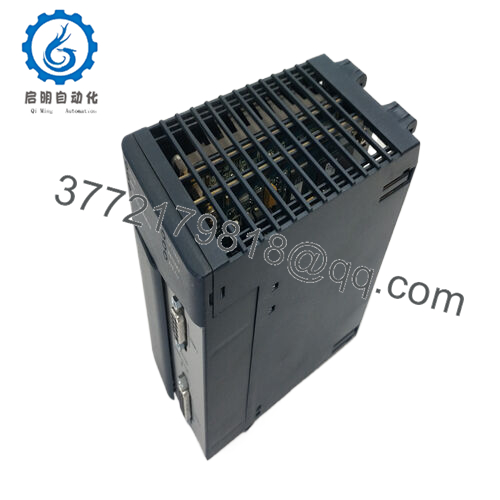
- IC695CRU320-EH
- IC695CRU320-EH
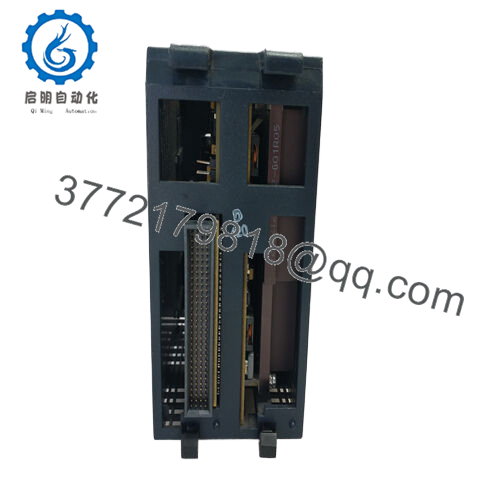
Water utilities leverage it for filtration plants, handling analog trends in redundant racks to counter pump failures without disrupting supply—its diagnostics enable rapid role swaps in 24/7 process control environments. Across these used in power plants or high-throughput refining, the GE IC695CRU320-EH excels in demanding fast sync and modular I/O for operational continuity.
IC695CRU320-CD – Earlier revision for baseline hot-standby in less demanding sync setups
IC695CRU320-EW – Later firmware-enhanced for advanced security and HART pass-through
IC695CMU310 – Non-redundant alternative with similar processing for standard applications
IC695CPE330 – Dual-core Ethernet-rich upgrade for intensive non-redundant tasks
IC695RMX128 – Required redundancy link module for single-path sync
IC695RMX228 – Dual-fiber variant for enhanced link redundancy
IC695ETM001 – Ethernet add-on for SRTP/Modbus TCP in redundant networks
IC695PNC001 – PROFINET controller companion for distributed redundancy
Before seating the GE IC695CRU320-EH in the backplane, depower both primary and backup racks, confirming universal slots and avoiding conflicts with expansion boundaries; mate RMX modules first with fiber looped correctly—reversed polarity often causes immediate sync fails. Align firmware between pairs via the latest IPI checklist, as minor deltas block role assumption, and install the lithium battery preemptively, verifying charge to prevent RAM wipes on initial cycles. Ground chassis thoroughly in high-EMI zones, and document serial port assignments upfront for consistent programmer hooks.
Ongoing care keeps redundancy sharp: bi-weekly LED sweeps spot creeping link errors or role instabilities hinting at fiber wear. Monthly, inspect battery voltage and RMX connectors for oxidation in saline plants, cycling manual transfers quarterly to benchmark switchover against spec. Annually, pull redundancy logs via Proficy for trend analysis on queue stalls, and refresh flash backups while testing low-battery scenarios. These practices catch subtle degradations early, ensuring the HSB pair stays aligned and responsive in loaded configurations.