 WhatsApp: +86 16626708626
 Email:
  Phone: +86 16626708626
Description
These pain points hit hardest in transitional setups: migrating from Series 90-30 without forklift upgrades, where mismatched serial buses disrupt I/O signal flows, or in distributed nodes needing serial comms for legacy devices without Ethernet overhead. The GE IC695CPU310 proves essential here, bridging PCI and serial backplanes to host both RX3i high-speed modules and 90-30 serial I/Os seamlessly, all while executing up to 512 program blocks at 0.2 ms per 1K bools. In automation environments focused on cost-effective redundancy—say, duplexing pumps with bumpless transfer—its embedded serial ports enable direct RS-232/485 ties to RTUs or HMIs, sidestepping extra NICs. For teams grappling with legacy code ports, it supports ladder, structured text, and function blocks natively, minimizing rewrite hours. This isn’t about raw power; it’s about dependable throughput that sustains process control loops without the bloat, freeing cycles for diagnostics or simple trending. In practice, it empowers upgrades that enhance rather than overhaul, ensuring your infrastructure evolves affordably while upholding operational steadiness.

- IC695CPU310
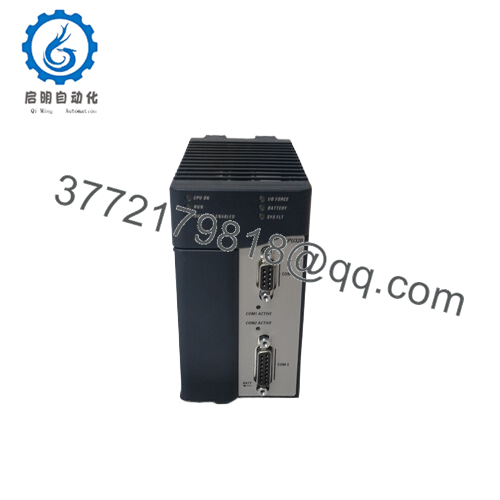
- IC695CPU310
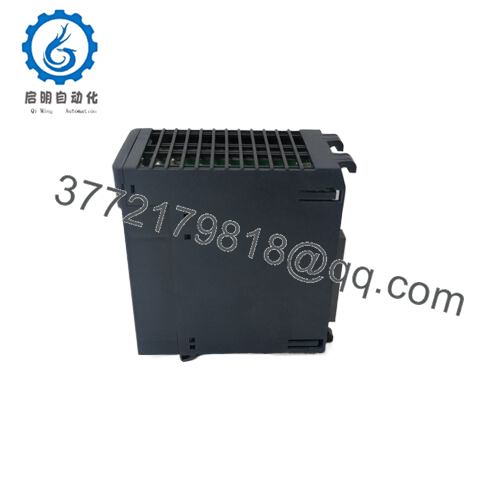
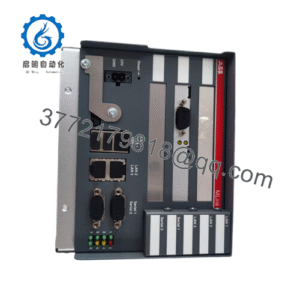
Engineers deploying it appreciate the clean path to hybrid architectures: the GE IC695CPU310 slots into any RX3i universal backplane position (ideally slot 1), sourcing power from the 5 V/3.3 V rails and interfacing via the dual-bus structure—PCI for bandwidth-intensive tasks like motion coordination, serial for legacy polling. Its front-panel USB port facilitates Proficy Machine Edition downloads, while dual serial ports (one RS-232, one RS-485) handle protocols like Modbus RTU slave or SNP for point-to-point device queries, with configurable baud rates up to 115.2 kbps. In the automation stack, it reigns over the I/O layer, refreshing modules like discrete inputs or analog scanners in cyclic sweeps, then relaying status via backplane interrupts—no external processors needed for basic redundancy, where a secondary unit mirrors via serial links for failover under 100 ms.
Data handling shines with 10 MB flash for retentive storage, buffering trends or recipes against power loss, and supporting up to 128 KB per block for modular programming that scales without recompiles. Diagnostics embed deeply: reference tables expose CPU load, fault tables, and serial buffer overflows, piping into SCADA for threshold alerts. For expansion, it drives up to 12-slot racks with serial extensions, aggregating 512 I/O points while maintaining deterministic timing for closed-loop velocity profiles. Non-Ethernet by design, it fits grounded cabinets where serial suffices, yet pairs effortlessly with add-on NIUs for TCP/IP if networks creep in. Overall, it anchors the I/O architecture as a versatile hub, distilling complex field inputs into actionable logic with minimal latency, ideal for skids or panels where space and simplicity trump gigabit bells.
| Specification | Details |
|---|---|
| Model Number | IC695CPU310 |
| Brand | GE (Emerson) |
| Type | RX3i Single-Slot CPU |
| Input Voltage | 5 V DC / 3.3 V DC (backplane) |
| Operating Temp Range | 0 to 60 °C |
| Mounting Style | RX3i Universal Backplane Slot |
| Dimensions | 5.57 x 1.57 x 5.12 in (141.5 x 40 x 130 mm) |
| Weight | 0.75 lb (0.34 kg) |
| Interface/Bus | PCI and Serial Backplane |
| Compliance | CE, cULus, RoHS |
| Supported Protocols | Modbus RTU, SNP, Serial I/O |
| Typical Power Draw | 1 A @ 5 V, 1.25 A @ 3.3 V |
Integrating the GE IC695CPU310 yields a foundation of steady execution that streamlines daily operations without unnecessary complexity. Its balanced processor speed and memory footprint deliver consistent scan performance—0.195 ms/Kbool under load—keeping loops responsive in metering or batching, where even minor delays compound into throughput dips. This reliability means fewer overruns in vibration-heavy enclosures, preserving I/O signal accuracy for downstream analytics and cutting false triggers that sideline equipment.
Upkeep becomes less burdensome too: serial diagnostics surface port errors or memory parity faults via LED codes and %SA references, enabling quick field checks with a handheld terminal rather than full teardowns. Porting 90-30 projects via Proficy’s conversion tools trims migration weeks to days, reducing engineering overhead and letting you allocate talent to tweaks like alarm rationalization. Over years, the flash-backed retention ensures program integrity through brownouts, deferring battery swaps and extending intervals between overhauls in remote setups.