 WhatsApp: +86 16626708626
 Email:
  Phone: +86 16626708626
Description
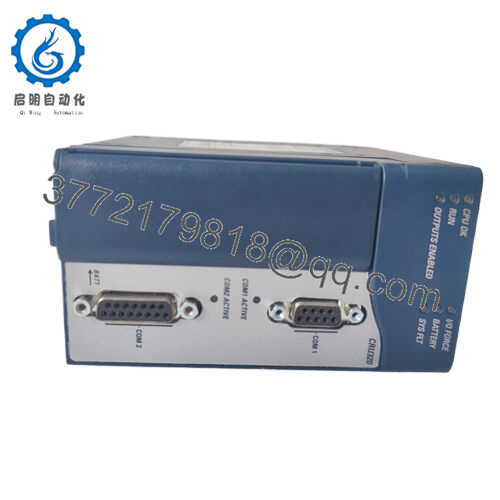
In industrial automation, tackling demanding logic execution and data-intensive applications without escalating to oversized hardware is a frequent hurdle for engineers scaling PACSystems RX3i platforms. Consider a metals processing plant juggling high-speed discrete control alongside analog trending for quality assurance, where insufficient user memory leads to fragmented programs or forced compromises on diagnostics, or a packaging facility integrating multiple PROFINET devices that strains lower-tier CPUs during peak cycles, risking overruns and delayed outputs. The GE IC695CPE310-AC resolves these as a robust mid-to-high-range CPU module, boasting 10 MB of user memory and a 1.1 GHz processor to handle complex ladder logic, function blocks, and structured text in a compact two-slot footprint.
This unit shines in environments requiring expanded program capacity beyond entry-level options, like migrating from legacy IC695CPU310 setups without rewriting code, or deploying in distributed process control where Ethernet connectivity must support SRTP exchanges with SCADA while serial ports manage legacy Modbus devices. It becomes indispensable when system stability demands battery-less retention via the included Energy Pack, preserving RAM during power dips common in remote substations or mobile equipment. Engineers opt for the GE IC695CPE310-AC in high-reliability industrial automation scenarios needing seamless upgrades, such as boosting scan rates in batch processing without disrupting validated recipes, or accommodating larger I/O counts up to 32K discrete points in expanding lines. By emphasizing modular integration and protocol versatility, it curbs the challenges of memory constraints or connectivity bottlenecks, incorporating SEO keywords like PACSystems RX3i CPU, high-performance process control, and reliable Ethernet interface for applications prioritizing uptime and flexibility. Whether addressing drift in multi-axis motion synced with vision systems or ensuring fault-tolerant data logging in regulated industries, the GE IC695CPE310-AC delivers the headroom for sustained performance, making it a strategic choice for evolving automation architectures.
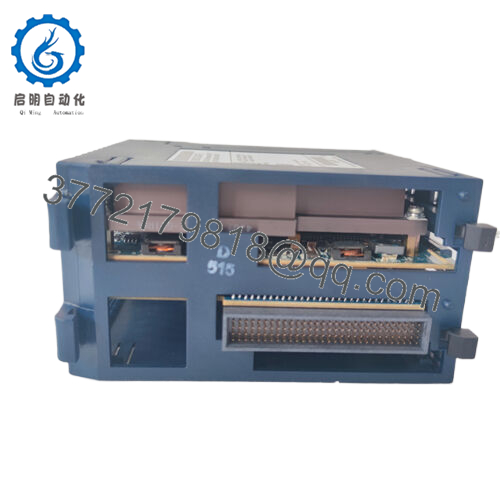
Positioned centrally in the RX3i universal backplane, the GE IC695CPE310-AC serves as the execution engine, occupying two slots and interfacing via PCI for local high-speed I/O while its single embedded Ethernet port handles 10/100 Mbps traffic for programmer access, Modbus TCP, or EGD peer exchanges. It bridges to field devices through compatible modules like IC695ALG or PNC001 PROFINET controllers, supporting layered networks where serial ports—one RS-232 for direct HMI hooks and one RS-485 for multi-drop—facilitate SNP or Modbus RTU without add-ons.
In the automation stack, it anchors the control layer, syncing with expansion racks or remote drops over Genius or PROFIBUS, and leverages USB for rapid application loads from thumb drives, bypassing network dependencies in secured plants. Diagnostics flow intuitively via onboard LEDs for run/stop status, faults, and port activity, supplemented by Proficy Machine Edition tools for register monitoring or forced switchovers in test modes. Though not native hot-standby, it pairs effectively with redundancy modules for mirrored operations, maintaining state via Energy Pack during transfers. Protocol support keeps interactions fluid: embedded Ethernet for SRTP client/server duties, serial for legacy integration, and openness to OPC UA via gateways. This architecture avoids the pitfalls of fragmented systems, allowing straightforward scaling—add racks for more channels or layer in Ethernet globals for plant-wide visibility—while the GE IC695CPE310-AC ensures low-latency cycles in process control, adapting to your backplane without mandating wholesale redesigns.
| Specification | Details |
|---|---|
| Model Number | IC695CPE310-AC |
| Brand | GE (Emerson) |
| Type | PACSystems RX3i CPU Module |
| Input Voltage | 5 VDC @ 1A, 3.3 VDC @ 1A, 24 VDC @ 0.5A |
| Operating Temp Range | 0°C to 60°C |
| Mounting Style | RX3i Universal Backplane (two slots) |
| Dimensions | Approx. 140 x 260 x 45 mm |
| Weight | 0.6 kg |
| Interface/Bus | PCI, Embedded Ethernet (1 port), USB |
| Compliance | CE, UL, RoHS, ATEX Zone 2 |
| Supported Protocols | SRTP, Modbus TCP/RTU, SNP, Serial I/O, EGD |
| Typical Power Draw | 11 W |
Deploying the GE IC695CPE310-AC yields a control core engineered for expansive logic without excess heat or power demands, where its 10 MB memory accommodates intricate PID cascades or data tables that keep historical trends intact, ensuring performance consistency across shifts and minimizing overruns in high-boolean workloads. This reliability directly curbs production variances, like maintaining tight tolerances in extrusion lines or coordinating servo drives without jitter.
Ease of integration reduces engineering overhead significantly: drop-in compatibility with CPU310 projects means no logic rewrites, while the Energy Pack eliminates battery maintenance woes, preserving configurations through outages that plague traditional setups. Maintenance efficiency rises with accessible diagnostics—remote log pulls via Ethernet or USB snapshots during breaks—flagging issues like flash wear early to preempt failures. Built for enduring cycles in dusty or variable-humidity environments, it sustains long-term performance with robust thermal management, turning potential upgrade pains into seamless evolutions that support facility growth or tech refreshes without proportional downtime or retraining costs.

- IC695CPE310-AC
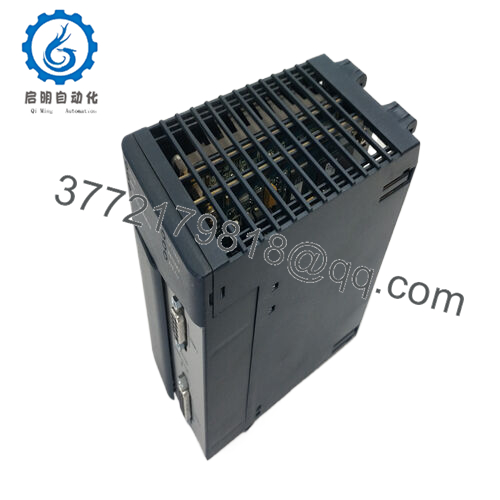
- IC695CPE310-AC
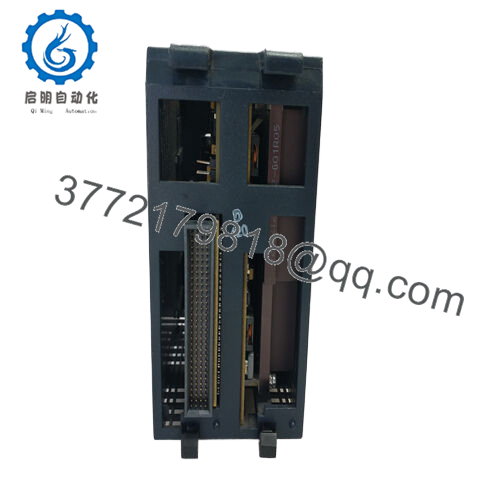
The GE IC695CPE310-AC thrives in sectors needing ample memory for data-rich operations, such as metals and mining where it’s used in conveyor sequencing and weighment control over Ethernet globals, delivering fast data cycles amid dust and vibration for critical system uptime in 24/7 extraction processes. Power generation facilities deploy it for auxiliary systems monitoring, handling analog inputs from generators with Modbus ties to DCS, where its diagnostics ensure rapid isolation of faults in harsh thermal conditions.
Food processing lines leverage it for recipe management in multi-zone ovens, supporting PROFINET for sensor networks and serial for scale integrations—its expanded blocks handle complex alarming without fragmentation, vital in washdown environments demanding continuous uptime and traceability. Throughout these process control applications, the GE IC695CPE310-AC provides resilient performance in power plants or high-throughput manufacturing, excelling under EMI or extended runs with modular scalability.
IC695CPE305-AF – Lower-memory sibling for cost-sensitive standard applications
IC695CPE330-AA – Dual-core upgrade for intensive multi-tasking needs
IC695CPU310 – Direct predecessor for legacy drop-in replacements
IC695CPE400 – Advanced standalone with Linux co-processing capabilities
IC695ACC400 – Included Energy Pack for non-volatile RAM backup
IC695ETM001 – Ethernet expander for additional port density
IC695PNC001 – PROFINET controller for high-speed distributed I/O
IC695RMX128 – Redundancy memory extension for synced operations
Before powering the rack for the GE IC695CPE310-AC, ensure universal backplane compatibility and avoid the two highest slots to prevent bus arbitration issues; connect the Energy Pack cable securely first, as loose fittings can trigger false low-charge faults on startup. Align firmware with your Proficy suite per release notes—mismatches often halt loads—and pre-install the RTC battery if not shipped in place, checking polarity to sidestep clock resets. Ethernet shielding demands proper grounding in noisy cabinets, and label ports early for quick commissioning.
Routine checks keep it reliable: monitor LEDs bi-weekly for Ethernet negotiation or override indicators, signaling potential cable degradation. Monthly, wipe serial connectors to combat corrosion in coastal installs, and test Energy Pack capacitance quarterly via controlled discharges. Annually, archive flash contents and validate against backups, while running integrity scans on user memory to catch bit flips from cosmic events in high-altitude sites. These practices foster proactive upkeep, extending component life and maintaining scan predictability in loaded programs.