 WhatsApp: +86 16626708626
 Email:
  Phone: +86 16626708626
Description
In legacy industrial automation setups relying on Series 90-30 PLCs, engineers frequently encounter bottlenecks from isolated control islands where data exchange with HMIs, SCADA systems, or enterprise networks requires cumbersome serial cabling or third-party gateways—leading to delayed diagnostics, fragmented visibility, and heightened risk of undetected faults in process control loops. This isolation amplifies downtime during troubleshooting, especially in expansive facilities with distributed I/O, where real-time access to registers or alarm logs can mean the difference between minutes and hours of lost production. The GE IC693CMM321-JJ resolves these hurdles as a proven TCP/IP Ethernet interface module that seamlessly bridges Series 90-30 backplanes to 10Base-T LANs, enabling SRTP client/server communications for up to 16 simultaneous connections without sacrificing high reliability in industrial automation environments.
Picture upgrading a water treatment plant or manufacturing line still running on 90-30 hardware: without native Ethernet, you’re stuck polling via slow serial links or adding converters that introduce single points of failure. The GE IC693CMM321-JJ becomes critical during modernization efforts, attaching directly via AAUI to SQE-enabled transceivers for robust network integration, supporting COMMREQ-initiated transfers that pull data from remote PLCs or push updates to hosts. In process control scenarios demanding critical system uptime, it shines by facilitating remote programming, fault reporting, and multi-device polling over standard infrastructure, reducing the need for on-site handheld programmers while maintaining I/O signal integrity amid EMI-prone floors.
What makes the GE IC693CMM321-JJ a staple in industrial automation is its dual-role flexibility—acting as a client for proactive data pushes or a server for responsive queries—paired with Station Manager diagnostics that pinpoint issues like channel timeouts or IP conflicts. For teams managing aging fleets, it eliminates serial bottlenecks, fostering predictive maintenance through Ethernet-linked tools and aligning with SEO terms like Ethernet interface module, Series 90-30 networking, and TCP/IP process control upgrades.
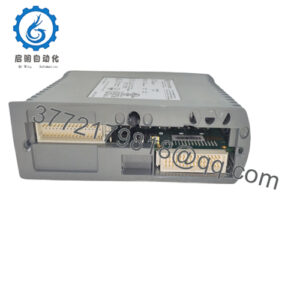
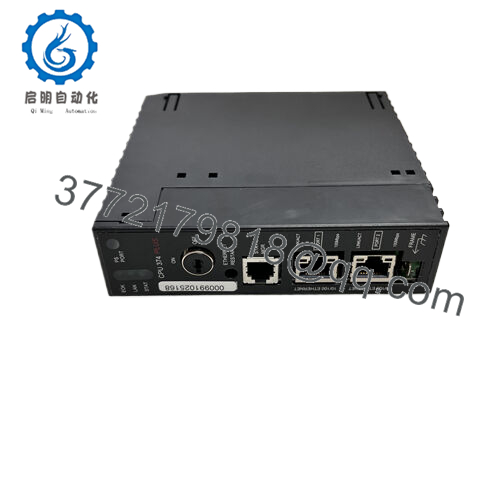
Nestled in any Series 90-30 baseplate slot, the GE IC693CMM321-JJ operates as the gateway between your CPU’s backplane and broader Ethernet ecosystems, handling SRTP over TCP/IP for seamless interaction with Proficy Machine Edition, third-party HMIs, or peer PLCs. It connects via a single AAUI port to an external transceiver (like IC649AEA102 for 10Base-T), drawing 5V from the rack while exposing RS-232 for Station Manager monitoring and RS-485 for firmware loads—no extra power modules needed beyond standard supplies.
In the automation stack, it sits at the communication layer above I/O modules but below enterprise networks, executing COMMREQs from ladder logic to establish channels, transfer registers, or abort sessions dynamically. Diagnostics flow through onboard LEDs and software commands, flagging LAN faults or overloads instantly to your SCADA. For redundancy-minded setups, install two in one rack for failover paths, or pair with CPUs like the 364/374 that have embedded ports for hybrid topologies. The GE IC693CMM321-JJ supports protocols like Modbus/TCP emulation via toolkits, fitting distributed architectures where fast pings confirm node health without serial delays. Hot-swap capable in expansion racks, it minimizes interruptions, making it ideal for layered systems blending legacy CCM with modern IP-based oversight.
| Specification | Details |
|---|---|
| Model Number | IC693CMM321-JJ |
| Brand | GE (Emerson) |
| Type | TCP/IP Ethernet Interface Module |
| Input Voltage | 5 V DC (from backplane) |
| Operating Temp Range | 0°C to +60°C |
| Mounting Style | Series 90-30 baseplate slot |
| Dimensions | 5.59 in x 1.26 in x 5.12 in (approx. H x W x D) |
| Weight | 0.8 lb |
| Interface/Bus | AAUI (external transceiver), RS-232, RS-485 |
| Compliance | CE, UL, CSA |
| Supported Protocols | SRTP over TCP/IP, CCM, SNP |
| Typical Power Draw | 700 mA @ 5V |
Selecting the GE IC693CMM321-JJ unlocks sustained reliability in networked operations, with its surge-tolerant AAUI interface and error-checking ensuring packet integrity even in noisy plants, translating to performance consistency that keeps SRTP channels open during peak loads. This means fewer dropped connections during bulk transfers, safeguarding against data loss in alarm-heavy loops.
Maintenance efficiency surges thanks to built-in Station Manager tools—remote commands reveal stats like collision rates or buffer usage, enabling proactive tweaks that cut diagnostic time versus serial probing. Engineered for endurance with flash-stored configs and no moving parts, it delivers long-term performance across thermal swings, while its 16-connection ceiling handles multi-HMI setups without custom scaling.
The overarching benefit is slashed engineering overhead: drop-in compatibility with existing 90-30 racks preserves logic investments, easing migrations to Ethernet without full rip-and-replace. In distributed control, it reduces cabling sprawl, lowering install costs and points of failure. For budgets stretched by legacy support, the GE IC693CMM321-JJ extends system life, deferring upgrades while enabling modern features like web-based monitoring—compounding value through predictable connectivity and scalable integration.
In pharmaceutical manufacturing, the GE IC693CMM321-JJ facilitates process control by linking batch reactors to central SCADA over Ethernet, supporting fast data cycles for recipe downloads in regulated environments demanding continuous uptime and audit trails.
Water utilities deploy it for remote pump station oversight, rejecting serial limitations to enable real-time trending in harsh conditions, ensuring critical system uptime amid flood-prone or dusty sites with modular integration for phased expansions.
Food processing lines use the GE IC693CMM321-JJ in CIP monitoring, pulling register data to HMIs for compliance logging, thriving in washdown areas while upholding high reliability for 24/7 operations.

- IC693CMM321-JJ
- IC693CMM321-JJ
IC693CMM321-KM – Later revision with enhanced firmware for broader SRTP stability in high-load networks.
IC693CPU364 – Embedded Ethernet CPU alternative for single-module simplicity in compact racks.
IC693CPU374 – Higher-performance CPU with built-in dual ports for redundant networking paths.
IC695ETM001 – RX3i equivalent for migration to PACSystems with gigabit speeds.
IC697CMM741 – Series 90-70 counterpart for larger-scale legacy integrations
. IC693BEM331 – Genius bus companion for hybrid distributed I/O extensions.
IC693PCM301 – Programmable coprocessor add-on for custom protocol handling.
Ahead of installing the GE IC693CMM321-JJ, confirm CPU firmware hits 6.50+ for full 16-connection support—earlier versions cap at one SRTP server, so grab updates from Emerson’s portal. Validate transceiver compatibility; SQE-enabled units prevent heartbeat clashes on 10Base-T segments. Assign a static IP outside DHCP ranges to dodge conflicts, and subnet-match your programmer PC—ping tests pre-store catch routing slips. Rack power budgeting is key: tally 700mA against supply headroom, especially in loaded bases.
For upkeep, prioritize the four LEDs daily—steady OK green signals health, flickering LAN indicates traffic, SER flags serial activity, and STAT amber prompts Station Manager dives for codes like overloads. Quarterly, execute PING loops from the host to baseline latency, catching cable degradation early. Torque AAUI connectors to spec in vibratory zones, and archive configs via loader port before firmware flashes. Tie faults into PLC logic for auto-email alerts, syncing with panel rounds to sustain sub-second responses without emergent callouts.