 WhatsApp: +86 16626708626
 Email:
  Phone: +86 16626708626
Description
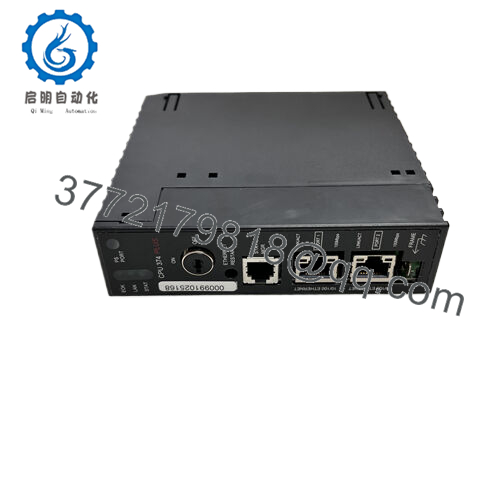
In the interconnected fabric of industrial automation, where legacy PLCs must evolve to meet the demands of networked SCADA and real-time data sharing without ripping out core infrastructure, the friction of protocol isolation often stalls progress. Control engineers in process environments grapple with silos—trapped I/O data behind proprietary buses, sluggish file transfers that delay recipe updates, or the vulnerability of unmonitored Ethernet drops leading to undetected collisions and packet loss. These pain points not only hamper high-reliability operations but also inflate costs through custom middleware or forklift upgrades. The GE IC693CMM321-EE cuts through this as a TCP/IP Ethernet interface module for GE’s Series 90-30 PLCs, unlocking Ethernet connectivity via a simple AAUI transceiver setup to fuse your rack-mounted logic with broader LAN fabrics for seamless host-to-device dialogue.
Visualize a bottling line where a 90-30 PLC orchestrates fillers and labelers, but production tweaks require manual recipe pushes from a remote HMI—delays that cascade into shift overruns—or a utility substation syncing meter data with enterprise historians amid EMI-laden switchyards. The GE IC693CMM321-EE becomes vital in these process control crucibles, enabling up to 16 concurrent server sessions for parallel reads/writes, which streamlines distributed I/O polling without taxing the CPU’s scan cycle. In the expansive industrial automation arena, it bridges the gap to IIoT gateways, supporting diagnostics that surface link faults before they disrupt loops and facilitating firmware flashes over the network to extend system lifespans. For specifiers, essentials like its 10Base-T compatibility and 450 mA backplane load directly inform rack planning, while the lack of handheld programmer support nudges toward PC-based tools—nuances that shape deployment economics. By dissolving these connectivity barriers, the GE IC693CMM321-EE elevates isolated controllers into collaborative nodes, fostering resilient I/O signal flows and agile process control that scales with digital transformation imperatives.
Embedding the GE IC693CMM321-EE into your Series 90-30 architecture acts like a gateway upgrade that breathes network fluency into a standalone rack, channeling Ethernet traffic directly to the backplane for logic-level access. This module slips into any I/O slot of a standard or remote baseplate, sipping 5 VDC from the bus while exposing an AAUI port for a twisted-pair transceiver (like IC690ACC901) that taps into 10 Mbps Ethernet segments up to 100 meters out. From there, it handles TCP/IP stacks natively, mapping PLC registers (%AQ, %G) to socket endpoints for client-initiated pulls or server-hosted pushes, with configurable timeouts to keep loops responsive under 50 ms latency.
In the stack’s communication stratum, it layers above the CPU (e.g., a 363 model) and below HMIs or DCS front-ends, arbitrating multi-session exchanges—say, one thread dumping trends to a historian while another syncs setpoints from a SCADA client—without buffering overflows. Diagnostics integrate via status LEDs (OK, LAN, Error) and %I fault bits, flagging collisions or dropped packets for ladder-logic traps, while the RS-232 station manager port allows local config tweaks sans full downloads. It doesn’t natively bridge to Modbus or Profinet but excels in Ethernet’s domain, pairing with SNP loaders for remote firmware via the RS-485 port to minimize site visits. Consider the pathway: a remote operator queries production tallies; the GE IC693CMM321-EE authenticates the TCP socket, fetches %AQ words from the PLC, and serializes them outbound—all while shielding the backplane from ARP storms through built-in filtering. For integrators, its dual-module allowance per rack boosts bandwidth in data-heavy setups, rendering the GE IC693CMM321-EE a pragmatic enhancer of networked process control, where Ethernet becomes an extension of the rack rather than an afterthought.
| Specification | Details |
|---|---|
| Model Number | IC693CMM321-EE |
| Brand | GE (Emerson) |
| Type | Ethernet TCP/IP Interface Module |
| Input Voltage | 5 V DC (backplane) |
| Operating Temp Range | 0°C to 60°C |
| Mounting Style | Series 90-30 Baseplate Slot |
| Dimensions | 5.59 x 1.26 x 5.12 in (142 x 32 x 130 mm) |
| Weight | 0.55 lbs (0.25 kg) |
| Interface/Bus | Series 90-30 Backplane / Ethernet (AAUI) |
| Compliance | CE, UL, CSA |
| Supported Protocols | TCP/IP, Ethernet |
| Typical Power Draw | 450 mA @ 5 V DC |
Harnessing the GE IC693CMM321-EE infuses your 90-30 ecosystem with networked dexterity that streamlines data orchestration, as its multi-session handling lets concurrent queries—from diagnostics to batch transfers—coexist without scan interruptions, empowering operators to pull live trends into dashboards for on-the-fly yield tweaks. This engineered concurrency trims engineering overhead; no more staging sequential polls via serial links when Ethernet sockets distribute the load, allowing logic to prioritize core sequencing over comms housekeeping.
Reliability deepens through proactive safeguards: collision detection and heartbeat pings maintain link vitality, averting silent failures that could orphan remote drops and trigger false safeties, which in turn sustains high-fidelity I/O signals across the enterprise. Maintenance lightens as the module’s error LEDs and fault tables localize issues— a LAN blink-out often pins to a transceiver glitch, resolvable with a swap rather than rack teardown—fostering uptime predictability in always-on regimes. Performance endures over extended runs, with TCP retries buffering transient dips to keep file loads intact, supporting everything from firmware pushes to historian syncs without retransmit loops.
Ultimately, this module’s value accrues in adaptability: its AAUI flexibility sidesteps cabling overhauls for legacy Ethernet, while station manager access enables field diagnostics that cut travel costs. It’s a conduit for evolving process control, where integration ease and session scalability reduce silos, yielding sharper visibility and deferred migrations that keep capital agile.
The GE IC693CMM321-EE deploys effectively in breweries syncing fermenter temps via Ethernet to central SCADA amid steamy halls, where its TCP streams aggregate PLC data for recipe orchestration, upholding critical system uptime in batch-heavy cycles. In automotive paint shops, process control networks leverage it to federate 90-30 racks with HMI overlays for color-match adjustments, its multi-server chops handling fast data cycles from vision sensors without Ethernet congestion.
Oilfield pump stations round out its prowess, with the module linking remote PLCs to DCS hosts over rugged LANs for flow telemetry under dusty extremes, ensuring high-reliability Ethernet bridges that withstand voltage sags. Spanning these from textile dyeing to pharmaceutical blending, the GE IC693CMM321-EE fortifies industrial automation with networked I/O resilience, driving compliant, data-fluent operations.
IC693CMM302 – RS-232/RS-485 serial module for non-Ethernet comms
IC693CMM311 – Alphanumeric display coprocessor for local HMI ties
IC693ACC901 – AAUI-to-10Base-T transceiver for cable extensions
IC693CMM301 – RS-232 serial alternative for SNP protocol loads
IC693PWR330 – High-output power supply for comm-heavy racks
IC693ALG223 – Analog input companion for networked sensor fusion
IC693MDL646 – Sink output module for Ethernet-driven actuators
IC693CPU364 – Enhanced CPU for TCP session optimization

- IC693CMM321-EE
- IC693CMM321-EE
When readying the GE IC693CMM321-EE for a baseplate, first audit backplane loading—its 450 mA pull could strain lighter PSUs, so run the 90-30 sizing tool to confirm headroom, especially with dual modules. Verify Ethernet segment specs: pair it with SQE-enabled transceivers like IC690ACC901, and limit stubs to 185 meters total; pre-test the AAUI chain with a loopback for carrier detect before rack-in. Firmware sync is crucial—match the module’s release to your CPU’s OS (11.2+ ideal for full TCP features), pulling updates via the RS-485 loader port if needed. Secure the AAUI latch firmly post-connection, and ground the chassis to rack frame at one point to quash EMI pickup.
Sustaining the GE IC693CMM321-EE involves attuned checks that capitalize on its visibility: bi-weekly LED patrols for steady OK (green) against flashing errors, cross-referenced with %I diagnostics to log packet discards. Semi-annually, stress-test sessions with a PC client—flood 16 sockets and monitor for drops—to baseline throughput, adjusting MTU if collisions spike in shared LANs. In variable-temp sites, inspect the AAUI connector quarterly for oxidation, reseating if impedance drifts beyond 100 ohms. Anomalies like persistent LAN faults typically stem from cable noise, isolatable via station manager queries without halting scans. This insightful upkeep, rooted in the module’s self-diagnostics, renders it a vigilant network sentinel, conserving effort for strategic network evolutions over ad-hoc fixes.