 WhatsApp: +86 16626708626
 Email:
  Phone: +86 16626708626
Description
In many plants and infrastructure projects, the GE IC693BEM331 shows up wherever engineers need to orchestrate large networks of distributed I/O over a robust fieldbus rather than running bundles of hardwired signals back to the main cabinet. It is commonly used in process industries such as chemical, water and wastewater, and power generation, where a Series 90-30 PLC must supervise dozens of remote I/O blocks, motor control centers, or field control stations over a Genius bus. In these environments, wiring density, distance, and diagnostic visibility matter as much as raw I/O count, so designers look for a bus controller that can handle high data throughput while keeping fault finding straightforward during commissioning and maintenance.
The GE IC693BEM331 is often specified in upgrade projects where legacy Genius networks already exist and operators want to extend or resegment the bus without abandoning proven GE Fanuc hardware. It supports up to 31 devices on a single Genius I/O bus, making it suitable for distributed valve islands, remote I/O drops, or field control stations arranged along a production line or process area. Because the module can send and receive up to 128 bytes of data per device, it is applicable in control systems where analog signals, discrete I/O, and status words must move reliably between the PLC and multiple remote racks each scan. Engineers in OEM machinery, material handling, or batch processing use this module when they need deterministic bus behavior, predictable diagnostics, and tight integration with the Series 90-30 architecture used in industrial automation and distributed control.
When uptime is critical, the GE IC693BEM331 helps maintenance teams by providing clear communication status through front-panel indicators and integrated diagnostics from Genius devices back to the PLC fault tables. This reduces time spent tracing intermittent field wiring or bus topology issues and fits the way real plants operate—under time pressure, with limited resources, and a strong need for predictable, well-understood behavior from their communication backbone.
Product introduction and role
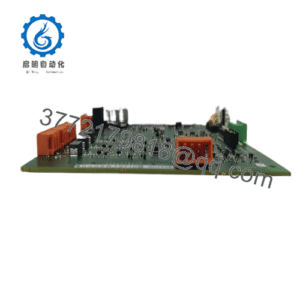
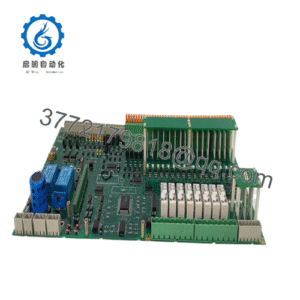
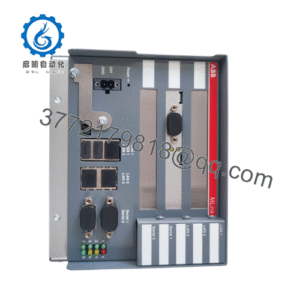
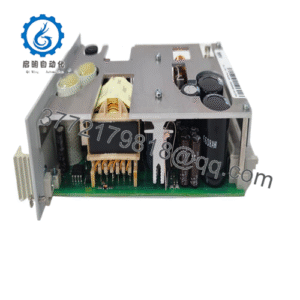
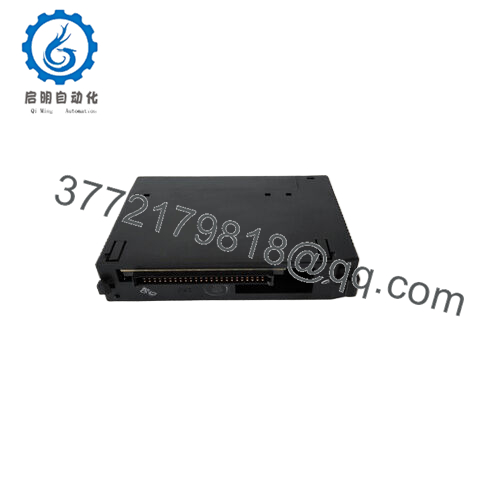
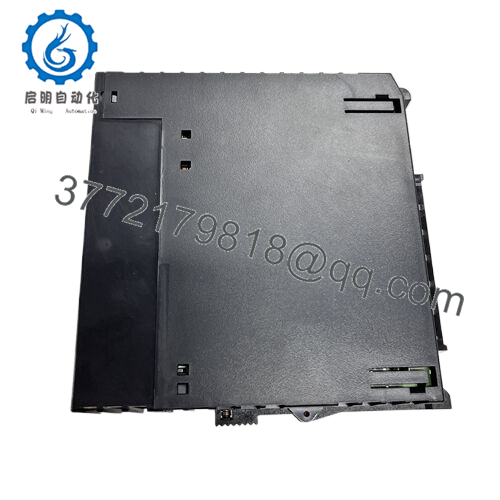
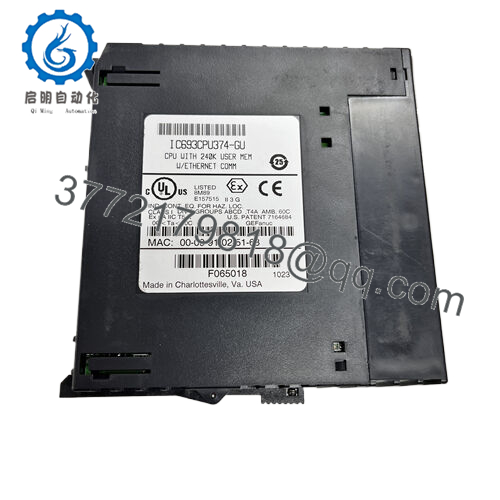
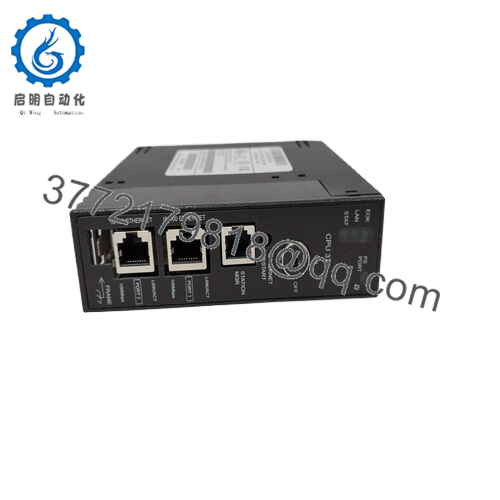
The GE IC693BEM331 is a Genius Bus Controller module for the GE Fanuc Series 90-30 PLC family, acting as the dedicated interface between the controller and a Genius serial I/O bus. Instead of treating communications as an external add-on, it installs directly in the 90-30 rack, so bus supervision and data exchange become part of the core control strategy. Its primary job is to send and receive control data between the CPU and distributed Genius devices, including remote I/O blocks, field control stations, and compatible PLC drops.
Within the control system architecture, the GE IC693BEM331 sits in an I/O slot and is configured through standard GE programming tools, so it operates like a native module rather than a third-party gateway. It supports Genius global data and datagrams, allowing engineers to broadcast key process values or status information to other controllers or hosts on the same bus without complex messaging logic. Up to eight Genius Bus Controllers can coexist in a single Series 90-30 system (with appropriate firmware), enabling multiple bus segments or redundant architectures where each bus handles a portion of the plant. This makes the module particularly valuable in distributed systems where scalability and network segregation are important for performance and troubleshooting.
From a positioning standpoint, the GE IC693BEM331 is a core communications and I/O-networking module rather than simple field wiring hardware. It targets engineers and integrators who standardize on GE Fanuc/Emerson hardware and need a stable, well-documented way to connect their 90-30 PLC to Genius-based I/O infrastructures still widely found in brownfield and hybrid modernization projects.

- IC693BEM331
Key features and functional benefits
A key strength of the GE IC693BEM331 is its ability to handle up to 31 devices on a single Genius I/O bus while transferring up to 128 bytes of control data per device per scan. This capacity gives engineers enough bandwidth to manage dense distributed I/O racks, complex analog modules, and specialty devices without saturating the network. By supporting both I/O control and global data exchange, the module lets designers implement fast, deterministic communication for time-critical control while still sharing key parameters with peer controllers or supervisory systems.
From a hardware standpoint, the GE IC693BEM331 follows the standard Series 90-30 modular form factor, designed to mount in existing 90-30 baseplates with the same bus and power connections as other I/O modules. Current consumption is typically under 300 mA at 5 V DC, which simplifies power budgeting within the rack and avoids oversizing the backplane supply. Front-panel LEDs provide immediate feedback on module health and bus status, so technicians can quickly identify whether a communication issue stems from network wiring, device configuration, or a module-level problem.
Compatibility is another practical benefit of the GE IC693BEM331. It supports a wide range of Series 90-30 CPU models with firmware release 5.0 or later and works with standard GE software such as Logicmaster 90-30, VersaPro, and Logic Developer-PLC. On the bus side, it interfaces with Genius I/O blocks, remote drops using Series 90-70 modules, and other Genius-based devices that use global data or datagrams. This means a single controller can coordinate legacy devices, remote racks, and newer systems without extensive gateway hardware, which is especially important in phased modernization where only parts of the plant are upgraded at a time.
In terms of long-term reliability, the GE IC693BEM331 benefits from the proven Genius protocol, which includes built-in diagnostics and fault reporting from field devices back to the PLC. Any alarms or faults on the bus are stored and made visible through the CPU’s fault tables, allowing maintenance teams to detect device-level issues before they escalate into unplanned downtime. Over the service life of a control system, this built-in visibility reduces the likelihood of “mystery” communication problems and supports planned maintenance instead of reactive repairs.
Technical specifications
| Parameter | Value |
|---|---|
| Model | GE IC693BEM331 Genius Bus Controller |
| Brand | GE Fanuc / Emerson Series 90-30 |
| Product type | Genius Bus Controller module for Series 90-30 PLC |
| Series compatibility | Series 90-30 PLC, up to 8 controllers per system (firmware ≥ 5.0) |
| Bus type | Genius I/O serial bus, up to 31 devices per bus |
| Data capacity per device | Up to 128 bytes input and 128 bytes output per device |
| Current consumption | Less than 300 mA at +5 V DC from backplane |
| Supported CPUs | IC693CPU311K, 321K, 331L or later and various 313, 323, 340–364 CPUs |
| Configuration software | Logicmaster 90-30, VersaPro, Logic Developer-PLC |
| Mounting | Plug-in module for Series 90-30 rack/baseplate |
| Status indication | Front-panel OK and COM LEDs for module and bus status |
| Global data support | Sends and receives up to 128 bytes global data per scan |
| Operating environment | Industrial control panels, typical Series 90-30 ambient ratings |
Related and compatible modules
GE IC693CMM321 – Ethernet communications module often paired with the GE IC693BEM331 to expose Genius-connected I/O to plant networks and SCADA systems.
GE IC693CPU323 – Series 90-30 CPU frequently used with the GE IC693BEM331 in mid-sized control systems requiring one or more Genius bus segments.
GE IC693CHS392 – Multi-slot baseplate providing rack space and backplane connectivity for the GE IC693BEM331 and associated CPU and I/O modules.
GE IC693ALG221 – Analog input module that can be located in remote drops on a Genius network controlled by the GE IC693BEM331
GE IC694BEM331 – Related Genius Bus Controller for the newer Series 90-30/90-70 or PACSystems environment, used when migrating networks while keeping Genius I/O.
GE IC697MDL750 – Discrete I/O module that can be used in remote racks connected over Genius via a bus controller paired with the GE IC693BEM331.
GE IC695ETM001 – Ethernet interface in newer PACSystems platforms, often interacting at a higher level with legacy 90-30 systems that still use the GE IC693BEM331 on the fieldbus side
Installation and maintenance guidance
Before installing the GE IC693BEM331, engineers should verify that the Series 90-30 rack has sufficient power capacity and that the baseplate slot allocation aligns with CPU and other communication modules. The Genius bus topology, including trunk lengths, drop counts, and termination, must be planned in advance so that up to 31 devices can be addressed without violating cable and loading limits. Proper grounding and shielding of the Genius cable, along with separation from high-noise power conductors, helps maintain signal integrity and reduces communication errors seen by the COM status indicator. Clear front access to the module is also useful so technicians can observe LEDs and connect test equipment when diagnosing bus issues
For maintenance, the GE IC693BEM331 benefits from periodic visual inspections of cabling, terminations, and panel conditions to catch loose conductors, moisture, or contamination that might affect the bus. Reviewing the PLC fault tables for Genius-related diagnostics on a defined schedule allows teams to identify devices that are starting to show intermittent faults, enabling proactive replacement during planned outages. When system firmware or engineering tools are updated, it is good practice to confirm that CPU and module firmware remain at supported levels for the Genius Bus Controller and to back up configurations before any major change. Where a Genius Hand-Held Monitor is available, it can be used as an additional diagnostic tool to view bus address, software revision, and device-level status directly on the network.