 WhatsApp: +86 16626708626
 Email:
  Phone: +86 16626708626
Description
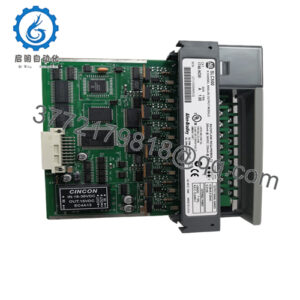
In the rigorous demands of industrial automation, where accurate temperature monitoring is non-negotiable for preventing equipment failure, ensuring product quality, or maintaining safety in high-heat processes, engineers often contend with inaccurate readings caused by electrical noise, cold junction drift, or inadequate isolation in thermocouple circuits. This hits hard in setups like furnace control or turbine exhaust monitoring, where even a few degrees of error can trigger unnecessary shutdowns, scrap batches, or violate regulatory thresholds, eroding high reliability and system stability. The GE IC660EBA023 tackles these issues directly as the electronics assembly for a robust 6-channel thermocouple input block in the Genius I/O family, delivering linearized, compensated signals with built-in diagnostics for seamless integration into distributed process control environments.
Think about retrofitting older plants with modern oversight—scattered thermocouples across vast facilities mean long wire runs prone to interference, demanding modular solutions that don’t require ripping out existing cabling. The GE IC660EBA023 becomes indispensable here, supporting J, K, T, E, B, R, S, and N types with per-group isolation and flexible CJC options to counter ambient fluctuations, preserving I/O signal fidelity without custom amplifiers or frequent recalibrations. In industrial automation scenarios pushing for predictive maintenance, its fault reporting on open wires, over/under-range, or high/low temperatures minimizes unplanned outages, aligning with goals like enhanced process control and critical system uptime.
What elevates the GE IC660EBA023 in real-world deployments is its rugged design for harsh conditions, where vibration or EMI could otherwise corrupt low-level mV signals from thermocouples. By handling internal, external, or user-defined CJC per channel, it ensures consistent accuracy across varying field temperatures, reducing engineering overhead in multi-zone applications. Whether combating ground loops in grounded thermocouples or scaling for bus extensions, this assembly anchors reliability in Genius networks, letting teams focus on optimization rather than constant validation in noise-heavy environments.
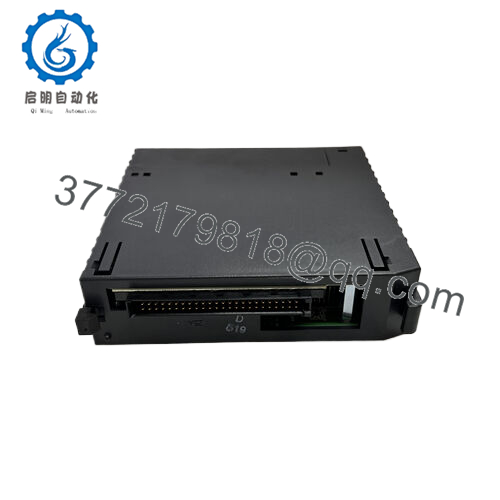
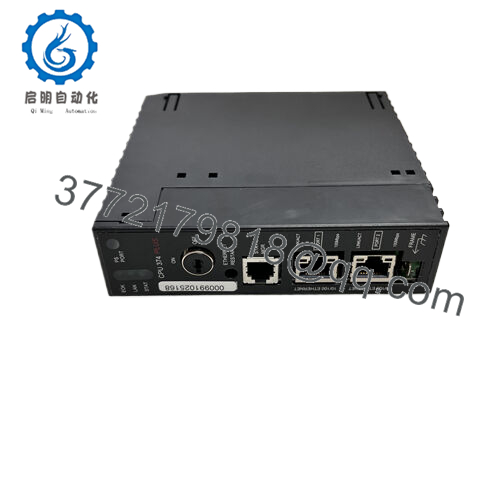
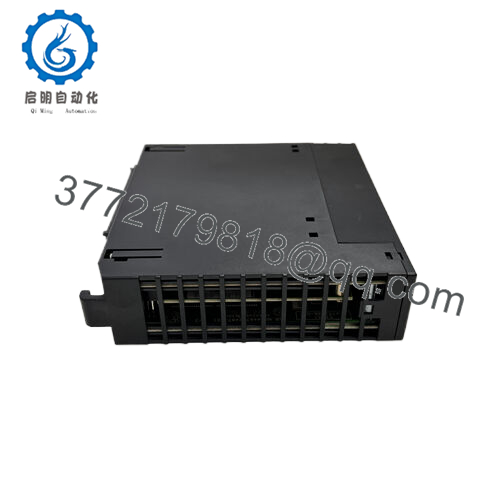
The GE IC660EBA023 functions as the intelligent core of a Genius thermocouple input block, pairing with a terminal assembly like the TBA023 to form a complete standalone unit that mounts remotely on the Genius bus. It processes six channels organized in three isolated groups—each with two thermocouple inputs and two CJC circuits—applying automatic linearization, fault detection, and scaling before broadcasting data over the redundant, noise-immune Genius serial bus at 153.6 Kbps. Positioned in distributed I/O architectures, it connects directly to controllers via bus interfaces like the BEM331 for Series 90-30 or BEM731 for Series 90-70, sitting at the field level below the PLC layer but enabling peer-to-peer communication for faster response in large-scale systems.
Configuration happens intuitively through a handheld monitor or host software, where you select thermocouple types, set alarm thresholds, or enable features like input filtering to dampen transients from nearby motors. It supports redundancy with dual-bus cabling and automatic switching, plus diagnostics that report issues like wiring errors or CJC failures straight to the SCADA layer via datagrams. In the automation stack, the GE IC660EBA023 bridges legacy Genius networks to modern PACSystems, handling low-level voltages down to microvolts with high-resolution conversion and refresh rates under 1 second for all channels. No central rack dependency means you can daisy-chain blocks across plants, hot-swap electronics without tools, and integrate with protocols like Modbus for hybrid setups—making it a flexible fit for evolving process control without bottlenecks.

- IC660EBA023
| Specification | Details |
|---|---|
| Model Number | IC660EBA023 |
| Brand | GE (Emerson) |
| Type | Thermocouple Input Block Electronics Assembly |
| Input Voltage | 24/48 V DC (18-56 V range) |
| Operating Temp Range | 0°C to +60°C |
| Mounting Style | Genius block chassis (with terminal assembly) |
| Dimensions | 8.83 in x 3.56 in x 3.94 in (H x W x D approx.) |
| Weight | 2.2 lb (electronics only) |
| Interface/Bus | Genius serial bus |
| Compliance | CE, UL, CSA |
| Supported Protocols | Genius proprietary (153.6 Kbps) |
| Typical Power Draw | 9 W |
Deploying the GE IC660EBA023 brings immediate reliability gains through its 300V group isolation and surge-tolerant design, shielding sensitive thermocouple signals from common-mode noise that plagues ungrounded systems and delivering performance consistency even in electrically hostile zones like steel mills. This means fewer false trips from drift, with onboard CJC accuracy holding readings to within spec over wide ambients, cutting downtime in temperature-critical loops.
Maintenance efficiency improves markedly with proactive diagnostics—open thermocouple detection or high background temperature alerts push upstream without polling overhead, allowing trend analysis in HMIs to predict failures before they cascade. Engineered for endurance with no moving parts and EEPROM-stored configs, it ensures long-term performance across thermal cycles, while hot-swappable electronics reduce mean time to repair to minutes in live systems.
The deeper value emerges in modular integration: one block handles diverse thermocouple types without spares proliferation, slashing inventory and simplifying expansions in distributed architectures. In legacy-to-modern transitions, it preserves bus investments while unlocking features like selectable filtering, minimizing engineering overhead and bolstering overall uptime. For operations chasing zero-defect goals, the GE IC660EBA023 translates to predictable costs—less recalibration labor, deferred capex on replacements, and scalable density that grows with facility needs without compromising signal integrity.
In power generation, the GE IC660EBA023 proves vital for turbine bearing temperature monitoring in harsh conditions with high vibration and EMI, providing isolated inputs for fast data cycles that feed into protective interlocks for critical system uptime amid continuous operation.
Chemical plants deploy it in reactor jacket control, handling multiple thermocouple types across explosive atmospheres, ensuring precise readings in corrosive environments while supporting modular integration for zoned expansions without signal degradation.
Metals processing lines use the GE IC660EBA023 for furnace zone profiling, rejecting noise from induction heaters to maintain accuracy in extreme heat, bolstering process control for uniform product quality in 24/7 high-throughput settings.
IC660BBA023 – Complete assembled block including terminal for turnkey thermocouple monitoring.
IC660TBA023 – Matching terminal assembly for field wiring and configuration storage.
IC660EBA021 – RTD input electronics alternative for resistance-based temperature sensing.
IC660EBA103 – AC-powered thermocouple variant for 115/125V supplies in different regions.
IC660EBA026 – Higher-density current input for mA loops in hybrid temperature/pressure apps.
IC660EBD101 – Discrete I/O companion for integrating alarms or switches.
IC660HHM501 – Handheld monitor for on-site configuration and diagnostics.
Before mating the GE IC660EBA023 with its terminal assembly, confirm bus termination—improper 75-ohm resistors at ends can cause reflections mimicking faults; use the HHM to scan for duplicates or baud mismatches. Verify power sourcing: it pulls from the bus or auxiliary, so check voltage drop over long runs and fuse at 3A slow-blow. Firmware isn’t an issue here, but ensure compatible HHM revision for full diagnostic access. Ground the shield properly at one end to avoid loops, and leave space for heat dissipation—stacked blocks in enclosures need 2-inch gaps.
Ongoing, rely on the dual LEDs: unit OK green means bus comms solid, I/O enabled amber flags config needs. Quarterly, force inputs with a simulator to verify linearization across types, catching CJC drift early. Inspect terminals for looseness in vibratory areas—retorque to 10 in-lb prevents intermittent opens that trigger faults. Annual bus health checks via HHM reveal noise trends, while cycling power clears transient errors. Integrate faults into your PLC logic for auto-logging, aligning with site rounds to keep accuracy within 0.5°C without surprise recalibrations.