 WhatsApp: +86 16626708626
 Email:
  Phone: +86 16626708626
Description
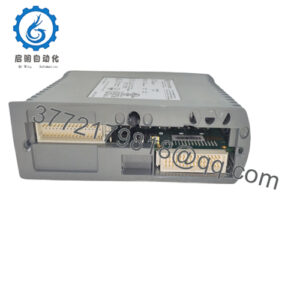
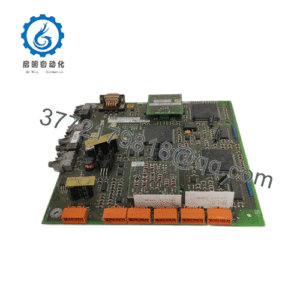
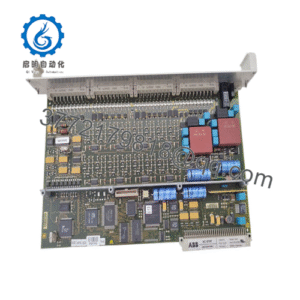
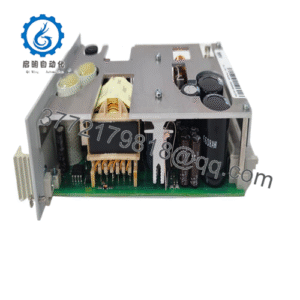
In industrial automation environments built around GE Series 90, PACSystems RX3i, or even third-party controllers, one of the most common sources of unplanned downtime is the failure of an aging analog input block handling critical temperature, pressure, or 4–20 mA process signals. When a legacy Genius I/O 24/48 VDC analog block dies, you’re often looking at obsolete part numbers, week-long lead times, and the uncomfortable reality that a single failed channel can shut an entire process skid. The GE IC660BBA020 solves this exact problem by delivering a modern, form-fit-function replacement that drops straight into the existing Genius bus wiring and mounting footprint—no rewiring, no new bus termination, and no changes to your PLC logic or scaling constants.
This block becomes essential whenever high-reliability current-loop monitoring is required in harsh locations: think furnace combustion control, compressor stations, or any remote node where thermocouple and RTD signals must stay accurate year after year despite heat, vibration, and electrical noise. The GE IC660BBA020 matters because it lets you keep the proven Genius distributed I/O architecture you already paid for while eliminating the risk of being stuck with NLA (no longer available) hardware. Instead of budgeting a full bus conversion or migrating to a new remote-I/O platform, engineers simply swap the block during a scheduled window and walk away knowing the system will run another decade.
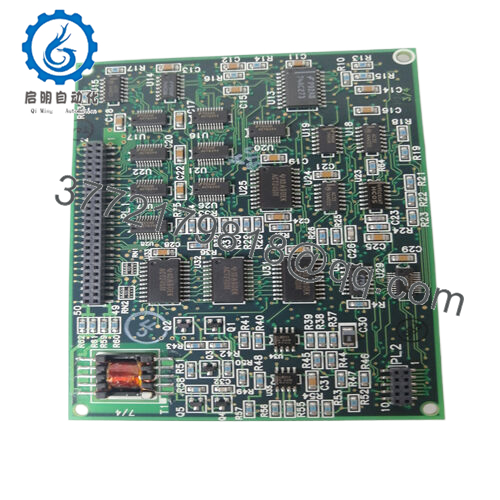
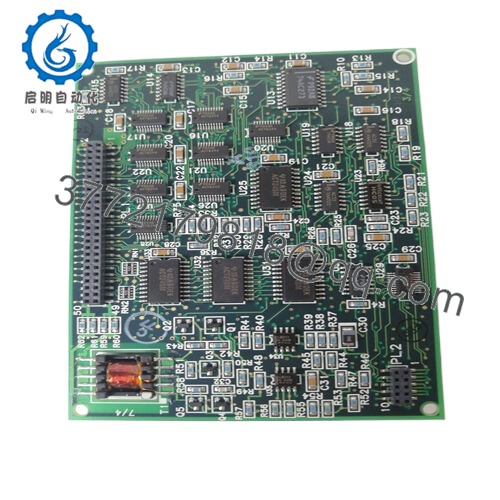
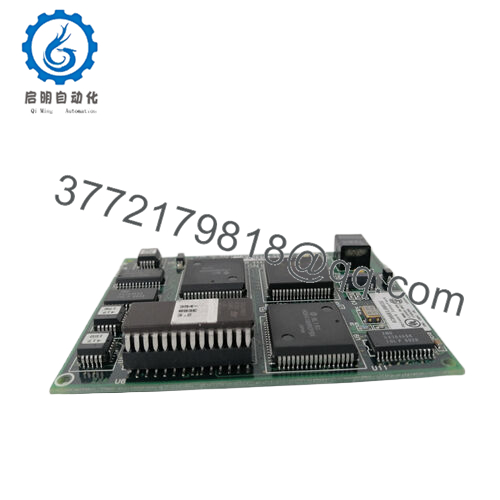
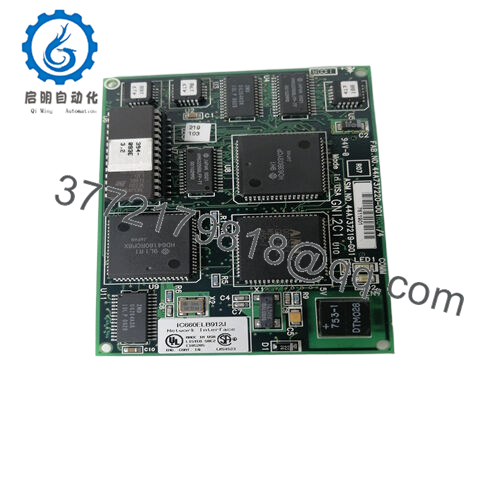
The GE IC660BBA020 lives on the Genius LAN as a standard 2-channel analog input block (4–20 mA or 0–10 V selectable per channel), occupying the same physical terminals and bus address as the original IC660BBA020/025/026 series it replaces. It communicates over the noise-immune 153.6 kbaud Genius protocol to any GE CPU that supports Genius—Series 90-30, 90-70, RX3i, or even VersaMax hosts with a Genius Bus Controller. Each channel offers independent 16-bit resolution, software-configurable fault detection (under/over-range and open-wire on current loops), and individual scaling performed directly in the block, so the controller receives engineering units instead of raw counts.

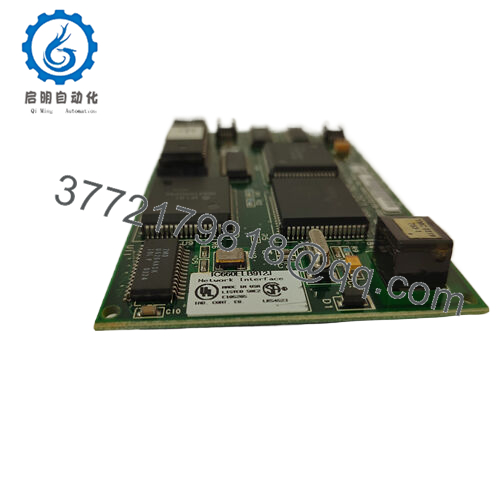
- IC660BBA020
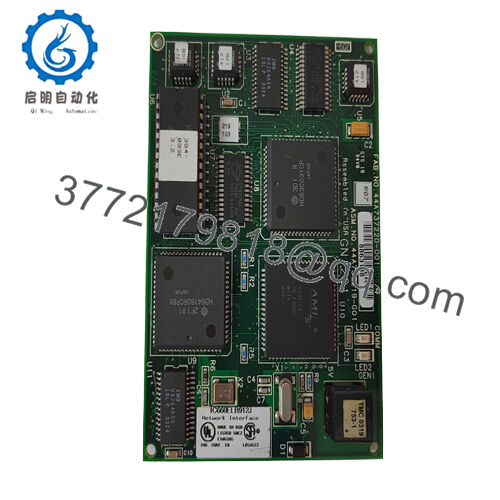
- IC660BBA020
Built-in diagnostics report faults to the handheld monitor or directly to the PLC fault table, while LED indicators on the block instantly show bus health, module OK status, and per-channel faults—saving hours of tracing during commissioning or troubleshooting. Because it draws power from the same 24/48 VDC Genius bus supply that has been feeding the original blocks for years, integration is literally a matter of removing four screws, swapping the terminal assembly (it transfers directly), and tightening the new block back in place. The GE IC660BBA020 preserves the exact same I/O architecture and field wiring, making it the fastest path to restoring critical analog monitoring in live plants.
| Specification | Details |
|---|---|
| Model Number | IC660BBA020 |
| Brand | GE (now Emerson) |
| Type | Genius 24/48 VDC Analog Input Block, 2 ch |
| Input Voltage | 18–56 VDC (bus powered) |
| Operating Temp Range | 0°C to 60°C |
| Mounting Style | Direct panel or DIN-rail with adapter |
| Dimensions | 224 mm × 90 mm × 100 mm |
| Weight | 1.8 kg |
| Interface/Bus | Genius LAN (dual RJ-45 style terminals) |
| Compliance | CE, UL, cUL, Class I Div 2 Groups A–D |
| Supported Protocols | Genius protocol |
| Typical Power Draw | 6 W |
Choosing the GE IC660BBA020 gives you laboratory-grade accuracy (0.1 % of full scale) with industrial toughness—galvanic isolation per channel, high common-mode rejection, and conformal coating that shrugs off condensation and corrosive atmospheres. Open-wire detection on 4–20 mA loops prevents the classic “zero reading = good process” false safety scenario that has caused countless over-pressure events. Because scaling and fault reporting happen in the block itself, CPU scan time stays low and deterministic even when you have dozens of analog points spread across a plant.
Maintenance teams see real savings: the block’s non-volatile memory retains configuration through power loss, and hot-insertion support means you can replace a failed unit on a live bus without dropping the entire network. The GE IC660BBA020 is engineered for long-term performance in environments where thermocouple junctions see 800 °C just a few meters away or where summer panel temperatures push 55 °C—conditions that cooked earlier generations of electronics. In practice, it reduces engineering overhead to almost zero while delivering the kind of signal reliability that keeps alarms trustworthy and loops tightly controlled.
You’ll find the GE IC660BBA020 keeping critical system uptime in power-generation balance-of-plant systems monitoring bearing temperatures and cooling-water flows, in petrochemical refineries watching reformer thermocouples, and in glass furnace zones where even a few minutes of bad temperature data ruins an entire batch. Water-treatment plants use it for chlorine residual and turbidity loops, while metals producers rely on it for ladle temperature and hydraulic pressure signals in continuous-casting lines. Anywhere Genius I/O has been installed for the last thirty years and analog accuracy directly affects safety or product quality, this block is the standard replacement.
IC660BBA100 – Thermocouple/RTD version when direct temperature sensor connection is needed
IC660BBA025 – Legacy 4–20 mA block this unit directly supersedes
IC660BBA104 – 4-channel current-source analog output companion
IC660BBA026 – Older 24/48 VDC 2-channel block now obsolete
IC660TBA026 – Matching terminal assembly with cold-junction compensation
IC660BBD020 – 24/48 VDC 16-circuit source/sink digital block for same bus
IC693BEM331 – Genius Bus Controller for RX3i/90-30 hosts
Before swapping, note the existing bus baud rate and block address from the handheld monitor or PLC configuration—new blocks ship defaulted to 153.6 kbaud standard and address 31, so a quick re-address is usually required. Verify bus power is within 18–56 VDC and that both bus cables are landed on the same terminals (serial A and B are polarity-insensitive but must be consistent). Leave at least 50 mm above and below for convection cooling; forced air isn’t required but helps in 60 °C ambient.
Day-to-day, glance at the two green LEDs during rounds—steady means happy. Every couple of years, cycle power during a planned outage and confirm configuration with the HHM; the block retains everything else indefinitely. Field terminals accept up to 12 AWG, and the entire terminal board unplugs for bench service if you ever need to move wiring to a spare block. Most sites keep one configured spare on the shelf—swap time is under ten minutes with a screwdriver.