 WhatsApp: +86 16626708626
 Email:
  Phone: +86 16626708626
Description
- Real-World Use & Application Scenarios
Where is this product used and why?
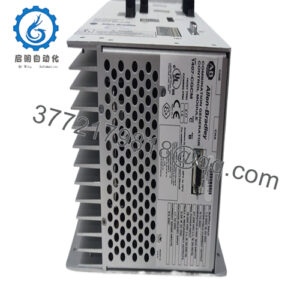
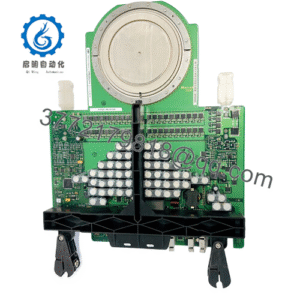
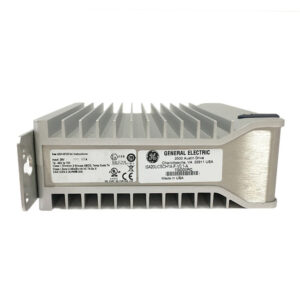
The HE693RTD600 is designed for precise resistance-temperature sensing in industrial environments. It’s commonly deployed in chemical processing, food and beverage, metal forming, and energy facilities where six RTD channels monitor process temperatures with stability and repeatability. The module accepts common RTD types (Pt100, Pt1000, Ni100, etc.) and provides stable excitation, isolation, and signal conditioning suitable for PLCs or distributed control systems. In retrofit projects, the RTD600 enables upgrading legacy temperature sensing to a digitally-compatible interface with improved accuracy and diagnostics, reducing wiring complexity while expanding monitoring coverage. Engineers reference this module when specifying rugged, temperature-sensitive measurement points across the control network. - Product Introduction & Positioning
What this product is and how it fits
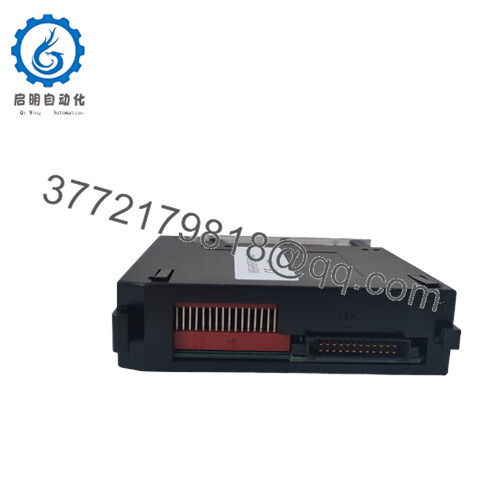
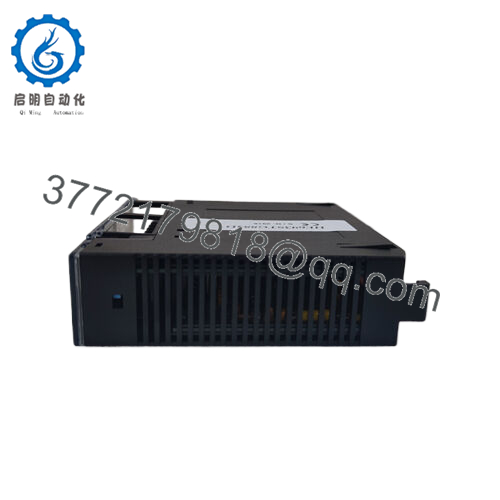
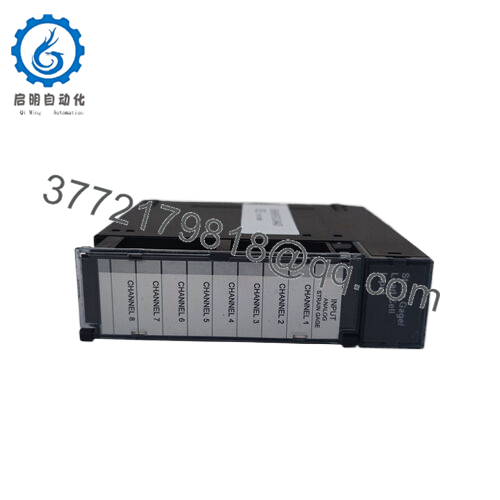
The HE693RTD600 is a six-channel RTD input module intended to interface with a GE Horner/Series 90-style control ecosystem. It provides isolated RTD measurement channels with defined excitation, conversion, and filtering to deliver clean digital temperature values to the host controller. The module fits into a compact I/O rack or backplane, pairing with other analog/digital I/O blocks to create a cohesive temperature monitoring and control subsystem. Its value lies in high-accuracy temperature data, channel-level diagnostics, and straightforward integration with existing software workflows for calibration, data logging, and alarms.
- HE693RTD600
- HE693RTD600
- Key Technical Features & Functional Benefits
The RTD input module offers precise, reliable temperature sensing across six channels. Expect stable excitation current per channel, low measurement drift, and effective isolation to mitigate crosstalk and electrical noise. Channel-level status indicators and fault reporting help with fast diagnostics, while configurable RTD types (Pt100, Ni100, etc.) support diverse sensor inventories. The modular form factor and compatibility with GE Horner-style backplanes facilitate scalable installations, enabling easy expansion of temperature-monitoring coverage as process control needs grow. - Detailed Technical Specifications
Parameter | Value
Model | HE693RTD600
Brand | Horner Electric / GE Horner (GE family alignment)
Type | RTD input module
Channels | 6
RTD Types Supported | Pt100, Pt1000, Ni100, Cu10 (per datasheet)
Excitation | Per-channel reference excitation (value specified in datasheet)
Isolation | Channel-to-channel isolation and backplane isolation
Measurement Resolution | As specified in datasheet (commonly 0.1°C or 0.05°C classes)
Update Rate | Per system timing (typically fast enough for real-time control)
Power Requirements | Backplane or local supply per configuration
Mounting | Rack/PCB backplane compatible
Operating Temperature | Industrial range (typical 0–60°C)
Accuracy | Per datasheet (typical ±0.2°C to ±0.5°C depending on sensor and wiring)
Initialization/Calibration | Factory-calibrated; field calibration options available
Diagnostics | Channel status, fault flags, sensor open/short indication
Certifications | Industrial safety and EMC compliance - Related Modules or Compatible Units
- HE693RTD600-BATTERY – Battery-backed options for RTD data retention
- HE693RTD660/665/666 – Other RTD input variants with different channel counts or specs
- HE693ETM001 – Timing/sequence module compatible with Horner RTD families
- HE693AI600 – Analog input module companion for mixed-signal applications
- HE693CRC – Calibration and configuration utilities for RTD modules
- GE Horner backplane modules in the same family for expanded I/O
- Installation Notes & Maintenance Best Practices
Pre-installation considerations
Confirm the RTD wiring topology (2-wire, 3-wire, or 4-wire) and sensor compensation requirements. Plan for proper sensor routing, shielding, and thermally stable mounting to minimize thermal gradients. Verify compatibility with the host controller’s software and calibration routines, and ensure power and grounding schemes minimize noise pickup on RTD lines.
Maintenance best practices
Periodically verify sensor cleanliness and wiring integrity; inspect for corrosion or moisture ingress in harsh environments. Check RTD resistance against known standards during scheduled calibrations and update configuration as sensors are added or replaced. Maintain spare RTD sensors and module spares to reduce downtime, and keep thorough documentation of sensor types, calibration data, and topology changes.