 WhatsApp: +86 16626708626
 Email:
  Phone: +86 16626708626
Description
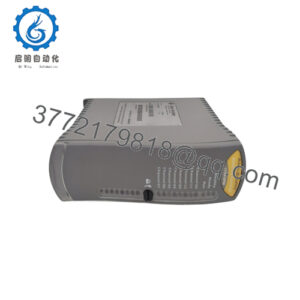
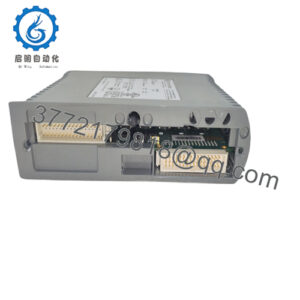
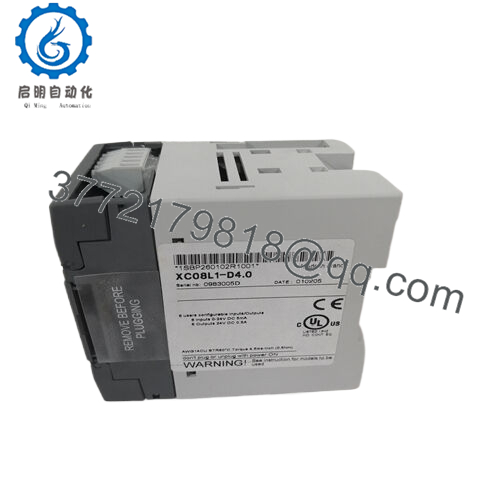
Product Model: XC08L1
Ordering / Part Number: 1SBP260102R1001
Product Brand: ABB
Product Series / Platform: Advant / Controller 31 / Digital Central Extensions
Product Features:
- 8 configurable I/O channels: supports 8 digital inputs and 8 digital outputs (24 V DC). Inputs: 0–24 V DC, ~5 mA per channel; Outputs: 24 V DC, up to 0.5 A per channel.
- Compact extension module design for plug-in to an existing rack or backplane in Control / Advant / OCS systems.
- Supplier and distributor listings commonly offer 12-month warranty on new units.

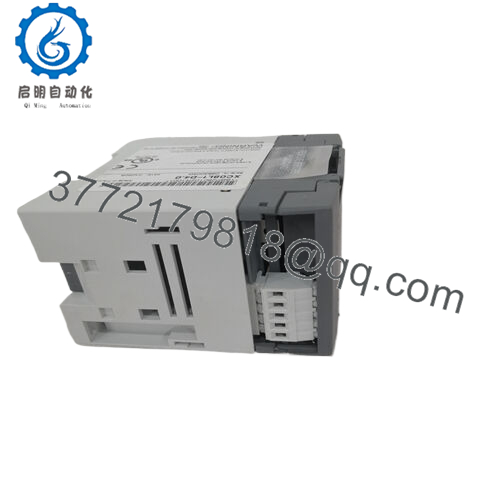
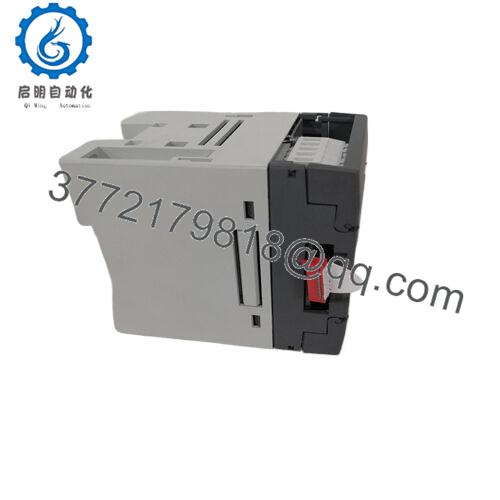
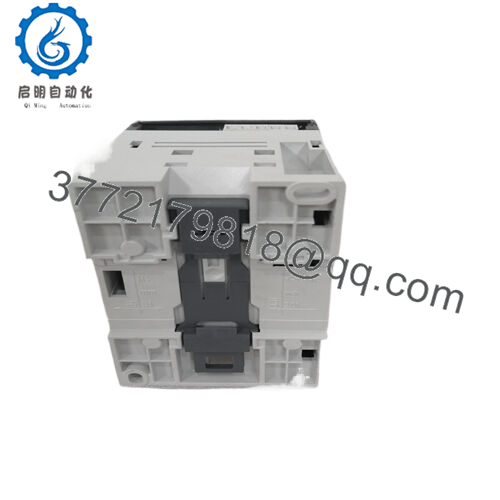
- XC08L1
- XC08L1
Applications & Industry Context
In industrial control systems—such as process plants, utilities, water treatment, or manufacturing—controllers often require more I/O capacity than originally provisioned. When a PLC, DCS or Advant rack runs out of outputs or inputs, the XC08L1 fills that gap as a modular expansion. It offers a compact, integrated way to add eight digital signals (inputs/outputs) into the existing control infrastructure without rebuilding cabinets or routing bulky external wiring.
For example, imagine a process skid with additional solenoids, indicators or interlock signals needed after commissioning. Instead of pulling new field wiring all the way back to the controller, one can mount an XC08L1 in a nearby rack location. The backplane buses or module connectors carry the logic communication, reducing wiring cost and error potential.
Because ABB’s Advant / Controller 31 / OCS systems were (and still are) common in many long-lived installations, the XC08L1 sees wide use in brownfield upgrades, maintenance swaps, or incremental expansions. Its modular nature is especially valuable in systems where downtime must be minimized.
In many legacy plants, engineers report that when outputs intermittently fail or inputs go “ghost,” swapping in an XC08L1 extension is often a first diagnostic step—since a failed base module or wiring can mimic I/O faults.
Product Role & System Fit
The XC08L1 (1SBP260102R1001) functions as a digital I/O extension module. It is not a processor or logic controller; rather, it expands the reach of existing controllers by providing additional digital input/output points. In system architecture, it usually plugs into a backplane or module bus of the main control chassis, alongside other modules.
From a systems viewpoint:
- The control logic under the main CPU addresses the XC08L1’s channels transparently, as if they were native I/O.
- Inputs from field devices (e.g. switches, sensors) feed into the XC08L1, which passes that status to the logic layer.
- Outputs driven by logic commands are switched through the module’s relay or transistor outputs to drive field loads (e.g. actuators, indicators).
- Because the module supports both input and output channels at 24 V DC standard, it fits typical industrial digital signal norms.
Given that ABB’s documentation includes XC08L1 among “digital central extensions” (i.e. extensions of the central control rack) and the system allows up to “6 digital or analog central extensions” in its architecture. Thus, XC08L1 commonly coexists with other extension modules like XI16E1, XO08R1, etc.
When planning expansions or spare parts, ensure the mapping, addressing scheme, backplane connector, and load capacity align with your system’s nomenclature and load budget.
Technical Features & Benefits
Here are the key technical attributes (from supplier sources) and how they benefit real installations:
8 Configurable I/O Channels
The module provides eight configurable digital I/O channels: 8 inputs and 8 outputs.
Benefit: High density of points per module—less cabinet real estate wasted.
Input / Output Ratings
- Inputs: 0–24 V DC, approx. 5 mA per channel
- Outputs: 24 V DC, up to 0.5 A per channel
Benefit: Adequate for standard industrial digital loads (e.g. relays, coils, indicators), without overspec or undue cost.
Compact Module Format
Designed for plug-in installation in ABB control racks, allowing quick swap or addition without field rewiring.
Benefit: Minimal mechanical disruption during upgrades or maintenance.
Wide Application Fit
Vendor materials note suitability for industrial automation, building automation, water treatment systems, etc.
Benefit: Versatility across sectors—one module design works across many domains.
Warranty Support & Supply Chain
Many distributor listings provide a 12-month guarantee on new units.
Benefit: Confidence when ordering spares or backup modules.
In field experience, adding or replacing an I/O extension module like XC08L1 can restore lost capacity or correct intermittent I/O errors quickly. The logic layer reflects its addition, enabling configuration without rearchitecting the core control logic.
Technical Specifications Table
| Specification | Detail / Value (as per suppliers) |
|---|---|
| Model | XC08L1 |
| Ordering / Part Number | 1SBP260102R1001 |
| Type | Digital I/O Extension Module |
| Number of Channels | 8 configurable I/O (8 inputs + 8 outputs) |
| Input Signal Voltage & Current | 0–24 V DC, ~5 mA per input channel |
| Output Signal Voltage & Current | 24 V DC, up to 0.5 A per output channel |
| Number of Central Extensions | System supports up to 6 digital/analog extensions |
| Compatibility / System | ABB Advant / Controller 31 / OCS control systems |
| Warranty | 12 months (common vendor practice) |
Because publicly available sources do not always provide complete surge ratings, isolation specs, or EMC performance, always refer to ABB’s official module datasheet or user manual for full specifications.
Related Models
When working within ABB’s expansion ecosystem, modules you may see alongside or instead of XC08L1 include:
- XI16E1 – A digital input extension (16 inputs) module (often referenced in ABB module lists)
- XO08R1 / XO08R2 – Relay output extension modules used for switching loads
- XC08L1-D4.0 – A variant of XC08L1 listed under the same part number (alternate version)
- Other digital or analog extension modules (Analog central extension types) used in the same control rack architecture
When selecting spares or planning upgrades, ensure the variant (base vs D4.0), module numbering, and firmware mapping are consistent with your control system.
Installation & Maintenance Insights
Having deployed and maintained many ABB control systems, here are practical tips when working with XC08L1:
- Power down before swapping modules – Though many racks may tolerate hot-swap in limited fashion, fully isolating power ensures safety and avoids backplane bus glitches.
- Check addressing / slot configuration – After installing the module, confirm its address in the control logic matches the physical slot and extension mapping.
- Wire inputs/outputs carefully – Use correct wire gauges, ensure shielding where needed, maintain consistent wiring practice relative to 24 V DC reference and ground.
- Avoid overloading outputs – Each output channel is rated to 0.5 A; exceeding this may cause voltage drop or permanent damage.
- Use spares proactively – Keep at least one configured XC08L1 (or identical spare) in inventory. Because I/O modules often fail first in aging systems, having a hot swap module saves time in diagnostics.
- Periodic inspections – During maintenance windows, check module connectors, signs of thermal stress or discoloration, ensure the backplane contacts remain clean.
- Test mapping and functionality – After installation, run diagnostics to confirm that all input and output points respond correctly and that logic behaves as expected.
These good practices help ensure that your control system expansion remains robust and operational.