 WhatsApp: +86 16626708626
 Email:
  Phone: +86 16626708626
Description
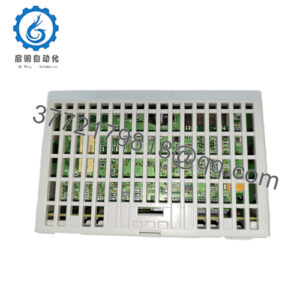
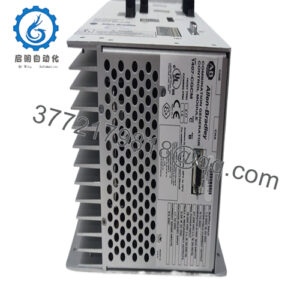
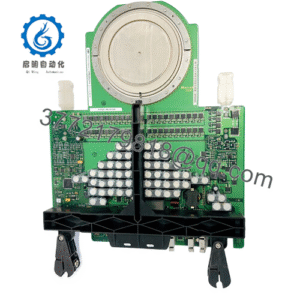
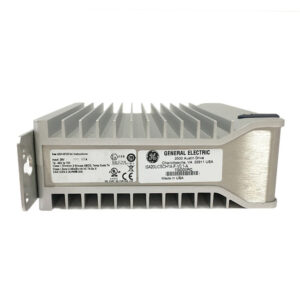
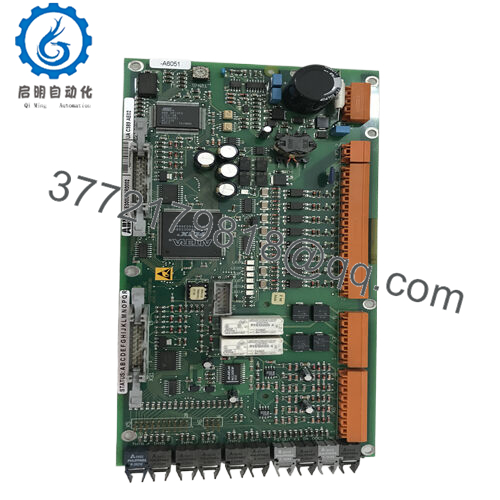
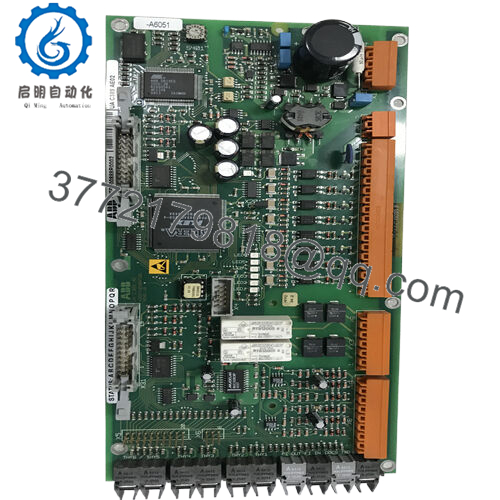
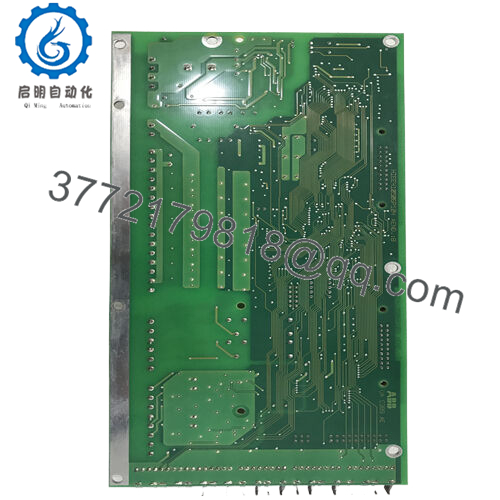
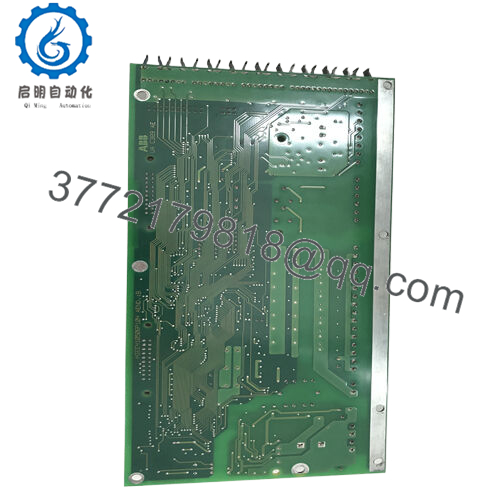
In the high-reliability domain of industrial automation, where precise pulse amplification and signal conditioning are paramount to preventing thyristor misfires, torque instabilities, or converter faults that could ripple through drive chains and halt critical loads like pumps or compressors, control engineers often confront the pitfalls of unbuffered gate commands: inadequate isolation leading to noise-induced false triggers, limited current drive exposing power stacks to overvoltages, and the integration strains of scaling MVAC (Medium Voltage AC) systems without rearchitecting enclosures or risking EMC non-compliance in EMI-saturated bays. These issues compound in power-intensive settings such as steel rolling mills or marine propulsion drives, where a 5% gate pulse distortion might cascade into harmonic spikes, efficiency losses, or safety interlocks that trigger unplanned outages, inflating MTTR and regulatory scrutiny under standards like IEC 61800-5-1. The ABB UAC389AE02 HIEE300888R0002 addresses these as a pulse amplifier board within ABB’s ACS6000 and DCS800 medium-voltage drive families, engineered to boost and isolate low-level control pulses from inverters or excitation controllers, delivering robust, galvanically separated drive signals up to 30 mA peak with precise timing to ensure stable thyristor commutation and high reliability in process control architectures. Envision a synchronous motor start in a cement kiln: jittery pulses from a PM864 controller could desync firing angles, but the ABB UAC389AE02 HIEE300887R0002 conditions them with fiber-optic isolation and edge sharpening, propagating clean waveforms through S800 backplanes to power stages for seamless torque buildup without the need for external optos or amplifiers. It’s crucial in modular drive expansions, from retrofitting legacy exciters to densifying DCS800 nodes in dusty or vibration-heavy enclosures, where its coated design resists contaminants and supports scalability sans enclosure overhauls. This board advances industrial automation’s drive resilience, embedding fault diagnostics like pulse integrity checks to preempt trips while curbing the cabling overhead of unamplified gates. Rather than a mere booster, the ABB UAC389AE02 HIEE300888R0002 instills a precise pulse pathway, empowering teams to orchestrate MV power flows with assurance, in environments where signal sharpening delineates smooth starts from stalled sequences.
The ABB UAC389AE02 HIEE300888R0002 functions as a gate pulse amplifier in the signal conditioning layer of ABB’s ACS6000 or DCS800 drive ecosystems, receiving TTL-level or fiber-optic pulses from control boards like the SDCS-CON-4, then amplifying and isolating them for thyristor bridges, with adjustable dead-time compensation to prevent shoot-throughs in hot-switched configurations. It mounts via backplane headers in drive cubicles, interfacing through edge connectors or fiber ports for low-latency handoffs to power stacks, where it handles up to 24 channels with 5 V logic inputs and 15 V/30 mA outputs, all while drawing 24 V DC aux power from the bus. In a typical MVAC deployment, it might sharpen firing commands for a 6-pulse converter, applying galvanic isolation up to 2.5 kV to shield against bridge transients and relaying status via Profibus DP or Modbus RTU to the AC 800M for SOE logging in System 800xA. This supports redundancy through duplexed channels, where a secondary ABB UAC389AE02 HIEE300888R0002 mirrors primaries for bumpless failover in hot-standby loops, ensuring no single pulse fault desynchronizes the stack. Diagnostics integrate via onboard LEDs for channel health and bus-queryable registers that capture pulse width variances, flagging anomalies like overcurrents without halting the drive, while its conformal coating enhances durability in G3 harsh atmospheres. Positioned mid-stack in the I/O architecture, it decouples raw control pulses from high-power EMI, ensuring crisp propagation for firing logic or exciter sync in rack-mounted frames. For hybrid upgrades, the ABB UAC389AE02 HIEE300888R0002 accommodates firmware flashes via ABB’s DriveWindow, anchoring evolutions from compact converters to expansive MV webs where pulse potency underpins seamless process control.

- UAC389AE02 HIEE300888R0002
- UAC389AE02 HIEE300888R0002
| Specification | Details |
|---|---|
| Model Number | UAC389AE02 HIEE300888R0002 |
| Brand | ABB |
| Type | Pulse Amplifier Board |
| Input Voltage | 24 V DC |
| Operating Temp Range | -10°C to +70°C |
| Mounting Style | Backplane |
| Dimensions | 180 mm x 100 mm x 25 mm |
| Weight | 0.4 kg |
| Interface/Bus | DCS800 / ACS6000 Drive Bus |
| Compliance | CE, RoHS, EMC, Coated for G3 |
| Supported Protocols | Profibus DP, Modbus RTU |
| Typical Power Draw | 6 W |
Choosing the ABB UAC389AE02 HIEE300888R0002 equips your drive stack with a pulse powerhouse engineered for enduring exactitude, where its isolation and sharpening avert the distortions that erode commutation angles, yielding smoother torque curves and fewer harmonic-induced trips that extend MTBF in cyclic loads without the drag of external buffers inflating enclosure heat. In the thick of operational throes, this translates to firings that track commands with sub-microsecond fidelity, letting you pursue refinements like vector optimization on sharpened signals rather than sifting pulse pathologies post-glitch.
The board’s drive-native docking and coated resilience further lighten integration tolls, as plug-compatible headers hasten stack proofs, compressing SAT phases and channeling acumen to flux evolutions over gate hunts in legacy converters. Maintenance gains a sharper edge too, with self-reporting on channel vigor that pinpoints pulse skips early—via bus polls—compressing fault hunts to minutes and stretching calibration cadences, which in turn lightens the load on tech rotations and bolsters overall drive dominion.
Ultimately, the ABB UAC389AE02 HIEE300888R0002 nurtures a precise propagation in pulse-pinched industrial automation, where such sharpeners not only gird firing fortitude but also unlock pathways for layered logics, like adaptive dead-time on flux fluxes, all bereft of the retrofit rigmarole that hampers agility.
In steel mill rolling stands, the ABB UAC389AE02 HIEE300888R0002 amplifies gate pulses for DCS800 thyristors, where it upholds high reliability against arc flashes and thermal flux, anchoring process control environments that demand edge-true firings for strip tension in high-speed tandem process control webs.
Marine thruster drives harness the ABB UAC389AE02 HIEE300888R0002 for converter conditioning, ensuring critical system uptime amid saline shakes and torque throbs, with isolation clout locking propulsion commands tight and nipping desyncs in variable-pitch process control scaffolds.
Cement kiln synchronous motors deploy the ABB UAC389AE02 HIEE300888R0002 to sharpen exciter signals, backing fast data cycles under dusty drafts and flux fluxes, where its amplifier poise maintains speed holds seamless and balks stalls in flux-heavy process control frames.
UAC389AE01 – Base variant without coating for indoor non-corrosive setups.
UAC385AE01 – Gate interface companion for input buffering in MV stacks.
SDCS-CON-4 – Control board counterpart for pulse generation upstream.
SDCS-PIN-4 – Power interface add-on for thyristor bridge ties.
PM864A – Processor unit integrating UAC389AE02 for 800xA oversight.
CI854A – Communication interface for Profibus extensions post-amplification.
DCS800-S01 – Drive frame housing UAC389AE02 for exciter duties.
HIEE300888R0001 – Legacy uncoated version for older ACS6000 paths.
As you prep the ABB UAC389AE02 HIEE300888R0002 for your backplane, align edge pins precisely with the DCS800 slots to evade trace fractures, and probe the 24 V DC rail for <5% ripple—strays court pulse skews—while mapping channel assignments against your firing roster via the DriveWindow to preempt overlap clips. Assay cabinet humidity below 95% RH to honor the 70°C ceiling, routing fibers shielded from bridge noise, and baseline a self-test cycle post-mount to confirm isolation under 2.5 kV sans live power-up risks.
Perpetual stewardship hinges on vigilance: cull event buffers trimestrial over the bus to hunt firing variances or heat anomalies, and cinch header latches post-quake episodes to thwart creep-induced arcs. Annual full-load stress with a pulse generator affirms dead-time holds under 10 µs, and an ESD-wary swab of traces thwarts film bridges in humid vaults. These protocols cast the ABB UAC389AE02 HIEE300888R0002 as an ironclad igniter, unveiling fissures pre-fracture and stewarding your stack’s spark with calibrated thrift.