 WhatsApp: +86 16626708626
 Email:
  Phone: +86 16626708626
Description
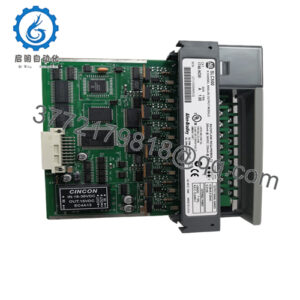
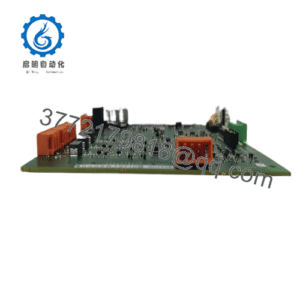
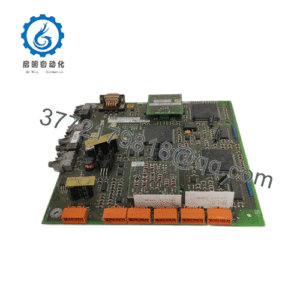
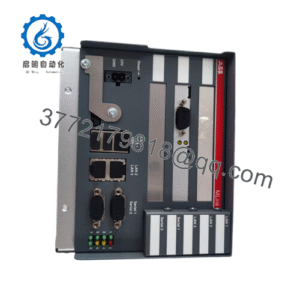
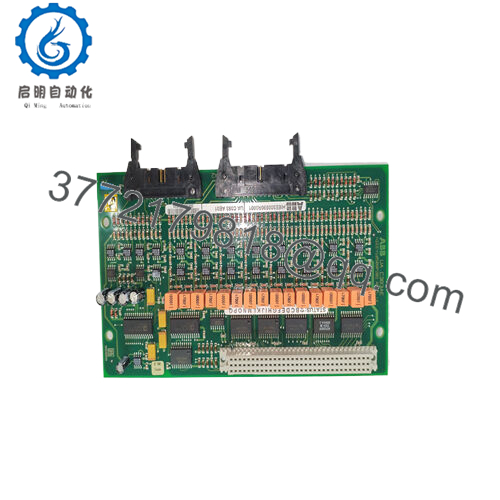
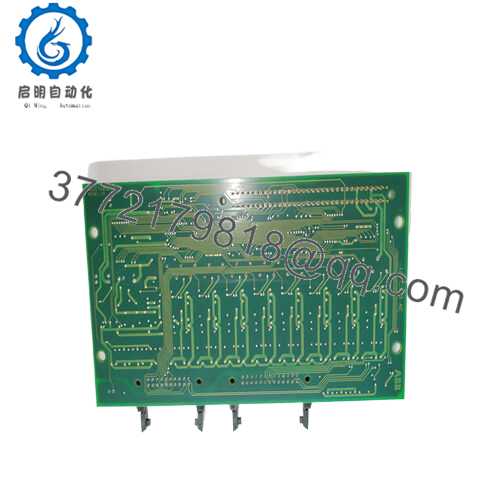
Product Model: UAC383AE01
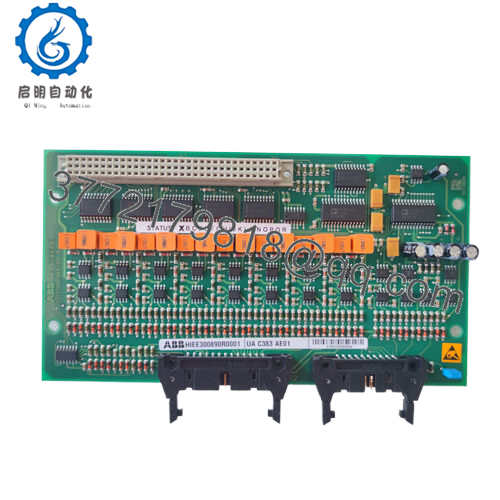
Ordering / Type Number: HIEE300890R0001
Product Brand: ABB
Product Class / Usage: Measurement / Binary Input Board (MUB / Digital I/O)
Product Features:
- Functions as a binary input / measurement unit board (MUB) for ABB control systems.
- Provides 16 independent input channels, each with opto-isolation, current limiting, and EMC protection components.
- Input voltage range typically 18–30 V DC (nominal 24 V), with per-channel current draw and grouped voltage monitoring.
- Designed to operate within ABB 800xA / Advant system enclosures and integrated racks.

- UAC383AE01 HIEE300890R0001
- UAC383AE01 HIEE300890R0001
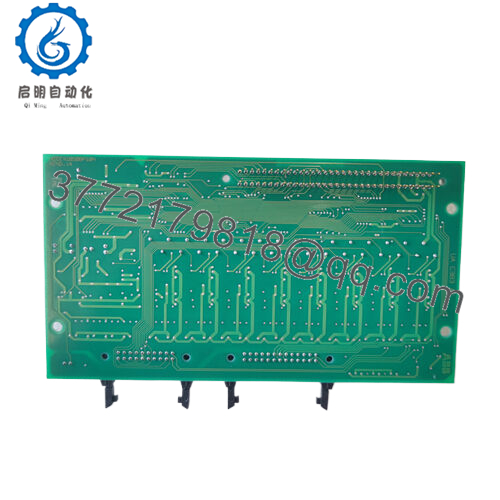
Applications & Industry Context
In complex automation and power generation environments—such as energy plants, utilities, or factory DCS systems—accurately reading and processing binary (on/off) signals is indispensable. For example: breaker statuses, valve open/close contacts, limit switches, alarms, safety interlocks—all of these rely on binary input logic. The ABB UAC383AE01 is one such module designed to reliably acquire these discrete signals in a control rack and feed them into the control logic.
During plant fault diagnosis or black-start events, having clearly timestamped binary inputs is crucial—without them, root-cause reconstruction becomes guesswork. The UAC383AE01 fills that role as a measurement unit board (MUB) or binary input board in ABB’s system architecture. Vendors list it under both “binary input board” and “measurement unit board / MUB” , indicating its dual role: it not only reads discrete signals but also integrates into the measurement/monitoring platform.
Given the number of legacy ABB installations (800xA, Advant, OCS, etc.), this board is often stocked as a spare. Control engineers often remark that replacing a suspect binary input board with a fresh UAC383AE01 resolves persistent missing-channel faults or “ghost” signaling issues.
Product Role & System Fit
Within a control cabinet or rack, the UAC383AE01 typically occupies a slot in a backplane or module cage. It reads switched signals from field wiring (via terminal blocks) and presents the data over the internal bus to the DCS or logic controller. Because it’s a measurement / binary input board, its role lies between the raw field contacts and the higher-level control logic.
In terms of system fit:
- It likely interfaces with ABB 800xA / Advant / OCS system families.
- It communicates input states (open/closed) and may support grouping, monitoring of input voltage, and alerting if the process supply to the board fails.
- Each input channel is protected via optical isolation, current limiters, and EMC filtering—ensuring that harsh plant electrical environments don’t corrupt your logic.
- Its integration should be seamless with legacy DCS / PLC racks; signals from this module become part of the larger control and interlock logic.
Therefore, when replacing or deploying one, you must ensure matching connector pinout, signal grounding strategy, and supply voltage (18–30 V range) alignment with the system. Mis-wiring or mismatched input voltage ranges can lead to detection failures or damage.
Technical Features & Benefits
Here are key features of UAC383AE01 (HIEE300890R0001) and how they translate to practical benefits:
16 Independent Input Channels
The module supports 16 binary input channels.
Benefit: High channel density allows many discrete signals to be aggregated into one board, optimizing rack space and simplifying wiring.
Wide Input Voltage & Low Current Draw
The module’s inputs typically accept 18–30 V DC (nominal 24 V), with each channel drawing approximately 6 mA at 24 V.
Benefit: Compatible with standard industrial DC wiring; low input current reduces load on power supplies or fuses.
Grouped Isolation & Voltage Monitoring
The inputs are divided into two isolated groups (each 8 channels), each with a voltage monitoring signal to detect supply loss.
Benefit: Allows the system to detect and react if the board supply voltage fails—improving fault diagnostics and safety.
EMC Protection & Current Limiting
Each input channel is equipped with its own current limiting, EMC (electromagnetic compatibility) suppression, and opto-isolation barrier.
Benefit: Enhanced robustness—noise, surges or transients from field wiring are less likely to corrupt input states or damage the board.
Modular Board Form & Standard Footprint
It is marketed as a board fitting ABB measurement / I/O rack architectures.
Benefit: Easier swap-in replacement—less custom cabinet work, fewer surprises in reinstallation.
From field experience, swapping a drifting or noisy binary input board for a fresh, fully functional UAC383AE01 often cures intermittent digital input errors—reducing time spent tracing wiring or misconfiguration. Because this board sits at a critical interface layer, its reliability is essential for overall system stability.
Technical Specifications Table
| Specification | Detail / Value |
|---|---|
| Model / Designation | UAC383AE01 |
| Type / Ordering Number | HIEE300890R0001 |
| Module Function | Binary Input / Measurement Unit Board (MUB) |
| Number of Input Channels | 16 independent channels |
| Input Voltage Range | 18–30 V DC (nominal 24 V) |
| Typical Input Current | ~6 mA per channel at 24 V |
| Isolation / Grouping | Two isolated groups of 8 channels each, with voltage monitoring |
| Protection & Filtering | Opto-isolation, EMC suppression, current limiting per channel |
| Platform / Compatibility | ABB 800xA / Advant / measurement / I/O racks |
| Board Dimension / Weight | Approx. board size listed by vendors (e.g. 136 × 60 × 85 mm) |
| Warranty (supplier listed) | 12 months / 365 days typical |
Related Models
When dealing with ABB control systems and planning spares, comparable modules include:
- UAC383AE01 (HIEE300890R0001) – this module, binary input / measurement board.
- Other UAC / UAD family boards – modules handling analog inputs, outputs or control logic in the same system family.
- Measurement Unit Boards (MUB) in ABB’s ecosystem – which may be cross-referenced in 800xA or legacy catalogs.
- Binary input boards from ABB – modules that perform similar discrete input collection tasks in compatible architectures.
When choosing a spare board, it’s essential to match model, revision, connector pinout and system slot to avoid digit mapping or communication mismatch.
Installation & Maintenance Insights
From field experience in industrial automation, here are best practices when working with the UAC383AE01:
- Verify Revision & Part Number
Before inserting the board, confirm the board is HIEE300890R0001 and that its connector pinout matches your rack. A revision mismatch can lead to incorrect inputs or damage. - Power Down Before Installation
Always remove power from the I/O rack and drain any residual voltages before handling or inserting the module. The binary input board connects directly to field wiring and power rails—live insertion risks damage. - Wire and Terminal Check
Inspect field wiring (contacts, switches, relays) before installation to ensure correct polarity, insulation and no exposed wiring. A noisy or damaged field wire often manifests as input errors. - Torque & Connection Quality
When tightening terminal connections, follow the manufacturer’s torque recommendations. Loose terminals are a frequent cause of intermittent input faults or high resistance paths. - Voltage Monitoring Signal Use
Because the module groups its inputs and includes voltage monitoring per group, wire the voltage monitoring channel properly so the system can detect supply failures. - Label & Document
After installation, label the board slot, record serial number, installation date, and any wiring channel mapping. This documentation pays dividends when troubleshooting or doing future swaps. - Swap Strategy
In the event of input failures, many engineers replace the binary input board first (alongside a known good spare) before chasing wiring issues. Because this board is relatively “low cost” relative to logic modules, the quick swap approach often restores system function faster. - Periodic Inspection
During scheduled outages, inspect the board terminals, look for discoloration (due to heat), clean dust or corrosion, and validate that all input LEDs function correctly if available.