 WhatsApp: +86 16626708626
 Email:
  Phone: +86 16626708626
Description
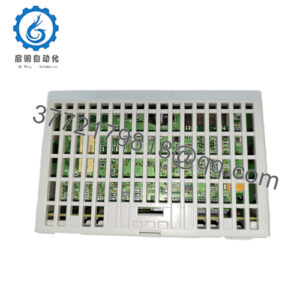
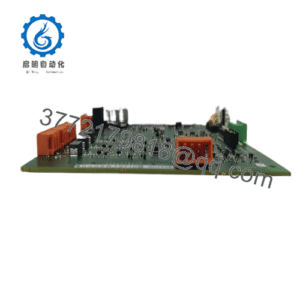
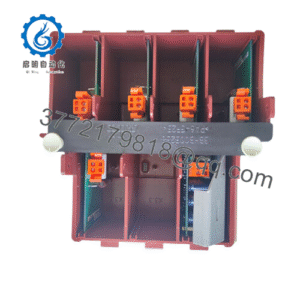
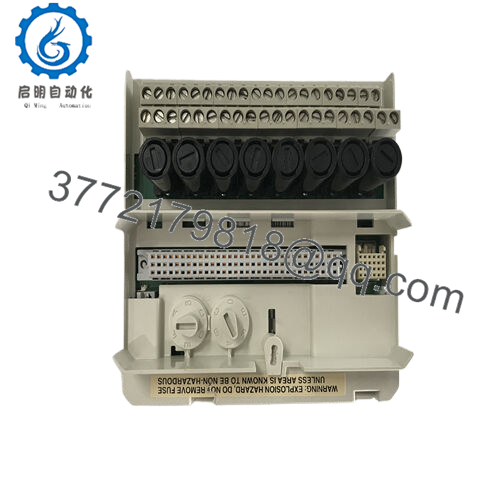
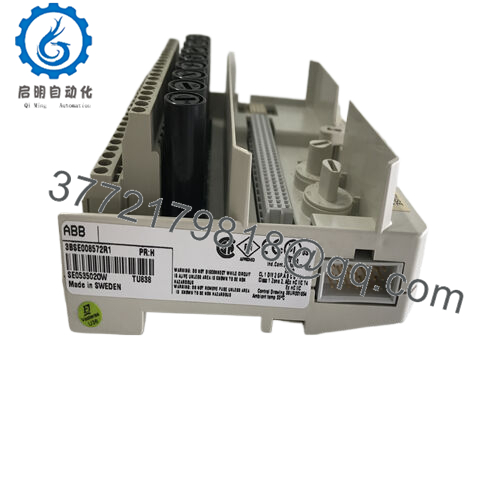
In the densely packed cabinets of industrial automation, where analog signals from transducers, pressure transmitters, or flow sensors must terminate reliably without risking voltage imbalances, fuse failures, or wiring errors that could skew measurements and trigger process deviations, control system designers often grapple with the limitations of basic terminal blocks: insufficient fusing for loop protection, limited return paths leading to ground loops, and the space crunch in DIN-rail assemblies that hampers scalability during expansions. These pain points are especially acute in field-intensive applications like water treatment plants or pharmaceutical blending stations, where 4-20 mA loops demand fused power outlets and isolated returns to maintain signal integrity amid humid conditions or variable loads, otherwise inviting intermittent faults that cascade into recalibrations, downtime spikes, or compliance lapses under standards like ISA-S71.04. The ABB TU838 (3BSE008572R1) confronts these as an extended Module Termination Unit (MTU) for the S800 I/O system, delivering a fused, multi-channel interface with dedicated transducer power outlets, signal terminals, and return paths up to 50 V, ensuring high-reliability connections that safeguard process control without the bloat of external fuse blocks or custom harnesses. Imagine a filtration skid: unprotected sensor loops could succumb to a short from condensation, corrupting flow data and halting dosing, but the ABB TU838 provides 2×4 fused outlets and 16 signal terminals with isolated L+/L- feeds, enabling clean, protected tie-ins to AI810 analog inputs for accurate trending in System 800xA. It’s vital in modular I/O expansions, from retrofitting legacy panels to densifying S800 nodes in corrosive enclosures, where its horizontal mounting and rated isolation support goals like minimized wiring errors and enhanced signal reliability. This unit embodies a practical shield, aligning with industrial automation’s drive for robust field interfaces that cut engineering hours on fuse layouts while fostering environments where analog fidelity underpins seamless loops and proactive maintenance.
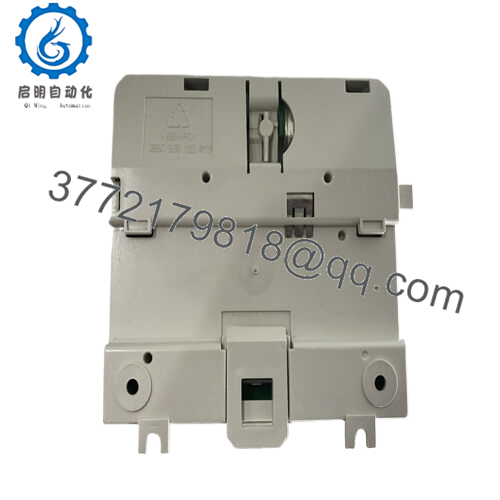
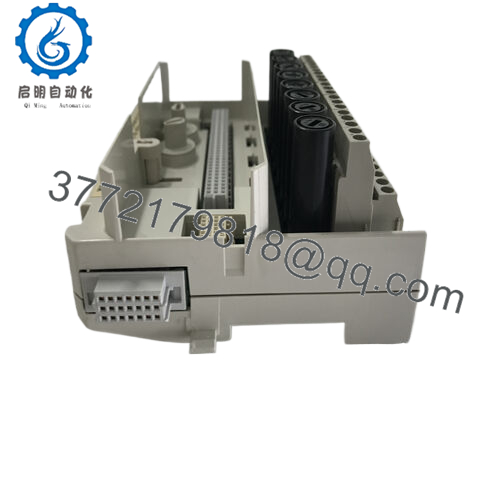
The ABB TU838 serves as a passive termination hub in the S800 I/O’s analog field layer, connecting external transducer wiring—such as 4-20 mA loops from RTDs or mV inputs—to active modules like the AI830A via the ModuleBus, incorporating fuses and returns to prevent loop overloads or ground potentials without introducing electronics that could fail. It latches horizontally onto 35 mm DIN rails in marshalling cabinets, positioning beside I/O carriers where its 2×4 fused power outlets (50 V max, 100 mA per fuse) supply loop excitation, complemented by 16 signal terminals, 2×4 return paths, and 2×2 L+/L- feeds for balanced isolation against EMI. In a typical S800 configuration, it pairs with a CI840 Profibus interface, distributing protected signals to the AC 800M controller for PID execution, while mechanical keys ensure only matching modules engage, averting mismatches in redundant setups. This facilitates scalability through daisy-chaining for up to 16 channels, with fuses resettable or replaceable (5×20 mm) to isolate faults without global disruptions. For diagnostics, it leverages the host module’s status LEDs and bus queries, but its fused design enables quick visual fuse checks, integrating with 800xA asset views for loop health over Modbus TCP. Positioned at the cabinet edge of the I/O architecture, it decouples raw field variances—like transducer shorts—from backplane logic, ensuring untainted ascent for alarming or archiving in rack ecosystems. Adaptable for G3 harsh environments via variants, the ABB TU838 supports firmware-agnostic expansions, rooting out denser analog webs from compact skids to plant-wide S800 meshes where termination tenacity underpins uninterrupted process control.

- TU838
- TU838
| Specification | Details |
|---|---|
| Model Number | TU838 (3BSE008572R1) |
| Brand | ABB |
| Type | Extended Module Termination Unit |
| Input Voltage | Up to 50 V DC/AC |
| Operating Temp Range | -25°C to +70°C |
| Mounting Style | DIN Rail (35 mm, horizontal) |
| Dimensions | 358 mm x 73 mm x 66 mm |
| Weight | 0.6 kg |
| Interface/Bus | ModuleBus (S800 I/O) |
| Compliance | CE, RoHS, ISA-S71.04 G3 (variant) |
| Supported Protocols | N/A (Passive) |
| Typical Power Draw | 0 W (Passive) |
Incorporating the ABB TU838 into your S800 array equips it with a termination tier machined for steadfast safeguarding, where its fused outlets and isolated returns thwart shorts that might otherwise corrupt loop currents, yielding measurements that hold steady through load swings and fewer fuse-blown interruptions that preserve batch consistencies without the overhead of scattered protectors bloating panel audits. In the flux of field exposures, this reliability fosters a tactical tilt: loops that latch spans with unyielding poise, unshackling technicians to probe process variances like sensor offsets over dissecting downed channels.
Its horizontal DIN profile and keyed alignment further ease assimilation into S800 carriers, as predefined terminal bands hasten tie-ins to ModuleBus spines, compressing proof cycles and diverting prowess to layered analytics rather than span hunts across fragmented blocks. Maintenance cadences benefit too, with resettable fuses that cue failures upfront—via simple pulls—narrowing scopes to targeted swaps and elongating intervals between full re-torques, which compounds to a leaner spares ledger and amplified enclosure economy.
At root, the ABB TU838 curates a fused frontier in analog-thirsty industrial automation, where such barriers not only gird signal sanctity but also bud scopes for boundless bonds, like hybrid fused-isolated on flux fluxes, all unchained by the snarl of signal snuffers or the pits of unquenched quivers.
In wastewater aeration basins, the ABB TU838 terminates fused 4-20 mA feeds from DO probes into S800 AI modules, where it clinches high reliability amid wet mists and blower throbs, bracing process control environments that count on loop-pure polls for oxygen handoffs in continuous treatment process control webs.
Pharma reactor skids harness the ABB TU838 for pH and ORP transducer ties, upholding critical system uptime against sterile streams and agitator fluxes, with fused clout ensuring telemetry handoffs that nix drift drops in GMP-bound process control scaffolds.
Power plant cooling loops embed the ABB TU838 to route flow and level signals over 50 V spans, backing fast data cycles under thermal ties and pump pulses, where its termination tenacity holds setpoint streams steady and nips imbalances in closed-loop process control frames.
TU810 – 16-channel basic MTU for lower-voltage (50 V) non-fused analog setups.
TU830 – 16-channel with ZP grounds for mixed analog returns in process power.
TU833 – 16-channel fused for 250 V high-voltage transducer loops.
TU847 – Dual-channel for CI840 fieldbus interfaces in non-redundant I/O.
TU839 – 16-channel extended with 2×8 signals for denser analog aggregation.
AI830A – Analog input module that pairs with TU838 for 8-channel 4-20 mA scaling.
AI810 – 8-channel analog input companion for single-ended signal fusion.
3BSE008573R1 – Enhanced variant with G3 coating for harsh corrosive sites.
Before slotting the ABB TU838 onto your DIN rail, tally the transducer loop currents against the 100 mA fuse ratings to avert nuisance blows from inrush, and confirm carrier keying aligns—one slider must match to dodge forced fits that shear pins—while measuring segments for the 358 mm length without crowding, potentially needing 5 mm spacers for ventilation in stacked arrays. Verify wire gauges (up to 2.5 mm²) suit the 0.6 Nm torque to prevent cold joints, and in G3 zones, opt for coated variants to resist film migration into terminals. A pre-power continuity sweep with a multimeter flags crossed returns, syncing labels with 800xA mappings to nix runtime rifts.
Nurturing it stays grounded: torque terminals quarterly with a calibrated driver, especially post-vibration startups, and inspect fuses for discoloration in humid bays—replace with ABB-spec 5×20 mm to maintain isolation. Annually, during I/O pauses, execute a full disconnect-reconnect to benchmark resistance under 0.05 Ω, isolating the MTU via ModuleBus bypass without bus halts, and dust housings with ESD-safe brushes to curb conductive layers in gritty sites. These habits render the ABB TU838 a silent sentinel, flagging frailties through host alerts rather than field flares, with minimal meddling to sustain your analog array’s arc.