 WhatsApp: +86 16626708626
 Email:
  Phone: +86 16626708626
Description
In the demanding field of industrial automation, where field wiring from high-voltage sensors or actuators must interface cleanly with control modules without risking shorts, crosstalk, or installation snarls that could compromise system integrity, designers and integrators often hit roadblocks with bulky termination blocks that devour DIN-rail real estate or demand intricate labeling to prevent miswiring. These issues compound in dense process control cabinets, such as those in power distribution panels or batch mixing stations, where space constraints and safety standards like G3 compliance amplify the need for compact, foolproof connections—otherwise, a single crossed pair might cascade into signal errors, false trips, or extended commissioning delays that erode project timelines. The ABB TU811 emerges as a streamlined solution: an 8-channel compact Module Termination Unit (MTU) for the S800 I/O system, providing a passive, keyed interface that safeguards field wiring up to 250 V while minimizing footprint for high-reliability deployments. Consider a substation relay rack: routing 120/230 V AC/DC lines from status contacts or solenoids could clutter the layout, inviting errors during maintenance, but the ABB TU811 condenses two rows of 8 terminals each into a slim profile, enabling one-wire ModuleBus links to I/O modules like DI810 or DO810 that ensure precise signal routing without custom jumpers. It’s crucial in modular I/O architectures, especially for retrofitting legacy panels or scaling S800 nodes in EMI-heavy environments, where mechanical keying averts mismatches and supports goals like reduced wiring overhead and enhanced process control. This unit isn’t just a connector—it’s a space-efficient enabler that aligns with industrial automation’s push for leaner cabinets, letting teams prioritize logic validation over terminal hunts, in setups where termination tidiness underpins the difference between seamless startups and troubleshooting marathons.
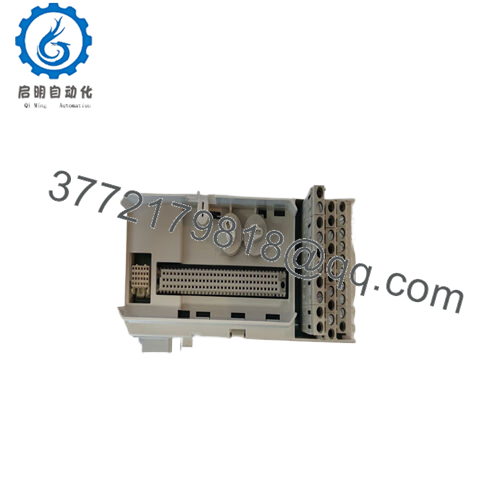
The ABB TU811 functions as a passive termination hub in the S800 I/O’s field connection layer, bridging external wiring from binary devices—such as limit switches or pilot relays—to active modules via the ModuleBus, without introducing active electronics that could fail or require calibration. It clips onto DIN rails in control enclosures, positioning atop or beside I/O modules like the DI811 for digital inputs or DO820 for outputs, where its two banks of 8 screw terminals (each handling 250 V AC/DC at 2 A) distribute signals and ZP grounds to prevent floating potentials. In a standard S800 assembly, it pairs with a CI801 communication interface, funneling conditioned field data over Profibus or Foundation Fieldbus to parent controllers like the AC 800M, supporting up to 16 channels total when stacked for redundancy in SIL-rated loops. This setup incorporates mechanical keys—two sliders that lock only compatible modules, averting electrical mismatches—while allowing daisy-chaining for expanded drops without daisy-chain jumpers. For diagnostics, it relies on the host module’s status, but its passive nature ensures transparency in fault isolation, with optional G3 coating (as TU811Z) for corrosive atmospheres. In the broader automation stack, the ABB TU811 sits at the edge, insulating high-voltage field ties from backplane logic against surges, and facilitating hot-swaps during outages via pluggable terminals. It’s adaptable for hybrid systems, like integrating with 800xA for centralized mapping, making it a foundational piece in rack-based or remote I/O islands where termination simplicity bolsters overall signal reliability and eases maintenance in distributed process control webs.

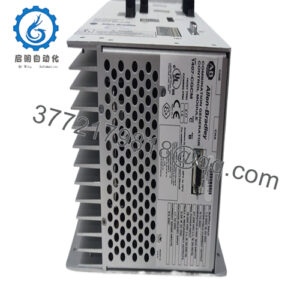
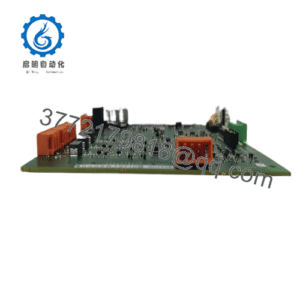
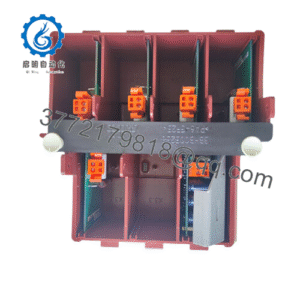
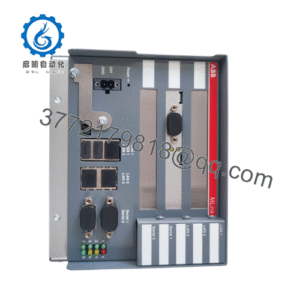
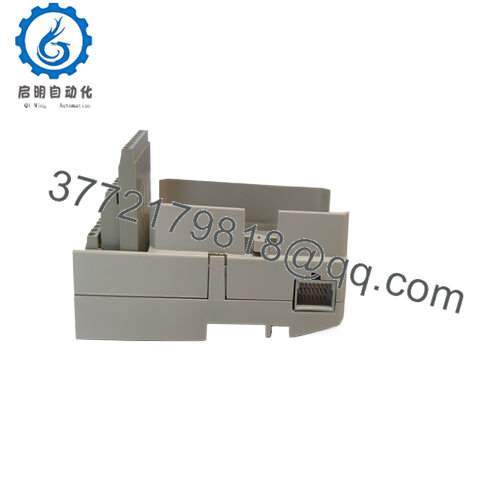
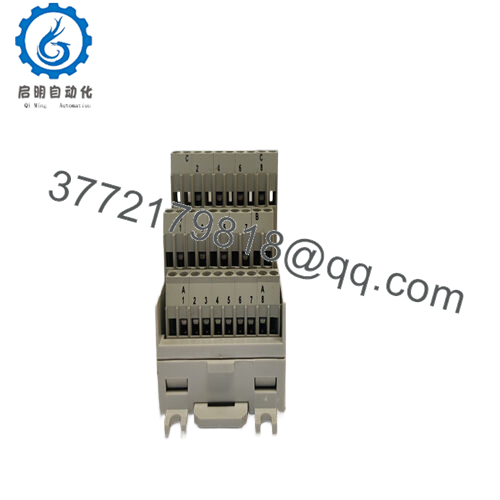
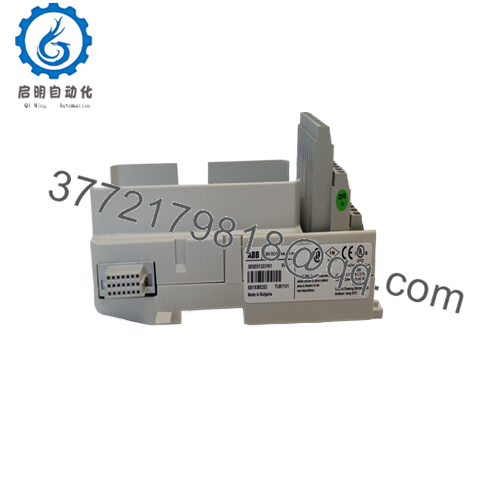
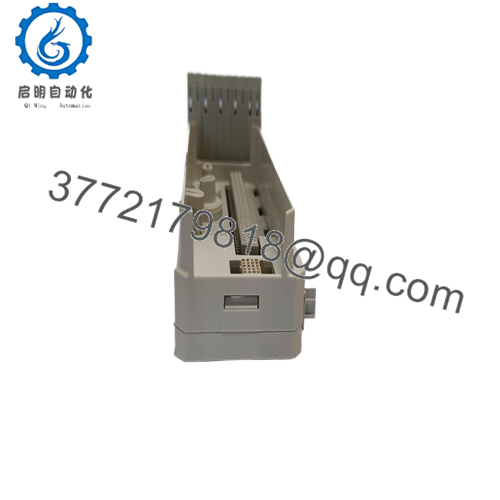
- TU811
- TU811
| Specification | Details |
|---|---|
| Model Number | TU811 (3BSE013231R1) |
| Brand | ABB |
| Type | Module Termination Unit (MTU) |
| Input Voltage | Up to 250 V AC/DC |
| Operating Temp Range | -25°C to +70°C |
| Mounting Style | DIN Rail |
| Dimensions | 126 mm x 52 mm x 110 mm |
| Weight | 0.15 kg |
| Interface/Bus | ModuleBus (S800 I/O) |
| Compliance | CE, RoHS, G3 (TU811Z variant) |
| Supported Protocols | N/A (Passive) |
| Typical Power Draw | 0 W (Passive) |
Selecting the ABB TU811 streamlines your S800 deployments with a termination approach designed for enduring compactness, where its dual-row layout and keyed alignment slash DIN-rail usage by up to 50% compared to bulkier alternatives, translating to denser cabinets that accommodate expansions without enclosure swaps—ideal for space-pinched sites where every millimeter counts toward cost containment. In practice, this efficiency manifests as quicker field tie-ins, with pluggable terminals that withstand vibration without loosening, ensuring long-term performance in cyclic loads and reducing the callback frequency for wiring tweaks that disrupt shifts.
The unit’s passive reliability further lightens integration burdens, as mechanical safeguards eliminate the risk of module misinsertions that could void warranties or spark faults, allowing your team to offload validation to automated tools like 800xA’s library instead of manual audits. Maintenance intervals stretch as a result, with no active components to drift, fostering a setup where routine checks focus on torque specs rather than signal traces, and ultimately yielding higher MTBF in I/O chains that underpin critical process control.
At its core, the ABB TU811 delivers foundational wiring discipline in footprint-constrained industrial automation, where such restraint not only fortifies signal paths but also unlocks bandwidth for advanced features like remote I/O diagnostics, all while dodging the pitfalls of overbuilt blocks that inflate budgets without proportional gains.
In power generation switchgear, the ABB TU811 terminates high-voltage status from circuit breakers into S800 DI modules, where it upholds high reliability amid arc flashes and thermal cycles, enabling process control environments that demand secure 230 V AC ties for breaker position feedback in continuous grid monitoring.
Chemical dosing skids leverage the ABB TU811 for solenoid and valve interlocks, ensuring critical system uptime under corrosive drips and pressure pulses, with compact channels supporting fast field swaps that maintain flow integrity in batch process control setups.
Manufacturing press lines deploy the ABB TU811 to route limit switch signals at 120 V DC, backing high-speed data cycles against oily mists and mechanical jolts, where its keyed design prevents errors in automated sequencing for defect-free stamping operations.
TU810 – 16-channel variant for lower-voltage (50 V) applications in denser wiring.
TU812 – 8-channel MTU with fuse protection for output-heavy setups.
TU814 – High-density 16-channel unit for analog signal terminations.
TU830 – 16-channel MTU with ZP grounds for mixed I/O in process power feeds.
TU831 – Compact 8-channel for 50 V with enhanced shielding options.
TU842 – Terminal unit for thermocouple inputs, pairing with AI843 modules.
TU845 – 16-channel for high-current outputs up to 10 A.
3BSE013232R1 – TU812 variant for legacy S800 compatibility upgrades.
Before fitting the ABB TU811 into your DIN rail, confirm the S800 module’s keying matches—one of the two sliders must align to avoid forcing insertion that could shear pins—and measure rail segments to ensure the 52 mm width fits without crowding adjacent MTUs, potentially requiring a 10 mm spacer for airflow. Verify field cable gauges (up to 2.5 mm²) suit the screw torque (0.5-0.6 Nm) to prevent cold joints, and in G3 sites, opt for the TU811Z to resist coatings that might otherwise migrate into terminals. A quick continuity loop-out with a multimeter pre-power-up catches crossed pairs, while mapping terminal labels against the 800xA config avoids runtime surprises.
Ongoing oversight keeps it straightforward: inspect terminal tightness quarterly using a torque wrench, especially after vibration-heavy startups, and scan for corrosion on exposed strands in humid bays—clean with isopropyl if needed, but never lube. Annually, during I/O audits, perform a full disconnect-reconnect cycle to validate contact resistance under 0.1 ohm, isolating the MTU without bus downtime via the ModuleBus bypass. These habits ensure the ABB TU811 remains a silent partner, flagging wear through host diagnostics rather than field failures, with minimal intrusion to sustain your automation’s wiring web.