
 WhatsApp: +86 16626708626
 Email:
  Phone: +86 16626708626
Description
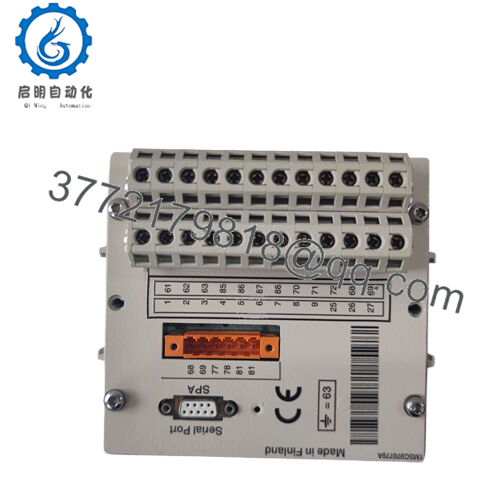
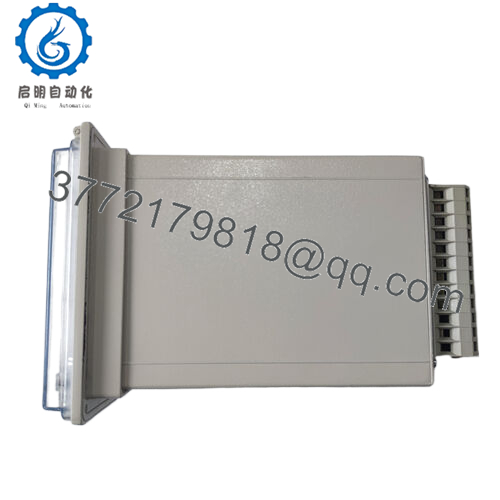
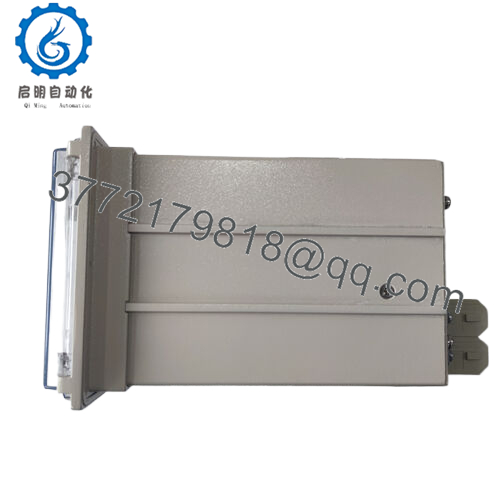
The ABB SPAJ140C is a combined overcurrent and earth-fault relay designed primarily for selective short-circuit and time overcurrent protection of distribution feeders in electrical networks. It finds real-world application in utility substations and industrial power distribution systems, especially in radial feeders and networks with isolated or resistively earthed neutrals. Engineers rely on the ABB SPAJ140C to deliver sensitive, reliable protection against phase faults and earth faults by monitoring current levels and triggering timely disconnections to prevent damage to transformers, motors, and other critical equipment.
In system architecture, the ABB SPAJ140C is a protection relay module typically integrated within ABB’s SPACOM family and compatible with PYRAMID™ coordinated protection and control systems. It includes multiple protection stages: low-set and high-set overcurrent units with definite or inverse definite minimum time (IDMT) characteristics, and low-set and high-set earth-fault units. The relay also features integrated circuit-breaker failure protection, significantly enhancing system reliability. Its local human-machine interface allows on-site setting and status queries, while the serial fiber-optic connection enables remote communication for data exchange with substation control systems.
Technically, the ABB SPAJ140C offers precise fault detection with a three-phase overcurrent capability, flexible time-current curves including IEC and British Standards, and a robust self-supervised microprocessor control. It supports current ratings of 1 A or 5 A with high dynamic withstand capacities (up to 1250 A half-wave for short intervals), plus a wide supply voltage range (18-265 V AC/DC). It contains six output relays configurable for trip or signaling purposes, making it adaptable for various protection logics. Housing in a rugged aluminum case rated IP54 ensures resistance to dust and moisture, while built-in electrical interference immunity safeguards accurate operation in harsh environments.
Technical Highlights:
| Parameter | Value |
|---|---|
| Model | ABB SPAJ140C |
| Brand | ABB |
| Type | Combined Overcurrent and Earth-Fault Relay |
| Rated Current | 1 A / 5 A |
| Thermal Withstand (Continuous) | 4 A / 20 A |
| Thermal Withstand (1 sec) | 100 A / 500 A |
| Dynamic Current Withstand | 250 A / 1250 A (half-wave value) |
| Time-Current Characteristics | Definite, IDMT, RI, RXIDG types |
| Operating Temperature | -10°C to +55°C |
| Power Supply Voltage | 18-265 V AC/DC |
| Output Relays | 2 heavy-duty trip, 4 signaling |
| Protection Features | Circuit-breaker Failure Protection |
| Housing | IP54 Aluminum Case |
| Weight | Approx. 3.5 kg |

- SPAJ140C
- SPAJ140C
Related Modules:
ABB SPAJ140D – A variant with additional features for enhanced protection flexibility.
ABB SPAJ140B – Earlier version with basic overcurrent and earth-fault protection functions.
ABB SPACOM family modules – Compatible relay systems designed for coordinated feeder protection.
ABB COM600 – Communication processor unit enabling data integration from protection relays.
ABB REF 541 – High-end protection relay often used in conjunction with SPAJ relays for advanced substation automation.
Installation of the ABB SPAJ140C should be done in suitably ventilated control panels with attention to secure wiring to minimize electromagnetic interference. The relay supports front panel setting adjustments and serial communication for parameter configuration and data retrieval, beneficial for both initial setup and ongoing maintenance. Routine diagnostics via the relay and connected control systems help engineers quickly identify faults or setting deviations, reducing downtime.