 WhatsApp: +86 16626708626
 Email:
  Phone: +86 16626708626
Description
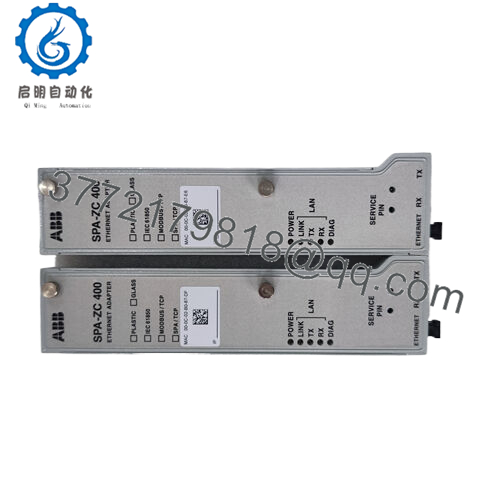
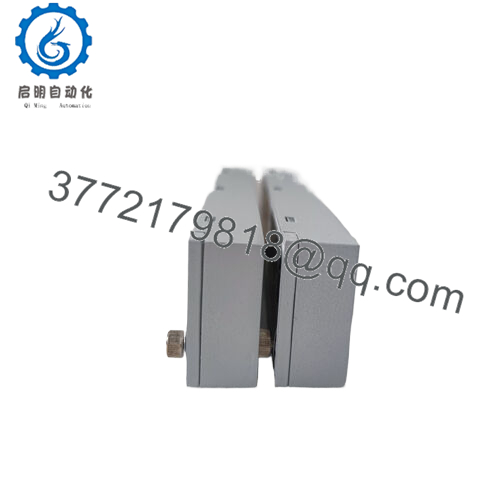
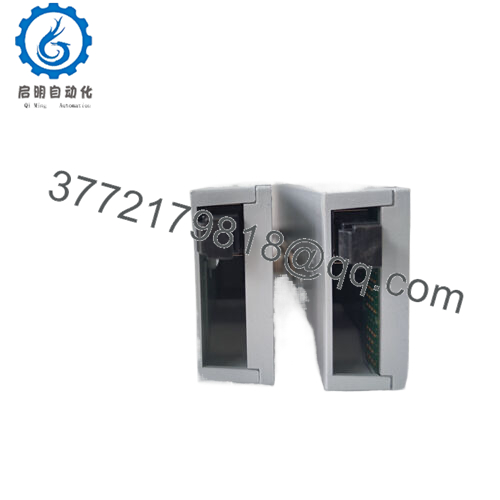
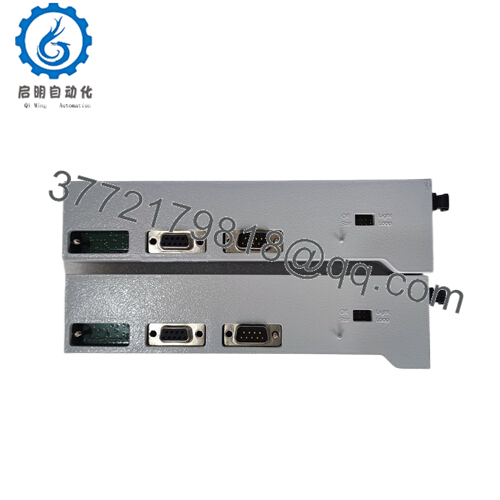
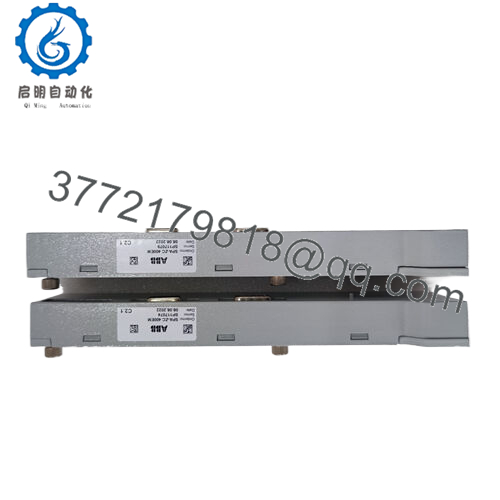
The ABB SPA-ZC400 Ethernet Adapter is a specialized communication module designed to connect ABB protection devices—such as REF 541/3/5, REM 543/5, and RET 541/3/5 relays—to the IEC 61850 standard Ethernet station bus. This product sees extensive use in modern substations and industrial automation setups where reliable, fast, and secure communication between Intelligent Electronic Devices (IEDs) is essential. Supporting IEC 61850, a global standard for substation automation, the SPA-ZC400 facilitates efficient horizontal communication through GOOSE messaging, crucial for real-time interlocking, blocking, and status updates in power protection systems and control architectures.
Functionally, the ABB SPA-ZC400 acts as a gateway between legacy protection relays and network communication protocols, supporting SPA over TCP/IP and Modbus TCP/IP. It enables seamless Ethernet access to IEDs, ensuring interoperability in complex automation networks. Additionally, it supports simultaneous dual-port communication allowing concurrent optical fiber connections with SPA or LON® interfaces, enhancing network flexibility and redundancy. Engineers benefit from an easy-to-use configuration tool that simplifies IEC 61850 data mapping, streamlining commissioning and integration processes within substation automation projects.
The adapter’s design prioritizes robustness and industrial suitability. It operates comfortably within a temperature range of -10°C to +55°C and complies with rigorous electromagnetic compatibility (EMC) standards, including tests for electrostatic discharge, surge immunity, and radio frequency interference, ensuring reliable operation in electrically noisy environments. Physically, the compact module weighs approximately 130 grams with dimensions roughly 195 mm by 50 mm by 26 mm, making it easy to mount in control cabinets without demanding excessive space. The module has multiple diagnostic LEDs for quick status checks and supports power consumption of about 5 watts, aligning with industrial power efficiency goals.
Technical specifications in summary:
| Parameter | Value |
|---|---|
| Model | ABB SPA-ZC400 |
| Brand | ABB |
| Type | Ethernet Communication Adapter |
| Compatibility | REF 541/3/5, REM 543/5, RET 541/3/5 protection devices |
| Protocols Supported | IEC 61850-8-1, SPA TCP/IP, Modbus TCP/IP |
| Dual Port Communication | Yes, simultaneous for SPA and LON® (optional) |
| Operating Temp | -10°C to +55°C |
| Dimensions | 195 mm × 50 mm × 26 mm |
| Weight | 130 grams |
| Power Consumption | Approx. 5 Watts |
| Environmental Rating | IP20 |
| EMC Standards | IEC 61000 series tested (surge, ESD, RF interference) |
- SPA-ZC400
- SPA-ZC400
Related modules supporting or complementing the ABB SPA-ZC400 include:
ABB REF 541/3/5 – Protection relays directly interfaced via the SPA-ZC400 adapter.
ABB REM 543/5 – Recorder devices for disturbance data upload via IEC 61850.
ABB RET 541/3/5 – Protection relays compatible with IEC 61850 communication through the SPA-ZC400.
ABB COM600 – Communication processor unit used alongside SPA-ZC400 in substation automation schemes.
ABB SPA-ZF – Optical fiber cables and accessories designed for SPA network connectivity.
ABB SPA-ZC400EM – Enhanced model with similar Ethernet adapter functionalities.
Installation of the SPA-ZC400 requires careful cabinet layout planning to accommodate its compact size and ensure proper airflow. Connections to the IEC 61850 station bus and optional fiber-optic ports must follow ABB’s detailed installation and commissioning manual. Proper grounding and shielding help maintain signal integrity in electrically harsh environments. Routine maintenance includes monitoring diagnostic LEDs and verifying communication status, with configuration and troubleshooting supported via integrated software tools.