 WhatsApp: +86 16626708626
 Email:
  Phone: +86 16626708626
Description
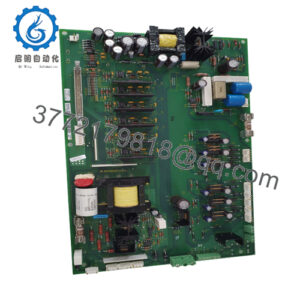
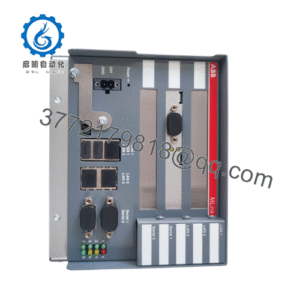
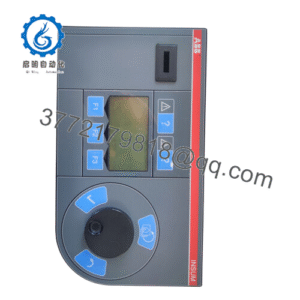
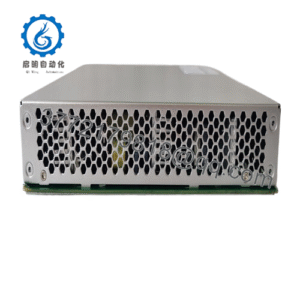
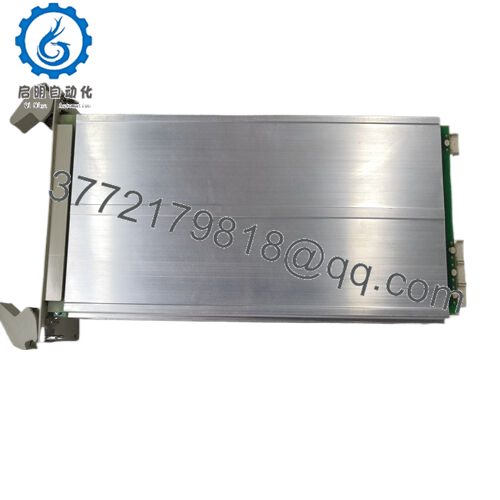
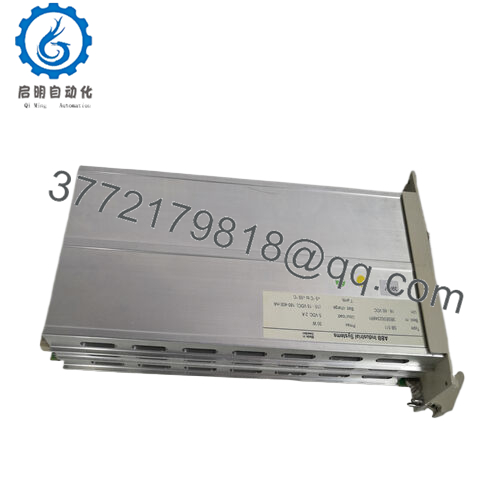
In industrial automation landscapes where power disruptions can ripple through entire process control chains, causing everything from data corruption to halted production lines, engineers are constantly weighing how to safeguard against the unpredictable. These vulnerabilities hit hardest in continuous-operation settings like chemical batching facilities or metallurgical smelters, where even milliseconds of instability in DCS or PLC systems might trigger safety shutdowns or quality deviations. The ABB SB511 (3BSE002348R1) emerges as a targeted solution—a backup power supply module that bridges these gaps by delivering instantaneous failover to maintain system integrity and high reliability. Envision a power grid flicker in a paper mill: without intervention, I/O signals could glitch, actuators freeze, and upstream controllers lose sync, but the ABB SB511 engages seamlessly, sustaining 24/48 V DC output to keep your automation stack operational. It’s crucial in modular I/O architectures where redundancy isn’t optional but a regulatory must, ensuring signal reliability during transients and supporting goals like minimized downtime in process control environments. This module isn’t about overkill; it’s a pragmatic layer that aligns with the realities of industrial automation, where fluctuating loads from field devices demand quick-response power without compromising on integration ease. By emphasizing automatic switching and real-time status feedback, the ABB SB511 empowers teams to build resilient networks that handle the ebb and flow of operations, from legacy upgrades to greenfield installs, all while weaving in essential safeguards against the hidden costs of unreliability.
The ABB SB511 functions as a compact standby power unit within ABB’s MOD 300 or Advant OCS distributed control systems, designed to monitor primary power feeds and activate its internal battery reserves the moment a dip or outage is detected, providing uninterrupted 24/48 V DC to downstream modules. It integrates at the power distribution tier of the automation stack, typically mounting alongside CPUs and I/O racks on a backplane or DIN rail, where it draws from the main supply for charging while readying for handoff—think of it as a vigilant sentinel that syncs with controllers like the PM510 to relay health data via the system bus. In a standard deployment, it supports up to several amps of backup current, enough to bridge gaps for critical loops like analog inputs or digital outputs, with built-in diagnostics that flag battery levels or switchover events through LED indicators and optional communication ties to SCADA overlays. This enables proactive oversight, such as alerting via Modbus or Profibus extensions for broader network visibility, without taxing the core processor. Redundancy is straightforward here; pair it with a duplicate ABB SB511 for hot-standby configurations, ensuring zero data loss in high-availability setups where process control demands fault-tolerant paths. Its role extends to buffering against surges in I/O-heavy zones, stabilizing voltage for fieldbus nodes and preventing the cascade of errors that plague underpowered segments. Ultimately, this module anchors the lower layers of your I/O architecture, fostering a cohesive flow from edge devices to supervisory layers, adaptable for both standalone cabinets or expansive DCS frameworks where every volt counts toward operational fluidity.
| Specification | Details |
|---|---|
| Model Number | SB511 (3BSE002348R1) |
| Brand | ABB |
| Type | Backup Power Supply Module |
| Input Voltage | 24/48 V DC |
| Operating Temp Range | -10°C to +40°C |
| Mounting Style | DIN Rail or Backplane |
| Dimensions | 125 mm x 75 mm x 100 mm |
| Weight | 0.5 kg |
| Interface/Bus | MOD 300 Bus |
| Compliance | CE, RoHS, IP20 |
| Supported Protocols | Modbus, Profibus (via system) |
| Typical Power Draw | 10 W (charging mode) |
Selecting the ABB SB511 infuses your automation infrastructure with a safeguard that’s engineered for seamless endurance, where its rapid switchover—often under 10 ms—translates to preserved process continuity and slashes the ripple effects of power events that might otherwise inflate repair budgets. In the thick of operations, this means your DCS remains locked in, with sensors and effectors holding steady, allowing engineers to chase efficiencies rather than firefighting transients that erode trust in I/O signal fidelity.

- SB511
- SB511
The real edge comes in how it lightens the load on system design: by embedding intelligent battery oversight that feeds into central monitoring, it curtails the need for bespoke redundancy scripts or extra hardware, streamlining commissioning and letting your team pivot to value-add tweaks like loop tuning. Maintenance rhythms benefit too, as status transparency cuts diagnostic hunts short, fostering a setup where uptime isn’t gambled on but baked in through predictive cues that head off degradation before it bites.
At its heart, the ABB SB511 champions long-term viability in volatile industrial automation spheres, where consistent power underpins not just reliability but the agility to scale amid shifting production mandates, all without the drag of convoluted failover logistics.
In power generation stations, the ABB SB511 deploys as a backup for excitation controls and monitoring relays, where it upholds critical system uptime against grid instabilities, ensuring turbine governors and protective interlocks stay powered through voltage sags in high-load, thermally stressed enclosures.
Chemical processing outfits rely on the ABB SB511 within DCS process control environments to buffer PLCs handling reactive batches, delivering high reliability in corrosive atmospheres where even fleeting outages could skew reactions or trigger hazmat protocols, maintaining precise I/O data cycles for safety compliance.
Metallurgical plants integrate the ABB SB511 into furnace management systems, supporting continuous uptime for conveyor and melting controls under dusty, elevated-temp conditions, where its standby kick-in prevents molten flow disruptions and safeguards against production halts in round-the-clock smelting ops.
PM510 – Core processor module that pairs with SB511 for MOD 300 logic execution.
MB510 – Program card interface for firmware updates in backup-powered setups.
SD822 – Digital input companion drawing from SB511 reserves for signal stability.
AI810 – Analog input module benefiting from SB511’s failover in process loops.
CI532 – Communication interface for remote battery status relay in DCS nets.
SR511 – Relay unit alternative with integrated power buffering for protection apps.
SB512 – Enhanced variant for extended battery runtime in longer outage scenarios.
3BSE008373R1 – Processor add-on for hybrid MOD 300 expansions with backups.
As you gear up to incorporate the ABB SB511, double-check your backplane’s power bus alignment to the 24/48 V DC spec, ensuring no polarity reversals that might sideline the charger, and gauge enclosure airflow to honor the -10°C to +40°C envelope—overly confined spots can nudge it toward thermal throttling. Battery health is non-negotiable pre-install; cycle a full discharge test with ABB’s diagnostic kit to baseline capacity, and confirm firmware syncs with your MOD 300 controller to enable smooth event logging without post-fit glitches.
Day-to-day upkeep stays grounded: inspect terminals bi-monthly for oxidation, particularly in humid plants, and log LED patterns during patrols to track charge cycles or fault blinks. Annually, execute a simulated outage drill to validate switchover timing and recharge efficiency, using multimeter taps on outputs for variance checks. If integrating with SCADA, tweak alert thresholds quarterly to match evolving loads, keeping the ABB SB511 as a low-touch ally that flags drifts early and preserves your automation’s pulse with minimal intrusion.